-
Chinese (Simplified)
-
English
-
German
-
Korean
-
Spanish

Chinese (Simplified)
English
German
Korean
Spanish
Sign up for an account to enjoy easy online shopping and instant order tracking.
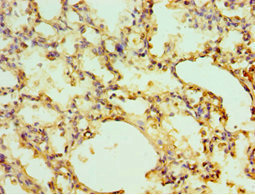
The antibody against EGLN1 was raised in rabbit using the Recombinant Human Egl nine homolog 1 protein (301-426AA) as the immunogen. This antibody exists as a non-conjugated isotype IgG, Antigen affinity purified. This antibody has been validated on ELISA, IHC.
$299.00
| Cat.No | ADC-44899A | Clonality | Polyclonal |
|---|---|---|---|
| Host Species | Rabbit | Target Name | EGLN1 |
| Form | Liquid | Species Reactivity | Human |
| Isotype | IgG | Storage Buffer | 50% Glycerol, PBS with 0.02% sodium azide, pH7.3. |
| Purification Method | Antigen affinity purified | Conjugate | Non-conjugated |
| Application | ELISA, IHC | Storage | Upon receipt |
| Immunogen Description | Recombinant Human Egl nine homolog 1 protein (301-426AA) | Target Species | Human |
|---|---|---|---|
| Immunogen Sequence | Complete sequences for the immunogen, target protein, and peptides are available upon request. | Uniprot ID | Q9GZT9 |
Uniprot Id
Q9GZT9
Target Species
Human
Target Name
EGLN1
Target Full Name
Egl nine homolog 1
Target Function
Cellular oxygen sensor that catalyzes, under normoxic conditions, the post-translational formation of 4-hydroxyproline in hypoxia-inducible factor (HIF) alpha proteins. Hydroxylates a specific proline found in each of the oxygen-dependent degradation (ODD) domains (N-terminal, NODD, and C-terminal, CODD) of HIF1A. Also hydroxylates HIF2A. Has a preference for the CODD site for both HIF1A and HIF1B. Hydroxylated HIFs are then targeted for proteasomal degradation via the von Hippel-Lindau ubiquitination complex. Under hypoxic conditions, the hydroxylation reaction is attenuated allowing HIFs to escape degradation resulting in their translocation to the nucleus, heterodimerization with HIF1B, and increased expression of hypoxy-inducible genes. EGLN1 is the most important isozyme under normoxia and, through regulating the stability of HIF1, involved in various hypoxia-influenced processes such as angiogenesis in retinal and cardiac functionality. Target proteins are preferentially recognized via a LXXLAP motif.
Target Involvement
Erythrocytosis, familial, 3 (ECYT3)
Target Subcellular Location
Cytoplasm. Nucleus.
Target Tissue Specificity
According to PubMed:11056053, widely expressed with highest levels in skeletal muscle and heart, moderate levels in pancreas, brain (dopaminergic neurons of adult and fetal substantia nigra) and kidney, and lower levels in lung and liver. According to Pub
Target Research Area
Cancer
Target Synonyms
C1ORF12; Chromosome 1 Open Reading Frame 12; DKFZp761F179; ECYT 3; ECYT3; Egl 9 family hypoxia inducible factor 1; EGL 9 homolog of C. elegans 1; EGL nine (C.elegans) homolog 1; Egl nine homolog 1 (C. elegans); Egl nine homolog 1; Egl nine like protein 1; EGLN 1; Egln1; EGLN1_HUMAN; HIF PH2; HIF Prolyl Hydroxylase 2; HIF-PH2; HIF-prolyl hydroxylase 2; HIFP4H 2; HIFPH2; HPH 2; HPH-2; HPH2; Hypoxia inducible factor prolyl hydroxylase 2; Hypoxia-inducible factor prolyl hydroxylase 2; ORF13; P4H2; PHD 2; PhD2; PNAS 118; PNAS 137; Prolyl Hydroxylase Domain Containing Protein 2; Prolyl hydroxylase domain-containing protein 2; Rat Homolog of SM20; SM 20; SM-20; SM20; Zinc finger MYND domain containing protein 6; ZMYND6
Target Background
The protein encoded by this gene catalyzes the post-translational formation of 4-hydroxyproline in hypoxia-inducible factor (HIF) alpha proteins. HIF is a transcriptional complex that plays a central role in mammalian oxygen homeostasis. This protein functions as a cellular oxygen sensor, and under normal oxygen concentration, modification by prolyl hydroxylation is a key regulatory event that targets HIF subunits for proteasomal destruction via the von Hippel-Lindau ubiquitylation complex. Mutations in this gene are associated with erythrocytosis familial type 3 (ECYT3).
Notification