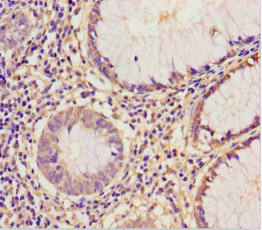
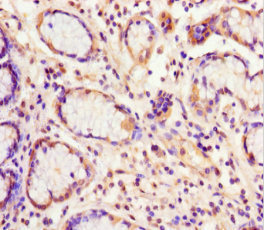
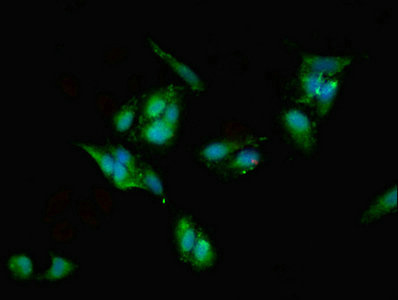
-
Chinese (Simplified)
-
English
-
German
-
Korean
-
Spanish
Chinese (Simplified)
English
German
Korean
Spanish
Sign up for an account to enjoy easy online shopping and instant order tracking.
The antibody against EIF6 was raised in rabbit using the Recombinant Human Eukaryotic translation initiation factor 6 protein (1-245AA) as the immunogen. This antibody exists as a non-conjugated isotype IgG, purified by protein G with a purity greater than 95%. This antibody has been validated on ELISA, IHC, IF.
$299.00
| Cat.No | ADC-22111A | Clonality | Polyclonal |
|---|---|---|---|
| Host Species | Rabbit | Target Name | EIF6 |
| Form | Liquid | Species Reactivity | Human |
| Isotype | IgG | Storage Buffer | 0.01M PBS, 0.03% Proclin 300; Constituents: 50% Glycerol, PH 7.4 |
| Purification Method | >95%, Protein G purified | Conjugate | Non-conjugated |
| Application | ELISA, IF, IHC | Storage | Upon receipt |
| Immunogen Description | Recombinant Human Eukaryotic translation initiation factor 6 protein (1-245AA) | Target Species | Human |
|---|---|---|---|
| Immunogen Sequence | Complete sequences for the immunogen, target protein, and peptides are available upon request. | Uniprot ID | P56537 |
Uniprot Id
P56537
Target Species
Human
Target Name
EIF6
Target Full Name
Eukaryotic translation initiation factor 6
Target Function
Binds to the 60S ribosomal subunit and prevents its association with the 40S ribosomal subunit to form the 80S initiation complex in the cytoplasm. Behaves as a stimulatory translation initiation factor downstream insulin/growth factors. Is also involved in ribosome biogenesis. Associates with pre-60S subunits in the nucleus and is involved in its nuclear export. Cytoplasmic release of TIF6 from 60S subunits and nuclear relocalization is promoted by a RACK1 (RACK1)-dependent protein kinase C activity. In tissues responsive to insulin, controls fatty acid synthesis and glycolysis by exerting translational control of adipogenic transcription factors such as CEBPB, CEBPD and ATF4 that have G/C rich or uORF in their 5'UTR. Required for ROS-dependent megakaryocyte maturation and platelets formation, controls the expression of mitochondrial respiratory chain genes involved in reactive oxygen species (ROS) synthesis. Involved in miRNA-mediated gene silencing by the RNA-induced silencing complex (RISC). Required for both miRNA-mediated translational repression and miRNA-mediated cleavage of complementary mRNAs by RISC. Modulates cell cycle progression and global translation of pre-B cells, its activation seems to be rate-limiting in tumorigenesis and tumor growth.
Target Subcellular Location
Cytoplasm. Nucleus, nucleolus. Note=Shuttles between cytoplasm and nucleus/nucleolus.
Target Protein Families
EIF-6 family
Target Tissue Specificity
Expressed at very high levels in colon carcinoma with lower levels in normal colon and ileum and lowest levels in kidney and muscle (at protein level).
Target Synonyms
b(2)gcn; B(2)GCN homolog; B4 integrin interactor; Binding protein of beta-4 integrin; CAB; eIF-6; EIF3A; EIF6; Eukaryotic translation initiation factor 3A; Eukaryotic translation initiation factor 6; IF6_HUMAN; Integrin beta 4 binding protein; ITGB4BP; OK/SW-cl.27; p27 beta 4 integrin binding protein ; p27(BBP); p27BBP; RP4-614O4.1
Target Background
Hemidesmosomes are structures which link the basal lamina to the intermediate filament cytoskeleton. An important functional component of hemidesmosomes is the integrin beta-4 subunit (ITGB4), a protein containing two fibronectin type III domains. The protein encoded by this gene binds to the fibronectin type III domains of ITGB4 and may help link ITGB4 to the intermediate filament cytoskeleton. The encoded protein, which is insoluble and found both in the nucleus and in the cytoplasm, can function as a translation initiation factor and prevent the association of the 40S and 60S ribosomal subunits. Multiple non-protein coding transcript variants and variants encoding two different isoforms have been found for this gene.
Notification