-
Chinese (Simplified)
-
English
-
German
-
Korean
-
Spanish
Chinese (Simplified)
English
German
Korean
Spanish
Sign up for an account to enjoy easy online shopping and instant order tracking.
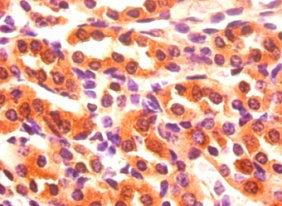
The antibody against FABP3 was raised in rabbit using the Recombinant Human Fatty acid-binding protein, heart protein (2-133AA) as the immunogen. This antibody exists as a non-conjugated isotype IgG, purified by protein G with a purity greater than 95%. This antibody has been validated on ELISA, WB, IHC.
$299.00
| Cat.No | ADC-50861A | Clonality | Polyclonal |
|---|---|---|---|
| Host Species | Rabbit | Target Name | FABP3 |
| Form | Liquid | Species Reactivity | Human, Mouse |
| Isotype | IgG | Storage Buffer | 0.01M PBS, 0.03% Proclin 300; Constituents: 50% Glycerol, PH 7.4 |
| Purification Method | >95%, Protein G purified | Conjugate | Non-conjugated |
| Application | ELISA, IHC, WB | Storage | Upon receipt |
| Immunogen Description | Recombinant Human Fatty acid-binding protein, heart protein (2-133AA) | Target Species | Human |
|---|---|---|---|
| Immunogen Sequence | Complete sequences for the immunogen, target protein, and peptides are available upon request. | Uniprot ID | P05413 |
Uniprot Id
P05413
Target Species
Human
Target Name
FABP3
Target Full Name
Fatty acid-binding protein, heart
Target Function
FABP are thought to play a role in the intracellular transport of long-chain fatty acids and their acyl-CoA esters.
Target Subcellular Location
Cytoplasm.
Target Protein Families
Calycin superfamily, Fatty-acid binding protein (FABP) family
Target Synonyms
MDGI; FABP11; H-FABP; M-FABP; O-FABP; FABP3
Target Background
The intracellular fatty acid-binding proteins (FABPs) belongs to a multigene family. FABPs are divided into at least three distinct types, namely the hepatic-, intestinal- and cardiac-type. They form 14-15 kDa proteins and are thought to participate in the uptake, intracellular metabolism and/or transport of long-chain fatty acids. They may also be responsible in the modulation of cell growth and proliferation. Fatty acid-binding protein 3 gene contains four exons and its function is to arrest growth of mammary epithelial cells. This gene is a candidate tumor suppressor gene for human breast cancer. Alternative splicing results in multiple transcript variants.
Notification