-
Chinese (Simplified)
-
English
-
German
-
Korean
-
Spanish
Chinese (Simplified)
English
German
Korean
Spanish
Sign up for an account to enjoy easy online shopping and instant order tracking.
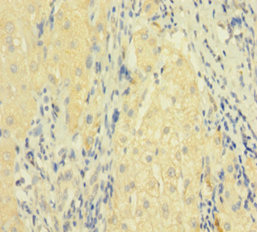
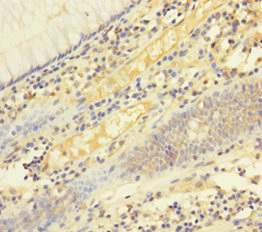
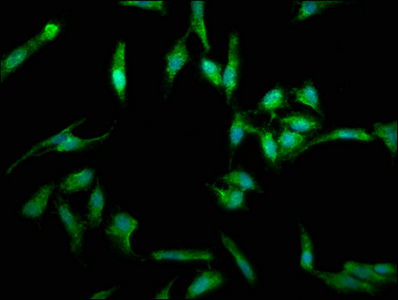
The antibody against FASLG was raised in rabbit using the Recombinant Human Tumor necrosis factor ligand superfamily member 6 protein (103-281AA) as the immunogen. This antibody exists as a non-conjugated isotype IgG, purified by protein G with a purity greater than 95%. This antibody has been validated on ELISA, IHC, IF.
$299.00
| Cat.No | ADC-49386A | Clonality | Polyclonal |
|---|---|---|---|
| Host Species | Rabbit | Target Name | FASLG |
| Form | Liquid | Species Reactivity | Human |
| Isotype | IgG | Storage Buffer | 0.01M PBS, 0.03% Proclin 300; Constituents: 50% Glycerol, PH 7.4 |
| Purification Method | >95%, Protein G purified | Conjugate | Non-conjugated |
| Application | ELISA, IF, IHC | Storage | Upon receipt |
| Immunogen Description | Recombinant Human Tumor necrosis factor ligand superfamily member 6 protein (103-281AA) | Target Species | Human |
|---|---|---|---|
| Immunogen Sequence | Complete sequences for the immunogen, target protein, and peptides are available upon request. | Uniprot ID | P48023 |
Uniprot Id
P48023
Target Species
Human
Target Name
FASLG
Target Full Name
Tumor necrosis factor ligand superfamily member 6
Target Function
Cytokine that binds to TNFRSF6/FAS, a receptor that transduces the apoptotic signal into cells. Involved in cytotoxic T-cell-mediated apoptosis, natural killer cell-mediated apoptosis and in T-cell development. Initiates fratricidal/suicidal activation-induced cell death (AICD) in antigen-activated T-cells contributing to the termination of immune responses. TNFRSF6/FAS-mediated apoptosis has also a role in the induction of peripheral tolerance. Binds to TNFRSF6B/DcR3, a decoy receptor that blocks apoptosis.; Induces FAS-mediated activation of NF-kappa-B, initiating non-apoptotic signaling pathways. Can induce apoptosis but does not appear to be essential for this process.; Cytoplasmic form induces gene transcription inhibition.
Target Involvement
Autoimmune lymphoproliferative syndrome 1B (ALPS1B)
Target Subcellular Location
Cell membrane; Single-pass type II membrane protein. Cytoplasmic vesicle lumen. Lysosome lumen.; [Tumor necrosis factor ligand superfamily member 6, soluble form]: Secreted.; [FasL intracellular domain]: Nucleus.
Target Protein Families
Tumor necrosis factor family
Target Research Area
Apoptosis
Target Synonyms
ALPS1B; Apoptosis (APO 1) antigen ligand 1; Apoptosis antigen ligand 1; Apoptosis antigen ligand; APT1LG1; APTL; CD178; CD178 antigen; CD95 ligand; CD95-L; CD95L; CD95L protein; Fas antigen ligand; Fas L; Fas ligand (TNF superfamily member 6); Fas ligand; FASL; Fasl Fas ligand (TNF superfamily member 6); FASLG; Generalized lymphoproliferative disease; Gld; soluble form; TNFL6_HUMAN; TNFSF6; Tumor necrosis factor (ligand) superfamily member 6; Tumor necrosis factor ligand superfamily member 6
Target Background
This gene is a member of the tumor necrosis factor superfamily. The primary function of the encoded transmembrane protein is the induction of apoptosis triggered by binding to FAS. The FAS/FASLG signaling pathway is essential for immune system regulation, including activation-induced cell death (AICD) of T cells and cytotoxic T lymphocyte induced cell death. It has also been implicated in the progression of several cancers. Defects in this gene may be related to some cases of systemic lupus erythematosus (SLE). Alternatively spliced transcript variants have been described.
Notification