• Contact info@abtriva.com for inquiries and orders.
  • Chinese (Simplified)

  • English

  • German

  • Korean

  • Spanish

United States (English / $ USD)

Rabbit anti-Human FBN1 Polyclonal Antibody

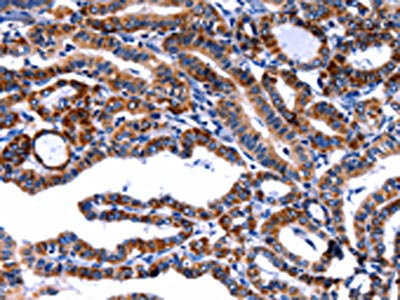
The antibody against FBN1 was raised in rabbit using the Synthetic peptide of Human FBN1 as the immunogen. This antibody exists as a non-conjugated isotype IgG, Antigen affinity purified. This antibody has been validated on ELISA, IHC.

ADC-28522A

The antibody against FBN1 was raised in rabbit using the Synthetic peptide of Human FBN1 as the immunogen. This antibody exists as a non-conjugated isotype IgG, Antigen affinity purified. This antibody has been validated on ELISA, IHC.

$299.00

Number
Order Exclusive Products Now

Request a Quote
High Purity LevelsPrecision and ReliabilityCustomization Options

Specifications


Cat.No ADC-28522A ClonalityPolyclonal
Host SpeciesRabbitTarget NameFBN1
FormLiquidSpecies ReactivityHuman, Mouse
IsotypeIgGStorage Buffer0.05% NaN3, 40% Glycerol., pH7.4 PBS
Purification MethodAntigen affinity purifiedConjugateNon-conjugated
ApplicationELISA, IHCStorageUpon receipt

Immunogen Information


Immunogen DescriptionSynthetic peptide of Human FBN1Target SpeciesHuman
Immunogen SequenceComplete sequences for the immunogen, target protein, and peptides are available upon request.Uniprot IDP35555
Background Information
  • Uniprot Id

    P35555

  • Target Species

    Human

  • Target Name

    FBN1

  • Target Full Name

    Fibrillin-1

  • Target Function

    Structural component of the 10-12 nm diameter microfibrils of the extracellular matrix, which conveys both structural and regulatory properties to load-bearing connective tissues. Fibrillin-1-containing microfibrils provide long-term force bearing structural support. In tissues such as the lung, blood vessels and skin, microfibrils form the periphery of the elastic fiber, acting as a scaffold for the deposition of elastin. In addition, microfibrils can occur as elastin-independent networks in tissues such as the ciliary zonule, tendon, cornea and glomerulus where they provide tensile strength and have anchoring roles. Fibrillin-1 also plays a key role in tissue homeostasis through specific interactions with growth factors, such as the bone morphogenetic proteins (BMPs), growth and differentiation factors (GDFs) and latent transforming growth factor-beta-binding proteins (LTBPs), cell-surface integrins and other extracellular matrix protein and proteoglycan components. Regulates osteoblast maturation by controlling TGF-beta bioavailability and calibrating TGF-beta and BMP levels, respectively. Negatively regulates osteoclastogenesis by binding and sequestering an osteoclast differentiation and activation factor TNFSF11. This leads to disruption of TNFSF11-induced Ca(2+) signaling and impairment of TNFSF11-mediated nuclear translocation and activation of transcription factor NFATC1 which regulates genes important for osteoclast differentiation and function. Mediates cell adhesion via its binding to cell surface receptors integrins ITGAV:ITGB3 and ITGA5:ITGB1. Binds heparin and this interaction has an important role in the assembly of microfibrils.; Adipokine secreted by white adipose tissue that plays an important regulatory role in the glucose metabolism of liver, muscle and pancreas. Hormone that targets the liver in response to fasting to increase plasma glucose levels. Binds the olfactory receptor OR4M1 at the surface of hepatocytes and promotes hepatocyte glucose release by activating the protein kinase A activity in the liver, resulting in rapid glucose release into the circulation. May act as a regulator of adaptive thermogenesis by inhibiting browning and energy consumption, while increasing lipid deposition in white adipose tissue. Also acts as an orexigenic hormone that increases appetite: crosses the blood brain barrier and exerts effects on the hypothalamus. In the arcuate nucleus of the hypothalamus, asprosin directly activates orexigenic AgRP neurons and indirectly inhibits anorexigenic POMC neurons, resulting in appetite stimulation. Activates orexigenic AgRP neurons via binding to the olfactory receptor OR4M1. May also play a role in sperm motility in testis via interaction with OR4M1 receptor.

  • Target Involvement

    Marfan syndrome (MFS); Ectopia lentis 1, isolated, autosomal dominant (ECTOL1); Weill-Marchesani syndrome 2 (WMS2); Overlap connective tissue disease (OCTD); Stiff skin syndrome (SSKS); Geleophysic dysplasia 2 (GPHYSD2); Acromicric dysplasia (ACMICD); Marfan lipodystrophy syndrome (MFLS)

  • Target Subcellular Location

    Secreted.; [Fibrillin-1]: Secreted, extracellular space, extracellular matrix.; [Asprosin]: Secreted.

  • Target Protein Families

    Fibrillin family

  • Target Research Area

    Signal Transduction

  • Target Synonyms

    350 kDa glycoprotein component extracellular microfibril; ACMICD; FBN 1; FBN; FBN1; FBN1_HUMAN; Fibrillin 15; Fibrillin-1; Fibrillin1; Fibrillin15; GPHYSD2; Marfan syndrome; MASS; MFS 1; MFS1; OCTD; SGS; SSKS; Weill Marchesani syndrome ; WMS; WMS2

  • Target Background

    This gene encodes a member of the fibrillin family of proteins. The encoded preproprotein is proteolytically processed to generate two proteins including the extracellular matrix component fibrillin-1 and the protein hormone asprosin. Fibrillin-1 is an extracellular matrix glycoprotein that serves as a structural component of calcium-binding microfibrils. These microfibrils provide force-bearing structural support in elastic and nonelastic connective tissue throughout the body. Asprosin, secreted by white adipose tissue, has been shown to regulate glucose homeostasis. Mutations in this gene are associated with Marfan syndrome and the related MASS phenotype, as well as ectopia lentis syndrome, Weill-Marchesani syndrome, Shprintzen-Goldberg syndrome and neonatal progeroid syndrome.

Inquire Rabbit anti-Human FBN1 Polyclonal Antibody Now


AbTriva respects your privacy and protects your personal data in accordance with AbTriva. For more information, please see our data protection statement. *

Notification