• Contact info@abtriva.com for inquiries and orders.
  • Chinese (Simplified)

  • English

  • German

  • Korean

  • Spanish

United States (English / $ USD)

Rabbit anti-Human FGF9 Polyclonal Antibody

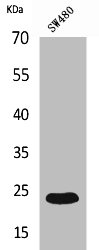
The antibody against FGF9 was raised in rabbit using the Synthesized peptide derived from the C-terminal region of Human FGF-9. as the immunogen. This antibody exists as a non-conjugated isotype IgG. The antibody was affinity-purified from rabbit antiserum by affinity-chromatography using epitope-specific immunogen. This antibody has been validated on WB, ELISA.

ADC-37170A

The antibody against FGF9 was raised in rabbit using the Synthesized peptide derived from the C-terminal region of Human FGF-9. as the immunogen. This antibody exists as a non-conjugated isotype IgG. The antibody was affinity-purified from rabbit antiserum by affinity-chromatography using epitope-specific immunogen. This antibody has been validated on WB, ELISA.

$167.00

Number
Order Exclusive Products Now

Request a Quote
High Purity LevelsPrecision and ReliabilityCustomization Options

Specifications


Cat.No ADC-37170A ClonalityPolyclonal
Host SpeciesRabbitTarget NameFGF9
FormLiquidSpecies ReactivityHuman, Mouse, Rat
IsotypeIgGStorage Buffer0.5% BSA and 0.02% sodium azide., Liquid in PBS containing 50% glycerol
Purification MethodThe antibody was affinity-purified from rabbit antiserum by affinity-chromatography using epitope-specific immunogen.ConjugateNon-conjugated
ApplicationELISA, WBStorageUpon receipt

Immunogen Information


Immunogen DescriptionSynthesized peptide derived from the C-terminal region of Human FGF-9.Target SpeciesHuman
Immunogen SequenceComplete sequences for the immunogen, target protein, and peptides are available upon request.Uniprot IDP31371
Background Information
  • Uniprot Id

    P31371

  • Target Species

    Human

  • Target Name

    FGF9

  • Target Full Name

    Fibroblast growth factor 9

  • Target Function

    Plays an important role in the regulation of embryonic development, cell proliferation, cell differentiation and cell migration. May have a role in glial cell growth and differentiation during development, gliosis during repair and regeneration of brain tissue after damage, differentiation and survival of neuronal cells, and growth stimulation of glial tumors.

  • Target Involvement

    Multiple synostoses syndrome 3 (SYNS3)

  • Target Subcellular Location

    Secreted.

  • Target Protein Families

    Heparin-binding growth factors family

  • Target Tissue Specificity

    Glial cells.

  • Target Synonyms

    FGF 9; FGF-9; FGF9; FGF9_HUMAN; Fibroblast growth factor 9; GAF (Glia-activafibroblast growth factor 9 (glia-activating factor); GAF; Glia Activating Factor; Glia-activating factor; HBFG 9; HBFG9; HBGF-9; Heparin-binding growth factor 9; MGC119914; MGC119915; SYNS3

  • Target Background

    The protein encoded by this gene is a member of the fibroblast growth factor (FGF) family. FGF family members possess broad mitogenic and cell survival activities, and are involved in a variety of biological processes, including embryonic development, cell growth, morphogenesis, tissue repair, tumor growth and invasion. This protein was isolated as a secreted factor that exhibits a growth-stimulating effect on cultured glial cells. In nervous system, this protein is produced mainly by neurons and may be important for glial cell development. Expression of the mouse homolog of this gene was found to be dependent on Sonic hedgehog (Shh) signaling. Mice lacking the homolog gene displayed a male-to-female sex reversal phenotype, which suggested a role in testicular embryogenesis.

Inquire Rabbit anti-Human FGF9 Polyclonal Antibody Now


AbTriva respects your privacy and protects your personal data in accordance with AbTriva. For more information, please see our data protection statement. *

Notification