• Contact info@abtriva.com for inquiries and orders.
  • Chinese (Simplified)

  • English

  • German

  • Korean

  • Spanish

United States (English / $ USD)

Rabbit anti-Human FOLH1 Polyclonal Antibody

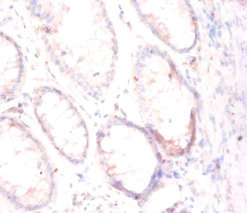
The antibody against FOLH1 was raised in rabbit using the Recombinant Human Glutamate carboxypeptidase 2 protein (48-750AA) as the immunogen. This antibody exists as a non-conjugated isotype IgG, purified by protein G with a purity greater than 95%. This antibody has been validated on ELISA, WB, IHC.

ADC-50326A

The antibody against FOLH1 was raised in rabbit using the Recombinant Human Glutamate carboxypeptidase 2 protein (48-750AA) as the immunogen. This antibody exists as a non-conjugated isotype IgG, purified by protein G with a purity greater than 95%. This antibody has been validated on ELISA, WB, IHC.

$299.00

Number
Order Exclusive Products Now

Request a Quote
High Purity LevelsPrecision and ReliabilityCustomization Options

Specifications


Cat.No ADC-50326A ClonalityPolyclonal
Host SpeciesRabbitTarget NameFOLH1
FormLiquidSpecies ReactivityHuman
IsotypeIgGStorage Buffer0.01M PBS, 0.03% Proclin 300; Constituents: 50% Glycerol, PH 7.4
Purification Method>95%, Protein G purifiedConjugateNon-conjugated
ApplicationELISA, IHC, WBStorageUpon receipt

Immunogen Information


Immunogen DescriptionRecombinant Human Glutamate carboxypeptidase 2 protein (48-750AA)Target SpeciesHuman
Immunogen SequenceComplete sequences for the immunogen, target protein, and peptides are available upon request.Uniprot IDQ04609
Background Information
  • Uniprot Id

    Q04609

  • Target Species

    Human

  • Target Name

    FOLH1

  • Target Full Name

    Glutamate carboxypeptidase 2

  • Target Function

    Has both folate hydrolase and N-acetylated-alpha-linked-acidic dipeptidase (NAALADase) activity. Has a preference for tri-alpha-glutamate peptides. In the intestine, required for the uptake of folate. In the brain, modulates excitatory neurotransmission through the hydrolysis of the neuropeptide, N-aceylaspartylglutamate (NAAG), thereby releasing glutamate. Involved in prostate tumor progression.; Also exhibits a dipeptidyl-peptidase IV type activity. In vitro, cleaves Gly-Pro-AMC.

  • Target Subcellular Location

    Cell membrane; Single-pass type II membrane protein.; [Isoform PSMA']: Cytoplasm.

  • Target Protein Families

    Peptidase M28 family, M28B subfamily

  • Target Tissue Specificity

    Highly expressed in prostate epithelium. Detected in urinary bladder, kidney, testis, ovary, fallopian tube, breast, adrenal gland, liver, esophagus, stomach, small intestine, colon and brain (at protein level). Detected in the small intestine, brain, kid

  • Target Synonyms

    Cell growth inhibiting protein 27 ; Cell growth-inhibiting gene 27 protein; FGCP; Folate hydrolase (prostate-specific membrane antigen) 1; Folate hydrolase 1; Folate hydrolase; Folate hydrolase prostate specific membrane antigen 1; FOLH 1; FOLH; Folh1; FOLH1_HUMAN; Folylpoly gamma glutamate carboxypeptidase; Folylpoly-gamma-glutamate carboxypeptidase; GCP 2; GCP II; GCP2; GCPII; GIG27; Glutamate carboxylase II; Glutamate carboxypeptidase 2; Glutamate carboxypeptidase II; Membrane glutamate carboxypeptidase; mGCP; N acetylated alpha linked acidic dipeptidase 1; N-acetylated-alpha-linked acidic dipeptidase I; NAALAD 1; NAALAD1; NAALAdase; NAALADase I; Prostate specific membrane antigen; Prostate specific membrane antigen variant F; Prostate-specific membrane antigen; PSM; PSMA; Pteroylpoly gamma glutamate carboxypeptidase; Pteroylpoly-gamma-glutamate carboxypeptidase

  • Target Background

    This gene encodes a type II transmembrane glycoprotein belonging to the M28 peptidase family. The protein acts as a glutamate carboxypeptidase on different alternative substrates, including the nutrient folate and the neuropeptide N-acetyl-l-aspartyl-l-glutamate and is expressed in a number of tissues such as prostate, central and peripheral nervous system and kidney. A mutation in this gene may be associated with impaired intestinal absorption of dietary folates, resulting in low blood folate levels and consequent hyperhomocysteinemia. Expression of this protein in the brain may be involved in a number of pathological conditions associated with glutamate excitotoxicity. In the prostate the protein is up-regulated in cancerous cells and is used as an effective diagnostic and prognostic indicator of prostate cancer. This gene likely arose from a duplication event of a nearby chromosomal region. Alternative splicing gives rise to multiple transcript variants encoding several different isoforms.

Inquire Rabbit anti-Human FOLH1 Polyclonal Antibody Now


AbTriva respects your privacy and protects your personal data in accordance with AbTriva. For more information, please see our data protection statement. *

Notification