• Contact info@abtriva.com for inquiries and orders.
  • Chinese (Simplified)

  • English

  • German

  • Korean

  • Spanish

United States (English / $ USD)

Rabbit anti-Human GLUL Polyclonal Antibody

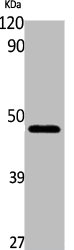
The antibody against GLUL was raised in rabbit using the Synthesized peptide derived from the Internal region of Human Gl Syn. as the immunogen. This antibody exists as a non-conjugated isotype IgG. The antibody was affinity-purified from rabbit antiserum by affinity-chromatography using epitope-specific immunogen. This antibody has been validated on WB, ELISA.

ADC-37311A

The antibody against GLUL was raised in rabbit using the Synthesized peptide derived from the Internal region of Human Gl Syn. as the immunogen. This antibody exists as a non-conjugated isotype IgG. The antibody was affinity-purified from rabbit antiserum by affinity-chromatography using epitope-specific immunogen. This antibody has been validated on WB, ELISA.

$167.00

Number
Order Exclusive Products Now

Request a Quote
High Purity LevelsPrecision and ReliabilityCustomization Options

Specifications


Cat.No ADC-37311A ClonalityPolyclonal
Host SpeciesRabbitTarget NameGLUL
FormLiquidSpecies ReactivityHuman, Mouse, Rat
IsotypeIgGStorage Buffer0.5% BSA and 0.02% sodium azide., Liquid in PBS containing 50% glycerol
Purification MethodThe antibody was affinity-purified from rabbit antiserum by affinity-chromatography using epitope-specific immunogen.ConjugateNon-conjugated
ApplicationELISA, WBStorageUpon receipt

Immunogen Information


Immunogen DescriptionSynthesized peptide derived from the Internal region of Human Gl Syn.Target SpeciesHuman
Immunogen SequenceComplete sequences for the immunogen, target protein, and peptides are available upon request.Uniprot IDP15104
Background Information
  • Uniprot Id

    P15104

  • Target Species

    Human

  • Target Name

    GLUL

  • Target Full Name

    Glutamine synthetase

  • Target Function

    Glutamine synthetase that catalyzes the ATP-dependent conversion of glutamate and ammonia to glutamine. Its role depends on tissue localization: in the brain, it regulates the levels of toxic ammonia and converts neurotoxic glutamate to harmless glutamine, whereas in the liver, it is one of the enzymes responsible for the removal of ammonia. Essential for proliferation of fetal skin fibroblasts. Independently of its glutamine synthetase activity, required for endothelial cell migration during vascular development: acts by regulating membrane localization and activation of the GTPase RHOJ, possibly by promoting RHOJ palmitoylation. May act as a palmitoyltransferase for RHOJ: able to autopalmitoylate and then transfer the palmitoyl group to RHOJ. Plays a role in ribosomal 40S subunit biogenesis.

  • Target Involvement

    Congenital systemic glutamine deficiency (CSGD)

  • Target Subcellular Location

    Cytoplasm, cytosol. Microsome. Mitochondrion. Cell membrane; Lipid-anchor.

  • Target Protein Families

    Glutamine synthetase family

  • Target Tissue Specificity

    Expressed in endothelial cells.

  • Target Synonyms

    cell proliferation-inducing protein 59; Cgl2214; GLNA; GLNA_HUMAN; GLNS; GLUL; Glutamate ammonia ligase; Glutamate decarboxylase; Glutamate--ammonia ligase; glutamine synthase; Glutamine synthetase; glutamine synthetase I; GS; PIG 43; PIG 59; PIG43; PIG59; Proliferation inducing protein 43

  • Target Background

    The protein encoded by this gene belongs to the glutamine synthetase family. It catalyzes the synthesis of glutamine from glutamate and ammonia in an ATP-dependent reaction. This protein plays a role in ammonia and glutamate detoxification, acid-base homeostasis, cell signaling, and cell proliferation. Glutamine is an abundant amino acid, and is important to the biosynthesis of several amino acids, pyrimidines, and purines. Mutations in this gene are associated with congenital glutamine deficiency, and overexpression of this gene was observed in some primary liver cancer samples. There are six pseudogenes of this gene found on chromosomes 2, 5, 9, 11, and 12. Alternative splicing results in multiple transcript variants.

Inquire Rabbit anti-Human GLUL Polyclonal Antibody Now


AbTriva respects your privacy and protects your personal data in accordance with AbTriva. For more information, please see our data protection statement. *

Notification