-
Chinese (Simplified)
-
English
-
German
-
Korean
-
Spanish
Chinese (Simplified)
English
German
Korean
Spanish
Sign up for an account to enjoy easy online shopping and instant order tracking.
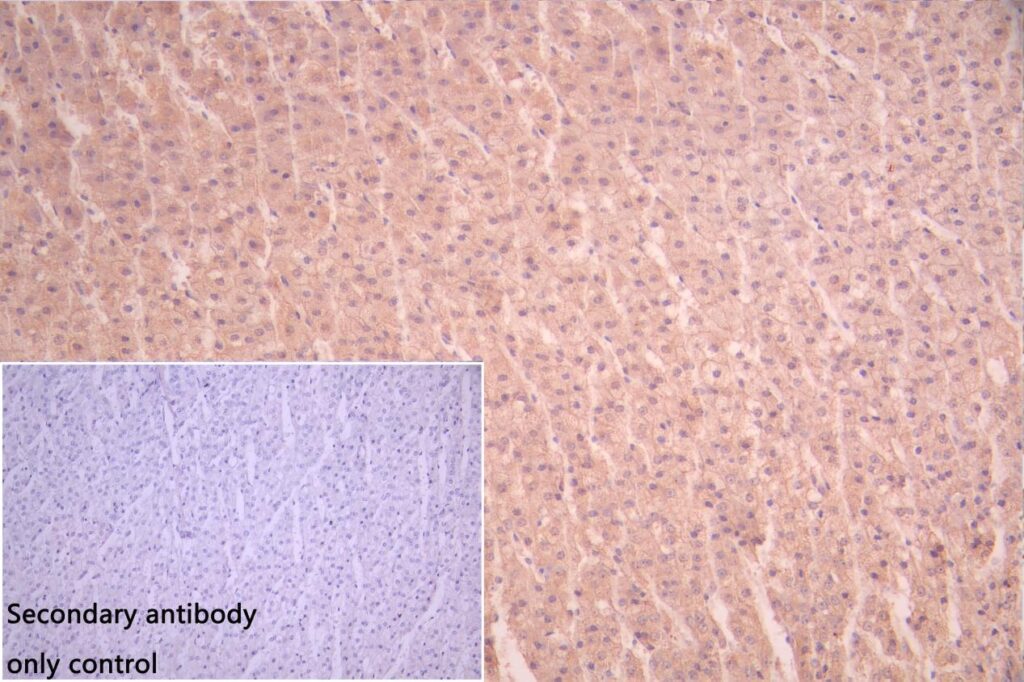
The antibody against GPIHBP1 was raised in rabbit using the Recombinant Human Glycosylphosphatidylinositol-anchored high density lipoprotein-binding protein 1 protein (21-151AA) as the immunogen. This antibody exists as a non-conjugated isotype IgG, purified by protein G with a purity greater than 95%. This antibody has been validated on ELISA, WB, IHC.
$299.00
| Cat.No | ADC-10302A | Clonality | Polyclonal |
|---|---|---|---|
| Host Species | Rabbit | Target Name | GPIHBP1 |
| Target Synonyms | GPIHBP1; HBP1; Glycosylphosphatidylinositol-anchored high density lipoprotein-binding protein 1; GPI-HBP1; GPI-anchored HDL-binding protein 1; High density lipoprotein-binding protein 1 | Form | Liquid |
| Species Reactivity | Human, Mouse, Rat | Isotype | IgG |
| Storage Buffer | 0.01M PBS, 0.03% Proclin 300; Constituents: 50% Glycerol, PH 7.4 | Purification Method | >95%, Protein G purified |
| Conjugate | Non-conjugated | Application | ELISA, IHC, WB |
| Storage | Upon receipt |
| Immunogen Description | Recombinant Human Glycosylphosphatidylinositol-anchored high density lipoprotein-binding protein 1 protein (21-151AA) | Target Species | Human |
|---|---|---|---|
| Immunogen Sequence | Complete sequences for the immunogen, target protein, and peptides are available upon request. | Uniprot ID | Q8IV16 |
Uniprot Id
Q8IV16
Target Species
Human
Target Name
GPIHBP1
Target Full Name
Glycosylphosphatidylinositol-anchored high density lipoprotein-binding protein 1
Target Function
Mediates the transport of lipoprotein lipase LPL from the basolateral to the apical surface of endothelial cells in capillaries. Anchors LPL on the surface of endothelial cells in the lumen of blood capillaries. Protects LPL against loss of activity, and against ANGPTL4-mediated unfolding. Thereby, plays an important role in lipolytic processing of chylomicrons by LPL, triglyceride metabolism and lipid homeostasis. Binds chylomicrons and phospholipid particles that contain APOA5. Binds high-density lipoprotein (HDL) and plays a role in the uptake of lipids from HDL.
Target Involvement
Hyperlipoproteinemia 1D (HLPP1D)
Target Subcellular Location
Apical cell membrane; Lipid-anchor, GPI-anchor. Basolateral cell membrane; Lipid-anchor, GPI-anchor. Cell membrane; Lipid-anchor, GPI-anchor.
Target Synonyms
GPIHBP1; HBP1; Glycosylphosphatidylinositol-anchored high density lipoprotein-binding protein 1; GPI-HBP1; GPI-anchored HDL-binding protein 1; High density lipoprotein-binding protein 1
Target Background
This gene encodes a capillary endothelial cell protein that facilitates the lipolytic processing of triglyceride-rich lipoproteins. The encoded protein is a glycosylphosphatidylinositol-anchored protein that is a member of the lymphocyte antigen 6 (Ly6) family. This protein plays a major role in transporting lipoprotein lipase (LPL) from the subendothelial spaces to the capillary lumen. Mutations in this gene are the cause of hyperlipoproteinemia, type 1D. Alternate splicing results in multiple transcript variants.
Notification