-
Chinese (Simplified)
-
English
-
German
-
Korean
-
Spanish
Chinese (Simplified)
English
German
Korean
Spanish
Sign up for an account to enjoy easy online shopping and instant order tracking.
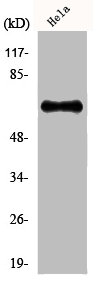
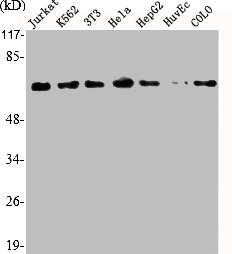
The antibody against GRK5 was raised in rabbit using the Synthesized peptide derived from the Internal region of Human GRK 5. as the immunogen. This antibody exists as a non-conjugated isotype IgG. The antibody was affinity-purified from rabbit antiserum by affinity-chromatography using epitope-specific immunogen. This antibody has been validated on WB, IHC, ELISA.
$167.00
| Cat.No | ADC-38540A | Clonality | Polyclonal |
|---|---|---|---|
| Host Species | Rabbit | Target Name | GRK5 |
| Form | Liquid | Species Reactivity | Human, Mouse, Rat |
| Isotype | IgG | Storage Buffer | 0.5% BSA and 0.02% sodium azide., Liquid in PBS containing 50% glycerol |
| Purification Method | The antibody was affinity-purified from rabbit antiserum by affinity-chromatography using epitope-specific immunogen. | Conjugate | Non-conjugated |
| Application | ELISA, IHC, WB | Storage | Upon receipt |
| Immunogen Description | Synthesized peptide derived from the Internal region of Human GRK 5. | Target Species | Human |
|---|---|---|---|
| Immunogen Sequence | Complete sequences for the immunogen, target protein, and peptides are available upon request. | Uniprot ID | P34947 |
Uniprot Id
P34947
Target Species
Human
Target Name
GRK5
Target Full Name
G protein-coupled receptor kinase 5
Target Function
Serine/threonine kinase that phosphorylates preferentially the activated forms of a variety of G-protein-coupled receptors (GPCRs). Such receptor phosphorylation initiates beta-arrestin-mediated receptor desensitization, internalization, and signaling events leading to their down-regulation. Phosphorylates a variety of GPCRs, including adrenergic receptors, muscarinic acetylcholine receptors (more specifically Gi-coupled M2/M4 subtypes), dopamine receptors and opioid receptors. In addition to GPCRs, also phosphorylates various substrates: Hsc70-interacting protein/ST13, TP53/p53, HDAC5, and arrestin-1/ARRB1. Phosphorylation of ARRB1 by GRK5 inhibits G-protein independent MAPK1/MAPK3 signaling downstream of 5HT4-receptors. Phosphorylation of HDAC5, a repressor of myocyte enhancer factor 2 (MEF2) leading to nuclear export of HDAC5 and allowing MEF2-mediated transcription. Phosphorylation of TP53/p53, a crucial tumor suppressor, inhibits TP53/p53-mediated apoptosis. Phosphorylation of ST13 regulates internalization of the chemokine receptor. Phosphorylates rhodopsin (RHO) (in vitro) and a non G-protein-coupled receptor, LRP6 during Wnt signaling (in vitro).
Target Subcellular Location
Cytoplasm. Nucleus. Cell membrane; Peripheral membrane protein. Note=Predominantly localized at the plasma membrane; targeted to the cell surface through the interaction with phospholipids. Nucleus localization is regulated in a GPCR and Ca(2+)/calmodulin-dependent fashion.
Target Protein Families
Protein kinase superfamily, AGC Ser/Thr protein kinase family, GPRK subfamily
Target Tissue Specificity
Highest levels in heart, placenta, lung > skeletal muscle > brain, liver, pancreas > kidney.
Target Synonyms
FLJ39780; FP2025; G protein coupled receptor kinase 5; G protein coupled receptor kinase GRK5; G protein-coupled receptor kinase 5; G protein-coupled receptor kinase GRK5; GPRK5; GRK-pan; GRK5; GRK5_HUMAN; Pan-GRK
Target Background
This gene encodes a member of the guanine nucleotide-binding protein (G protein)-coupled receptor kinase subfamily of the Ser/Thr protein kinase family. The protein phosphorylates the activated forms of G protein-coupled receptors thus initiating their deactivation. It has also been shown to play a role in regulating the motility of polymorphonuclear leukocytes (PMNs).
Notification