-
Chinese (Simplified)
-
English
-
German
-
Korean
-
Spanish
Chinese (Simplified)
English
German
Korean
Spanish
Sign up for an account to enjoy easy online shopping and instant order tracking.
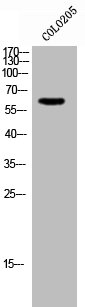
The antibody against GTF2H2 was raised in rabbit using the Synthesized peptide derived from the N-terminal region of Human TFIIH p44. as the immunogen. This antibody exists as a non-conjugated isotype IgG. The antibody was affinity-purified from rabbit antiserum by affinity-chromatography using epitope-specific immunogen. This antibody has been validated on WB, IHC, IF, ELISA.
$167.00
| Cat.No | ADC-35458A | Clonality | Polyclonal |
|---|---|---|---|
| Host Species | Rabbit | Target Name | GTF2H2 |
| Form | Liquid | Species Reactivity | Human, Mouse, Rat |
| Isotype | IgG | Storage Buffer | 0.5% BSA and 0.02% sodium azide., Liquid in PBS containing 50% glycerol |
| Purification Method | The antibody was affinity-purified from rabbit antiserum by affinity-chromatography using epitope-specific immunogen. | Conjugate | Non-conjugated |
| Application | ELISA, IF, IHC, WB | Storage | Upon receipt |
| Immunogen Description | Synthesized peptide derived from the N-terminal region of Human TFIIH p44. | Target Species | Human |
|---|---|---|---|
| Immunogen Sequence | Complete sequences for the immunogen, target protein, and peptides are available upon request. | Uniprot ID | Q13888 |
Uniprot Id
Q13888
Target Species
Human
Target Name
GTF2H2
Target Full Name
General transcription factor IIH subunit 2
Target Function
Component of the general transcription and DNA repair factor IIH (TFIIH) core complex, which is involved in general and transcription-coupled nucleotide excision repair (NER) of damaged DNA and, when complexed to CAK, in RNA transcription by RNA polymerase II. In NER, TFIIH acts by opening DNA around the lesion to allow the excision of the damaged oligonucleotide and its replacement by a new DNA fragment. In transcription, TFIIH has an essential role in transcription initiation. When the pre-initiation complex (PIC) has been established, TFIIH is required for promoter opening and promoter escape. Phosphorylation of the C-terminal tail (CTD) of the largest subunit of RNA polymerase II by the kinase module CAK controls the initiation of transcription. The N-terminus of GTF2H2 interacts with and regulates XPD whereas an intact C-terminus is required for a successful escape of RNAP II form the promoter.
Target Subcellular Location
Nucleus.
Target Protein Families
GTF2H2 family
Target Tissue Specificity
Widely expressed, with higher expression in skeletal muscle.
Target Synonyms
Basic transcription factor 2 44 kDa subunit; BTF2; BTF2 p44; BTF2-p44; BTF2P44; General transcription factor IIH; General transcription factor IIH polypeptide 2; General transcription factor IIH subunit 2; General transcription factor IIH; polypeptide 2; 44kDa; Gtf2h2; MGC102806; p44; T BTF2P44 ; T-BTF2P44; TF2H2_HUMAN; TFIIH; TFIIH basal transcription factor complex p44 subunit
Target Background
This gene is part of a 500 kb inverted duplication on chromosome 5q13. This duplicated region contains at least four genes and repetitive elements which make it prone to rearrangements and deletions. The repetitiveness and complexity of the sequence have also caused difficulty in determining the organization of this genomic region. This gene is within the telomeric copy of the duplication. Deletion of this gene sometimes accompanies deletion of the neighboring SMN1 gene in spinal muscular atrophy (SMA) patients but it is unclear if deletion of this gene contributes to the SMA phenotype. This gene encodes the 44 kDa subunit of RNA polymerase II transcription initiation factor IIH which is involved in basal transcription and nucleotide excision repair. Transcript variants for this gene have been described, but their full length nature has not been determined. A second copy of this gene within the centromeric copy of the duplication has been described in the literature. It is reported to be different by either two or four base pairs; however, no sequence data is currently available for the centromeric copy of the gene.
Notification