• Contact info@abtriva.com for inquiries and orders.
  • Chinese (Simplified)

  • English

  • German

  • Korean

  • Spanish

United States (English / $ USD)

Rabbit anti-Human HNRNPK Polyclonal Antibody

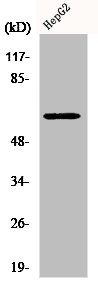
The antibody against HNRNPK was raised in rabbit using the Synthesized peptide derived from Human hnRNP K around the non-phosphorylation site of S284. as the immunogen. This antibody exists as a non-conjugated isotype IgG. The antibody was affinity-purified from rabbit antiserum by affinity-chromatography using epitope-specific immunogen. This antibody has been validated on WB, IHC, ELISA.

ADC-38472A

The antibody against HNRNPK was raised in rabbit using the Synthesized peptide derived from Human hnRNP K around the non-phosphorylation site of S284. as the immunogen. This antibody exists as a non-conjugated isotype IgG. The antibody was affinity-purified from rabbit antiserum by affinity-chromatography using epitope-specific immunogen. This antibody has been validated on WB, IHC, ELISA.

$167.00

Number
Order Exclusive Products Now

Request a Quote
High Purity LevelsPrecision and ReliabilityCustomization Options

Specifications


Cat.No ADC-38472A ClonalityPolyclonal
Host SpeciesRabbitTarget NameHNRNPK
FormLiquidSpecies ReactivityHuman, Mouse, Rat
IsotypeIgGStorage Buffer0.5% BSA and 0.02% sodium azide., Liquid in PBS containing 50% glycerol
Purification MethodThe antibody was affinity-purified from rabbit antiserum by affinity-chromatography using epitope-specific immunogen.ConjugateNon-conjugated
ApplicationELISA, IHC, WBStorageUpon receipt

Immunogen Information


Immunogen DescriptionSynthesized peptide derived from Human hnRNP K around the non-phosphorylation site of S284.Target SpeciesHuman
Immunogen SequenceComplete sequences for the immunogen, target protein, and peptides are available upon request.Uniprot IDP61978
Background Information
  • Uniprot Id

    P61978

  • Target Species

    Human

  • Target Name

    HNRNPK

  • Target Full Name

    Heterogeneous nuclear ribonucleoprotein K

  • Target Function

    One of the major pre-mRNA-binding proteins. Binds tenaciously to poly(C) sequences. Likely to play a role in the nuclear metabolism of hnRNAs, particularly for pre-mRNAs that contain cytidine-rich sequences. Can also bind poly(C) single-stranded DNA. Plays an important role in p53/TP53 response to DNA damage, acting at the level of both transcription activation and repression. When sumoylated, acts as a transcriptional coactivator of p53/TP53, playing a role in p21/CDKN1A and 14-3-3 sigma/SFN induction. As far as transcription repression is concerned, acts by interacting with long intergenic RNA p21 (lincRNA-p21), a non-coding RNA induced by p53/TP53. This interaction is necessary for the induction of apoptosis, but not cell cycle arrest.

  • Target Involvement

    Au-Kline syndrome (AUKS)

  • Target Subcellular Location

    Cytoplasm. Nucleus, nucleoplasm. Cell projection, podosome. Note=Recruited to p53/TP53-responsive promoters, in the presence of functional p53/TP53 (PubMed:16360036). In case of ASFV infection, there is a shift in the localization which becomes predominantly nuclear (PubMed:18775702).

  • Target Research Area

    Immunology, Epigenetics and Nuclear Signaling

  • Target Synonyms

    CSBP; dC stretch binding protein; FLJ41122; Heterogeneous nuclear ribonucleoprotein K; hnRNP K; HNRNPK; HNRPK; HNRPK_HUMAN; Transformation up regulated nuclear protein; Transformation up-regulated nuclear protein; Transformation upregulated nuclear protein; TUNP

  • Target Background

    This gene belongs to the subfamily of ubiquitously expressed heterogeneous nuclear ribonucleoproteins (hnRNPs). The hnRNPs are RNA binding proteins and they complex with heterogeneous nuclear RNA (hnRNA). These proteins are associated with pre-mRNAs in the nucleus and appear to influence pre-mRNA processing and other aspects of mRNA metabolism and transport. While all of the hnRNPs are present in the nucleus, some seem to shuttle between the nucleus and the cytoplasm. The hnRNP proteins have distinct nucleic acid binding properties. The protein encoded by this gene is located in the nucleoplasm and has three repeats of KH domains that binds to RNAs. It is distinct among other hnRNP proteins in its binding preference; it binds tenaciously to poly(C). This protein is also thought to have a role during cell cycle progession. Several alternatively spliced transcript variants have been described for this gene, however, not all of them are fully characterized.

Inquire Rabbit anti-Human HNRNPK Polyclonal Antibody Now


AbTriva respects your privacy and protects your personal data in accordance with AbTriva. For more information, please see our data protection statement. *

Notification