-
Chinese (Simplified)
-
English
-
German
-
Korean
-
Spanish

Chinese (Simplified)
English
German
Korean
Spanish
Sign up for an account to enjoy easy online shopping and instant order tracking.
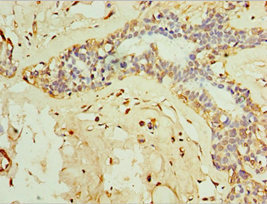
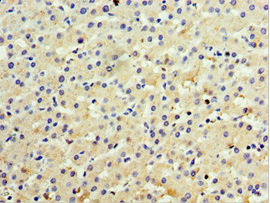
The antibody against IFNL3 was raised in rabbit using the Recombinant Human Interferon lambda-3 protein (22-196AA) as the immunogen. This antibody exists as a non-conjugated isotype IgG, Antigen affinity purified. This antibody has been validated on ELISA, IHC.
$299.00
| Cat.No | ADC-40317A | Clonality | Polyclonal |
|---|---|---|---|
| Host Species | Rabbit | Target Name | IFNL3 |
| Form | Liquid | Species Reactivity | Human |
| Isotype | IgG | Storage Buffer | 50% Glycerol, PBS with 0.02% sodium azide, pH7.3. |
| Purification Method | Antigen affinity purified | Conjugate | Non-conjugated |
| Application | ELISA, IHC | Storage | Upon receipt |
| Immunogen Description | Recombinant Human Interferon lambda-3 protein (22-196AA) | Target Species | Human |
|---|---|---|---|
| Immunogen Sequence | Complete sequences for the immunogen, target protein, and peptides are available upon request. | Uniprot ID | Q8IZI9 |
Uniprot Id
Q8IZI9
Target Species
Human
Target Name
IFNL3
Target Full Name
Interferon lambda-3
Target Function
Cytokine with antiviral, antitumour and immunomodulatory activities. Plays a critical role in the antiviral host defense, predominantly in the epithelial tissues. Acts as a ligand for the heterodimeric class II cytokine receptor composed of IL10RB and IFNLR1, and receptor engagement leads to the activation of the JAK/STAT signaling pathway resulting in the expression of IFN-stimulated genes (ISG), which mediate the antiviral state. Has a restricted receptor distribution and therefore restricted targets: is primarily active in epithelial cells and this cell type-selective action is because of the epithelial cell-specific expression of its receptor IFNLR1. Seems not to be essential for early virus-activated host defense in vaginal infection, but plays an important role in Toll-like receptor (TLR)-induced antiviral defense. Plays a significant role in the antiviral immune defense in the intestinal epithelium. Exerts an immunomodulatory effect by up-regulating MHC class I antigen expression.
Target Subcellular Location
Secreted.
Target Protein Families
Lambda interferon family
Target Synonyms
Cytokine ZCYTO22; IFN-lambda-3; IFN-lambda-4; IL-28B; IL-28C; IL28B; IL28B_HUMAN; IL28C; Interferon lambda-3; Interferon lambda-4; interleukin 28B (interferon; lambda 3); Interleukin 28C; Interleukin-28B; Interleukin-28C
Target Background
This gene encodes a cytokine distantly related to type I interferons and the IL-10 family. This gene, interleukin 28A (IL28A), and interleukin 29 (IL29) are three closely related cytokine genes that form a cytokine gene cluster on a chromosomal region mapped to 19q13. Expression of the cytokines encoded by the three genes can be induced by viral infection. All three cytokines have been shown to interact with a heterodimeric class II cytokine receptor that consists of interleukin 10 receptor, beta (IL10RB) and interleukin 28 receptor, alpha (IL28RA).
Notification