-
Chinese (Simplified)
-
English
-
German
-
Korean
-
Spanish
Chinese (Simplified)
English
German
Korean
Spanish
Sign up for an account to enjoy easy online shopping and instant order tracking.
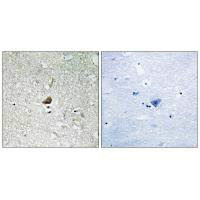
The antibody against IRAK1 was raised in rabbit using the Synthesized peptide derived from Internal of Human IRAK1. as the immunogen. The antibody was affinity-purified from rabbit antiserum by affinity-chromatography using epitope-specific immunogen. This antibody has been validated on ELISA, IHC.
$297.00
| Cat.No | ADC-42550A | Clonality | Polyclonal |
|---|---|---|---|
| Host Species | Rabbit | Target Name | IRAK1 |
| Form | Liquid | Species Reactivity | Human |
| Storage Buffer | PH 7.4, 0.02% sodium azide and 50% glycerol., 150mM NaCl, Rabbit IgG in phosphate buffered saline (without Mg2+ and Ca2+) | Purification Method | The antibody was affinity-purified from rabbit antiserum by affinity-chromatography using epitope-specific immunogen. |
| Application | ELISA, IHC | Storage | Upon receipt |
| Immunogen Description | Synthesized peptide derived from Internal of Human IRAK1. | Target Species | Human |
|---|---|---|---|
| Immunogen Sequence | Complete sequences for the immunogen, target protein, and peptides are available upon request. | Uniprot ID | P51617 |
Uniprot Id
P51617
Target Species
Human
Target Name
IRAK1
Target Full Name
Interleukin-1 receptor-associated kinase 1
Target Function
Serine/threonine-protein kinase that plays a critical role in initiating innate immune response against foreign pathogens. Involved in Toll-like receptor (TLR) and IL-1R signaling pathways. Is rapidly recruited by MYD88 to the receptor-signaling complex upon TLR activation. Association with MYD88 leads to IRAK1 phosphorylation by IRAK4 and subsequent autophosphorylation and kinase activation. Phosphorylates E3 ubiquitin ligases Pellino proteins (PELI1, PELI2 and PELI3) to promote pellino-mediated polyubiquitination of IRAK1. Then, the ubiquitin-binding domain of IKBKG/NEMO binds to polyubiquitinated IRAK1 bringing together the IRAK1-MAP3K7/TAK1-TRAF6 complex and the NEMO-IKKA-IKKB complex. In turn, MAP3K7/TAK1 activates IKKs (CHUK/IKKA and IKBKB/IKKB) leading to NF-kappa-B nuclear translocation and activation. Alternatively, phosphorylates TIRAP to promote its ubiquitination and subsequent degradation. Phosphorylates the interferon regulatory factor 7 (IRF7) to induce its activation and translocation to the nucleus, resulting in transcriptional activation of type I IFN genes, which drive the cell in an antiviral state. When sumoylated, translocates to the nucleus and phosphorylates STAT3.
Target Subcellular Location
Cytoplasm. Nucleus. Lipid droplet.
Target Protein Families
Protein kinase superfamily, TKL Ser/Thr protein kinase family, Pelle subfamily
Target Tissue Specificity
Isoform 1 and isoform 2 are ubiquitously expressed in all tissues examined, with isoform 1 being more strongly expressed than isoform 2.
Target Synonyms
AA48924; Il1rak; Interleukin 1 receptor associated kinase 1; Interleukin-1 receptor-associated kinase 1; IRAK; IRAK-1; Irak1; IRAK1-S; IRAK1_HUMAN; mPLK; OTTHUMP00000026014; OTTHUMP00000026015; OTTHUMP00000026020; OTTHUMP00000180621; Pelle; Pelle homolog; Pelle-like protein kinase; Plpk
Target Background
This gene encodes the interleukin-1 receptor-associated kinase 1, one of two putative serine/threonine kinases that become associated with the interleukin-1 receptor (IL1R) upon stimulation. This gene is partially responsible for IL1-induced upregulation of the transcription factor NF-kappa B. Alternatively spliced transcript variants encoding different isoforms have been found for this gene.
Notification