• Contact info@abtriva.com for inquiries and orders.
  • Chinese (Simplified)

  • English

  • German

  • Korean

  • Spanish

United States (English / $ USD)

Rabbit anti-Human KREMEN1 Polyclonal Antibody

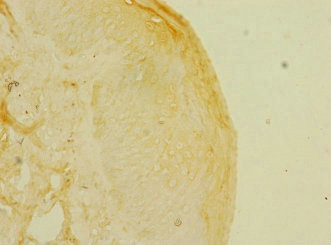
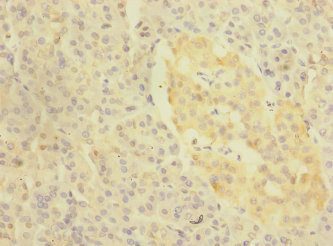
The antibody against KREMEN1 was raised in rabbit using the Recombinant Human Kremen protein 1 protein (180-380AA) as the immunogen. This antibody exists as a non-conjugated isotype IgG, Antigen affinity purified. This antibody has been validated on ELISA, IHC.

ADC-16303A

The antibody against KREMEN1 was raised in rabbit using the Recombinant Human Kremen protein 1 protein (180-380AA) as the immunogen. This antibody exists as a non-conjugated isotype IgG, Antigen affinity purified. This antibody has been validated on ELISA, IHC.

$299.00

Number
Order Exclusive Products Now

Request a Quote
High Purity LevelsPrecision and ReliabilityCustomization Options

Specifications


Cat.No ADC-16303A ClonalityPolyclonal
Host SpeciesRabbitTarget NameKREMEN1
FormLiquidSpecies ReactivityHuman
IsotypeIgGStorage Buffer50% Glycerol, PBS with 0.02% sodium azide, pH7.3.
Purification MethodAntigen affinity purifiedConjugateNon-conjugated
ApplicationELISA, IHCStorageUpon receipt

Immunogen Information


Immunogen DescriptionRecombinant Human Kremen protein 1 protein (180-380AA)Target SpeciesHuman
Immunogen SequenceComplete sequences for the immunogen, target protein, and peptides are available upon request.Uniprot IDQ96MU8
Background Information
  • Uniprot Id

    Q96MU8

  • Target Species

    Human

  • Target Name

    KREMEN1

  • Target Full Name

    Kremen protein 1

  • Target Function

    Receptor for Dickkopf proteins. Cooperates with DKK1/2 to inhibit Wnt/beta-catenin signaling by promoting the endocytosis of Wnt receptors LRP5 and LRP6. In the absence of DKK1, potentiates Wnt-beta-catenin signaling by maintaining LRP5 or LRP6 at the cell membrane. Can trigger apoptosis in a Wnt-independent manner and this apoptotic activity is inhibited upon binding of the ligand DKK1. Plays a role in limb development; attenuates Wnt signaling in the developing limb to allow normal limb patterning and can also negatively regulate bone formation. Modulates cell fate decisions in the developing cochlea with an inhibitory role in hair cell fate specification.

  • Target Involvement

    Ectodermal dysplasia 13, hair/tooth type (ECTD13)

  • Target Subcellular Location

    Cell membrane; Single-pass type I membrane protein.

  • Target Synonyms

    AV002070; Dickkopf receptor; KREM1_HUMAN; KREMEN; Kremen protein 1; Kremen protein 1 precursor; Kremen1; Kringle coding gene marking the eye and the nose; Kringle containing protein marking the eye and the nose; Kringle containing transmembrane protein 1; Kringle containing transmembrane protein; Kringle domain containing transmembrane protein 1; Kringle domain-containing transmembrane protein 1; Kringle-containing protein marking the eye and the nose; KRM1; RP23 293J16.1

  • Target Background

    This gene encodes a high-affinity dickkopf homolog 1 (DKK1) transmembrane receptor that functionally cooperates with DKK1 to block wingless (WNT)/beta-catenin signaling. The encoded protein is a component of a membrane complex that modulates canonical WNT signaling through lipoprotein receptor-related protein 6 (LRP6). It contains extracellular kringle, WSC, and CUB domains. Mutations in this gene result in ectodermal dysplasia. This protein has also been found to be a functional receptor for Coxsackievirus A10 and may be an alternative entry receptor for SARS-CoV-2.

Inquire Rabbit anti-Human KREMEN1 Polyclonal Antibody Now


AbTriva respects your privacy and protects your personal data in accordance with AbTriva. For more information, please see our data protection statement. *

Notification