-
Chinese (Simplified)
-
English
-
German
-
Korean
-
Spanish
Chinese (Simplified)
English
German
Korean
Spanish
Sign up for an account to enjoy easy online shopping and instant order tracking.
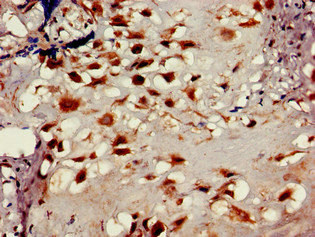
The antibody against LOXL2 was raised in rabbit using the Recombinant Human Lysyl oxidase homolog 2 protein (27-121AA) as the immunogen. This antibody exists as a non-conjugated isotype IgG, purified by protein G with a purity greater than 95%. This antibody has been validated on ELISA, WB, IHC.
$299.00
| Cat.No | ADC-09977A | Clonality | Polyclonal |
|---|---|---|---|
| Host Species | Rabbit | Target Name | LOXL2 |
| Form | Liquid | Species Reactivity | Human, Mouse, Rat |
| Isotype | IgG | Storage Buffer | 0.01M PBS, 0.03% Proclin 300; Constituents: 50% Glycerol, PH 7.4 |
| Purification Method | >95%, Protein G purified | Conjugate | Non-conjugated |
| Application | ELISA, IHC, WB | Storage | Upon receipt |
| Immunogen Description | Recombinant Human Lysyl oxidase homolog 2 protein (27-121AA) | Target Species | Human |
|---|---|---|---|
| Immunogen Sequence | Complete sequences for the immunogen, target protein, and peptides are available upon request. | Uniprot ID | Q9Y4K0 |
Uniprot Id
Q9Y4K0
Target Species
Human
Target Name
LOXL2
Target Full Name
Lysyl oxidase homolog 2
Target Function
Mediates the post-translational oxidative deamination of lysine residues on target proteins leading to the formation of deaminated lysine (allysine). Acts as a transcription corepressor and specifically mediates deamination of trimethylated 'Lys-4' of histone H3 (H3K4me3), a specific tag for epigenetic transcriptional activation. Shows no activity against histone H3 when it is trimethylated on 'Lys-9' (H3K9me3) or 'Lys-27' (H3K27me3) or when 'Lys-4' is monomethylated (H3K4me1) or dimethylated (H3K4me2). Also mediates deamination of methylated TAF10, a member of the transcription factor IID (TFIID) complex, which induces release of TAF10 from promoters, leading to inhibition of TFIID-dependent transcription. LOXL2-mediated deamination of TAF10 results in transcriptional repression of genes required for embryonic stem cell pluripotency including POU5F1/OCT4, NANOG, KLF4 and SOX2. Involved in epithelial to mesenchymal transition (EMT) via interaction with SNAI1 and participates in repression of E-cadherin CDH1, probably by mediating deamination of histone H3. During EMT, involved with SNAI1 in negatively regulating pericentromeric heterochromatin transcription. SNAI1 recruits LOXL2 to pericentromeric regions to oxidize histone H3 and repress transcription which leads to release of heterochromatin component CBX5/HP1A, enabling chromatin reorganization and acquisition of mesenchymal traits. Interacts with the endoplasmic reticulum protein HSPA5 which activates the IRE1-XBP1 pathway of the unfolded protein response, leading to expression of several transcription factors involved in EMT and subsequent EMT induction. Involved in E-cadherin repression following hypoxia, a hallmark of EMT believed to amplify tumor aggressiveness, suggesting that it may play a role in tumor progression. When secreted into the extracellular matrix, promotes cross-linking of extracellular matrix proteins by mediating oxidative deamination of peptidyl lysine residues in precursors to fibrous collagen and elastin. Acts as a regulator of sprouting angiogenesis, probably via collagen IV scaffolding. Acts as a regulator of chondrocyte differentiation, probably by regulating expression of factors that control chondrocyte differentiation.
Target Subcellular Location
Secreted, extracellular space, extracellular matrix, basement membrane. Nucleus. Chromosome. Endoplasmic reticulum.
Target Protein Families
Lysyl oxidase family
Target Tissue Specificity
Expressed in many tissues. Highest expression in reproductive tissues, placenta, uterus and prostate. In esophageal epithelium, expressed in the basal, prickle and granular cell layers. Up-regulated in a number of cancers cells and tissues.
Target Synonyms
LOR 2; LOR2; LOX L2; LOXL 2; LOXL2; LOXL2_HUMAN; Lysyl oxidase homolog 2; Lysyl oxidase like 2; Lysyl oxidase like protein 2; Lysyl oxidase related 2; Lysyl oxidase related protein 2; Lysyl oxidase related protein WS9 14; Lysyl oxidase-like protein 2; Lysyl oxidase-related protein 2; Lysyl oxidase-related protein WS9-14; WS9 14
Target Background
This gene encodes a member of the lysyl oxidase gene family. The prototypic member of the family is essential to the biogenesis of connective tissue, encoding an extracellular copper-dependent amine oxidase that catalyses the first step in the formation of crosslinks in collagens and elastin. A highly conserved amino acid sequence at the C-terminus end appears to be sufficient for amine oxidase activity, suggesting that each family member may retain this function. The N-terminus is poorly conserved and may impart additional roles in developmental regulation, senescence, tumor suppression, cell growth control, and chemotaxis to each member of the family.
Notification