-
Chinese (Simplified)
-
English
-
German
-
Korean
-
Spanish
Chinese (Simplified)
English
German
Korean
Spanish
Sign up for an account to enjoy easy online shopping and instant order tracking.
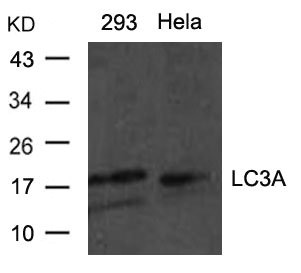
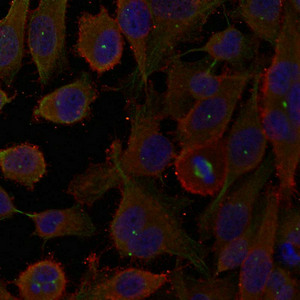
The antibody against MAP1LC3A was raised in rabbit using the Peptide sequence around aa.5~10 (R-P-F-K-Q) derived from Human LC3A. as the immunogen. Antibodies were produced by immunizing rabbits with synthetic peptide and KLH conjugates. Antibodies were purified by affinity-chromatography using epitope-specific peptide. This antibody has been validated on ELISA, WB, IF.
$297.00
| Cat.No | ADC-43294A | Clonality | Polyclonal |
|---|---|---|---|
| Host Species | Rabbit | Target Name | MAP1LC3A |
| Target Synonyms | light chain 3 antibody; Microtubule-associated proteins 1A/1B light chain 3A antibody; MLP3A_HUMAN antibody | Form | Liquid |
| Species Reactivity | Human, Mouse, Rat | Storage Buffer | PH 7.4, 0.02% sodium azide and 50% glycerol., 150mM NaCl, Supplied at 1.0mg/mL in phosphate buffered saline (without Mg2+ and Ca2+) |
| Purification Method | Antibodies were produced by immunizing rabbits with synthetic peptide and KLH conjugates. Antibodies were purified by affinity-chromatography using epitope-specific peptide. | Application | ELISA, IF, WB |
| Storage | Upon receipt |
| Immunogen Description | Peptide sequence around aa.5~10 (R-P-F-K-Q) derived from Human LC3A. | Target Species | Human |
|---|---|---|---|
| Immunogen Sequence | Complete sequences for the immunogen, target protein, and peptides are available upon request. | Uniprot ID | Q9H492 |
Uniprot Id
Q9H492
Target Species
Human
Target Name
MAP1LC3A
Target Full Name
Microtubule-associated protein 1 light chain 3 alpha
Target Function
Ubiquitin-like modifier involved in formation of autophagosomal vacuoles (autophagosomes). While LC3s are involved in elongation of the phagophore membrane, the GABARAP/GATE-16 subfamily is essential for a later stage in autophagosome maturation. Through its interaction with the reticulophagy receptor TEX264, participates in the remodeling of subdomains of the endoplasmic reticulum into autophagosomes upon nutrient stress, which then fuse with lysosomes for endoplasmic reticulum turnover.
Target Subcellular Location
Cytoplasm, cytoskeleton. Endomembrane system; Lipid-anchor. Cytoplasmic vesicle, autophagosome membrane; Lipid-anchor. Cytoplasmic vesicle, autophagosome. Note=LC3-II binds to the autophagic membranes.
Target Protein Families
ATG8 family
Target Tissue Specificity
Most abundant in heart, brain, liver, skeletal muscle and testis but absent in thymus and peripheral blood leukocytes.
Target Synonyms
ATG8E; Autophagy related protein LC3 A; Autophagy related ubiquitin like modifier LC3 A; Autophagy-related protein LC3 A; Autophagy-related ubiquitin-like modifier LC3 A; LC3; LC3A; MAP1 light chain 3 like protein 1; MAP1 light chain 3-like protein 1; MAP1A/1B light chain 3 A; MAP1A/MAP1B LC3 A; MAP1A/MAP1B light chain 3 A; MAP1ALC3; MAP1BLC3; Map1lc3a; Microtubule associated proteins 1A/1B light chain 3; Microtubule-associated protein 1 light chain 3 alpha; Microtubule-associated proteins 1A and 1B, light chain 3; Microtubule-associated proteins 1A/1B light chain 3A; MLP3A_HUMAN
Target Background
MAP1A and MAP1B are microtubule-associated proteins which mediate the physical interactions between microtubules and components of the cytoskeleton. MAP1A and MAP1B each consist of a heavy chain subunit and multiple light chain subunits. The protein encoded by this gene is one of the light chain subunits and can associate with either MAP1A or MAP1B. Two transcript variants encoding different isoforms have been found for this gene. The expression of variant 1 is suppressed in many tumor cell lines, suggesting that may be involved in carcinogenesis.
Notification