-
Chinese (Simplified)
-
English
-
German
-
Korean
-
Spanish
Chinese (Simplified)
English
German
Korean
Spanish
Sign up for an account to enjoy easy online shopping and instant order tracking.
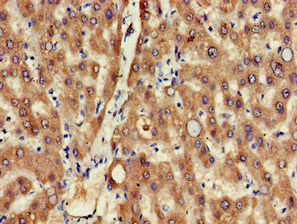
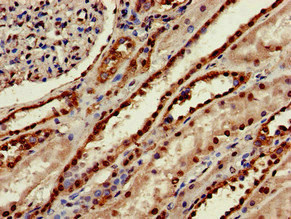
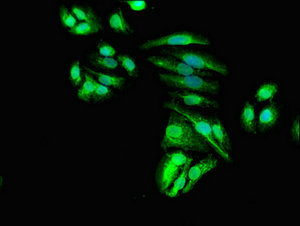
The antibody against MSRB1 was raised in rabbit using the Recombinant Human Methionine-R-sulfoxide reductase B1 protein (1-116AA) as the immunogen. This antibody exists as a non-conjugated isotype IgG, purified by protein G with a purity greater than 95%. This antibody has been validated on ELISA, IHC, IF.
$299.00
| Cat.No | ADC-09788A | Clonality | Polyclonal |
|---|---|---|---|
| Host Species | Rabbit | Target Name | MSRB1 |
| Form | Liquid | Species Reactivity | Human |
| Isotype | IgG | Storage Buffer | 0.01M PBS, 0.03% Proclin 300; Constituents: 50% Glycerol, PH 7.4 |
| Purification Method | >95%, Protein G purified | Conjugate | Non-conjugated |
| Application | ELISA, IF, IHC | Storage | Upon receipt |
| Immunogen Description | Recombinant Human Methionine-R-sulfoxide reductase B1 protein (1-116AA) | Target Species | Human |
|---|---|---|---|
| Immunogen Sequence | Complete sequences for the immunogen, target protein, and peptides are available upon request. | Uniprot ID | Q9NZV6 |
Uniprot Id
Q9NZV6
Target Species
Human
Target Name
MSRB1
Target Full Name
Methionine-R-sulfoxide reductase B1
Target Function
Methionine-sulfoxide reductase that specifically reduces methionine (R)-sulfoxide back to methionine. While in many cases, methionine oxidation is the result of random oxidation following oxidative stress, methionine oxidation is also a post-translational modification that takes place on specific residue. Acts as a regulator of actin assembly by reducing methionine (R)-sulfoxide mediated by MICALs (MICAL1, MICAL2 or MICAL3) on actin, thereby promoting filament repolymerization. Plays a role in innate immunity by reducing oxidized actin, leading to actin repolymerization in macrophages.
Target Subcellular Location
Cytoplasm. Nucleus. Cytoplasm, cytoskeleton.
Target Protein Families
MsrB Met sulfoxide reductase family
Target Synonyms
Annexin A2 like; EC 1 8 4; HSPC 270; HSPC270; Methionine R sulfoxide reductase; Methionine R sulfoxide reductase B1; Methionine sulfoxide reductase; Methionine-R-sulfoxide reductase B1; MGC3344; MSRB 1; MsrB1; MSRB1_HUMAN; OTTHUMP00000159418; Sel X; Selenoprotein R; Selenoprotein X 1; Selenoprotein X; Selenoprotein X1; SELR; SelX; SEPX 1; sepx1
Target Background
The protein encoded by this gene belongs to the methionine-R-sulfoxide reductase B (MsrB) family. Members of this family function as repair enzymes that protect proteins from oxidative stress by catalyzing the reduction of methionine-R-sulfoxides to methionines. This protein is highly expressed in liver and kidney, and is localized to the nucleus and cytosol. It is the only member of the MsrB family that is a selenoprotein, containing a selenocysteine (Sec) residue at its active site. It also has the highest methionine-R-sulfoxide reductase activity compared to other members containing cysteine in place of Sec. Sec is encoded by the UGA codon, which normally signals translation termination. The 3' UTRs of selenoprotein mRNAs contain a conserved stem-loop structure, designated the Sec insertion sequence (SECIS) element, that is necessary for the recognition of UGA as a Sec codon, rather than as a stop signal. A pseudogene of this locus has been identified on chromosome 19.
Notification