• Contact info@abtriva.com for inquiries and orders.
  • Chinese (Simplified)

  • English

  • German

  • Korean

  • Spanish

United States (English / $ USD)

Rabbit anti-Human NPHP4 Polyclonal Antibody

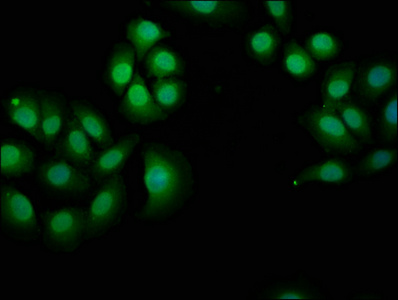
The antibody against NPHP4 was raised in rabbit using the Recombinant Human Nephrocystin-4 protein (397-543AA) as the immunogen. This antibody exists as a non-conjugated isotype IgG, purified by protein G with a purity greater than 95%. This antibody has been validated on ELISA, IHC, IF.

ADC-06832A

The antibody against NPHP4 was raised in rabbit using the Recombinant Human Nephrocystin-4 protein (397-543AA) as the immunogen. This antibody exists as a non-conjugated isotype IgG, purified by protein G with a purity greater than 95%. This antibody has been validated on ELISA, IHC, IF.

$299.00

Number
Order Exclusive Products Now

Request a Quote
High Purity LevelsPrecision and ReliabilityCustomization Options

Specifications


Cat.No ADC-06832A ClonalityPolyclonal
Host SpeciesRabbitTarget NameNPHP4
FormLiquidSpecies ReactivityHuman
IsotypeIgGStorage Buffer0.01M PBS, 0.03% Proclin 300; Constituents: 50% Glycerol, PH 7.4
Purification Method>95%, Protein G purifiedConjugateNon-conjugated
ApplicationELISA, IF, IHCStorageUpon receipt

Immunogen Information


Immunogen DescriptionRecombinant Human Nephrocystin-4 protein (397-543AA)Target SpeciesHuman
Immunogen SequenceComplete sequences for the immunogen, target protein, and peptides are available upon request.Uniprot IDO75161
Background Information
  • Uniprot Id

    O75161

  • Target Species

    Human

  • Target Name

    NPHP4

  • Target Full Name

    Nephrocystin-4

  • Target Function

    Involved in the organization of apical junctions; the function is proposed to implicate a NPHP1-4-8 module. Does not seem to be strictly required for ciliogenesis. Required for building functional cilia. Involved in the organization of the subapical actin network in multiciliated epithelial cells. Seems to recruit INT to basal bodies of motile cilia which subsequently interacts with actin-modifying proteins such as DAAM1. In cooperation with INVS may downregulate the canonical Wnt pathway and promote the Wnt-PCP pathway by regulating expression and subcellular location of disheveled proteins. Stabilizes protein levels of JADE1 and promotes its translocation to the nucleus leading to cooperative inhibition of canonical Wnt signaling. Acts as negative regulator of the hippo pathway by association with LATS1 and modifying LATS1-dependent phosphorylation and localization of WWTR1/TAZ.

  • Target Involvement

    Nephronophthisis 4 (NPHP4); Senior-Loken syndrome 4 (SLSN4)

  • Target Subcellular Location

    Cytoplasm, cytoskeleton, cilium basal body. Cytoplasm, cytoskeleton, microtubule organizing center, centrosome. Cell junction, tight junction. Nucleus.

  • Target Protein Families

    NPHP4 family

  • Target Tissue Specificity

    Expressed in kidney, skeletal muscle, heart and liver, and to a lesser extent in brain and lung.

  • Target Synonyms

    KIAA0673; Nephrocystin-4; nephronophthisis 4; Nephroretinin; NPHP4; NPHP4_HUMAN; POC10; POC10 centriolar protein homolog; SLSN4

  • Target Background

    This gene encodes a protein involved in renal tubular development and function. This protein interacts with nephrocystin, and belongs to a multifunctional complex that is localized to actin- and microtubule-based structures. Mutations in this gene are associated with nephronophthisis type 4, a renal disease, and with Senior-Loken syndrome type 4, a combination of nephronophthisis and retinitis pigmentosa. Alternative splicing results in multiple transcript variants.

Inquire Rabbit anti-Human NPHP4 Polyclonal Antibody Now


AbTriva respects your privacy and protects your personal data in accordance with AbTriva. For more information, please see our data protection statement. *

Notification