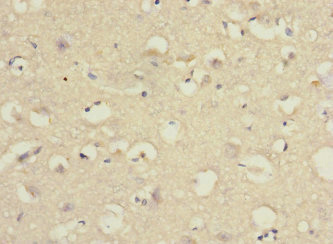
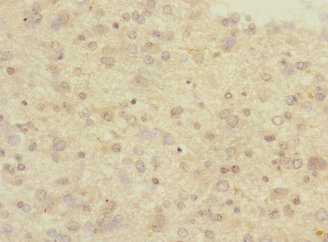
-
Chinese (Simplified)
-
English
-
German
-
Korean
-
Spanish

Chinese (Simplified)
English
German
Korean
Spanish
Sign up for an account to enjoy easy online shopping and instant order tracking.
The antibody against PCDH10 was raised in rabbit using the Recombinant Human Protocadherin-10 protein (515-715AA) as the immunogen. This antibody exists as a non-conjugated isotype IgG, Antigen affinity purified. This antibody has been validated on ELISA, IHC.
$299.00
| Cat.No | ADC-16431A | Clonality | Polyclonal |
|---|---|---|---|
| Host Species | Rabbit | Target Name | PCDH10 |
| Form | Liquid | Species Reactivity | Human |
| Isotype | IgG | Storage Buffer | 50% Glycerol, PBS with 0.02% sodium azide, pH7.3. |
| Purification Method | Antigen affinity purified | Conjugate | Non-conjugated |
| Application | ELISA, IHC | Storage | Upon receipt |
| Immunogen Description | Recombinant Human Protocadherin-10 protein (515-715AA) | Target Species | Human |
|---|---|---|---|
| Immunogen Sequence | Complete sequences for the immunogen, target protein, and peptides are available upon request. | Uniprot ID | Q9P2E7 |
Uniprot Id
Q9P2E7
Target Species
Human
Target Name
PCDH10
Target Full Name
Protocadherin-10
Target Function
Potential calcium-dependent cell-adhesion protein.
Target Subcellular Location
Cell membrane; Single-pass type I membrane protein.
Target Tissue Specificity
Moderately expressed in all regions of the brain examined, as well as in testis and ovary, and low expression in all other tissues tested.
Target Synonyms
DKFZp761O2023; KIAA1400; MGC133344; OL PCDH; Ortholog of OL pcdh; OTTHUMP00000220001; PCD10_HUMAN; PCDH10; PCDH19; Protocadherin 10 ; Protocadherin-10
Target Background
This gene belongs to the protocadherin gene family, a subfamily of the cadherin superfamily. This family member contains 6 extracellular cadherin domains, a transmembrane domain and a cytoplasmic tail differing from those of the classical cadherins. The encoded protein is a cadherin-related neuronal receptor thought to function in the establishment of specific cell-cell connections in the brain. This gene plays a role in inhibiting cancer cell motility and cell migration. Alternative splicing results in multiple transcript variants encoding different isoforms.
Notification