-
Chinese (Simplified)
-
English
-
German
-
Korean
-
Spanish

Chinese (Simplified)
English
German
Korean
Spanish
Sign up for an account to enjoy easy online shopping and instant order tracking.
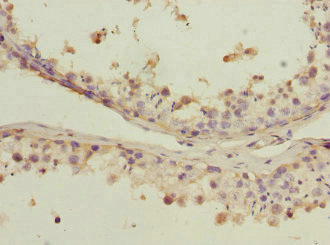
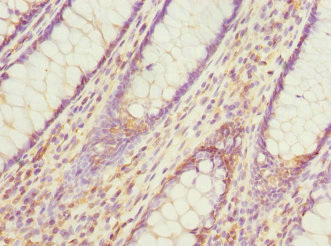
The antibody against PDCD5 was raised in rabbit using the Recombinant Human Programmed cell death protein 5 protein (1-125AA) as the immunogen. This antibody exists as a non-conjugated isotype IgG, Antigen affinity purified. This antibody has been validated on ELISA, IHC.
$299.00
| Cat.No | ADC-17278A | Clonality | Polyclonal |
|---|---|---|---|
| Host Species | Rabbit | Target Name | PDCD5 |
| Form | Liquid | Species Reactivity | Human |
| Isotype | IgG | Storage Buffer | 50% Glycerol, PBS with 0.02% sodium azide, pH7.3. |
| Purification Method | Antigen affinity purified | Conjugate | Non-conjugated |
| Application | ELISA, IHC | Storage | Upon receipt |
| Immunogen Description | Recombinant Human Programmed cell death protein 5 protein (1-125AA) | Target Species | Human |
|---|---|---|---|
| Immunogen Sequence | Complete sequences for the immunogen, target protein, and peptides are available upon request. | Uniprot ID | O14737 |
Uniprot Id
O14737
Target Species
Human
Target Name
PDCD5
Target Full Name
Programmed cell death protein 5
Target Function
May function in the process of apoptosis.
Target Protein Families
PDCD5 family
Target Tissue Specificity
Widely expressed. Highest levels in heart, testis, kidney, pituitary gland, adrenal gland and placenta.
Target Research Area
Cell Biology
Target Synonyms
PDCD5; PDCD5_HUMAN; Programmed cell death protein 5; Protein TFAR19; TF 1 cell apoptosis related protein 19; TF-1 cell apoptosis-related protein 19; TFAR19; TFAR19 novel apoptosis-related
Target Background
This gene encodes a protein that is upregulated during apoptosis where it translocates rapidly from the cytoplasm to the nucleus. The encoded protein may be an important regulator of K(lysine) acetyltransferase 5 (a protein involved in transcription, DNA damage response and cell cycle control) by inhibiting its proteasome-dependent degradation. Pseudogenes have been identified on chromosomes 5 and 12
Notification