-
Chinese (Simplified)
-
English
-
German
-
Korean
-
Spanish

Chinese (Simplified)
English
German
Korean
Spanish
Sign up for an account to enjoy easy online shopping and instant order tracking.
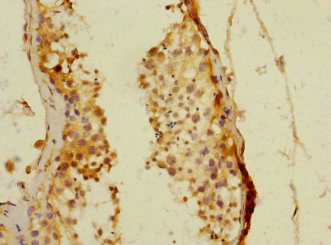
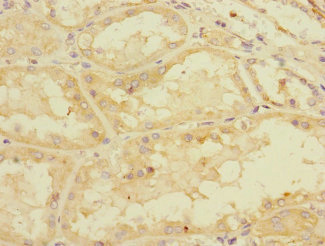
The antibody against PDE4DIP was raised in rabbit using the Recombinant Human Myomegalin protein (1-310AA) as the immunogen. This antibody exists as a non-conjugated isotype IgG, Antigen affinity purified. This antibody has been validated on ELISA, IHC.
$299.00
| Cat.No | ADC-16295A | Clonality | Polyclonal |
|---|---|---|---|
| Host Species | Rabbit | Target Name | PDE4DIP |
| Form | Liquid | Species Reactivity | Human |
| Isotype | IgG | Storage Buffer | 50% Glycerol, PBS with 0.02% sodium azide, pH7.3. |
| Purification Method | Antigen affinity purified | Conjugate | Non-conjugated |
| Application | ELISA, IHC | Storage | Upon receipt |
| Immunogen Description | Recombinant Human Myomegalin protein (1-310AA) | Target Species | Human |
|---|---|---|---|
| Immunogen Sequence | Complete sequences for the immunogen, target protein, and peptides are available upon request. | Uniprot ID | Q5VU43 |
Uniprot Id
Q5VU43
Target Species
Human
Target Name
PDE4DIP
Target Full Name
Myomegalin
Target Function
Functions as an anchor sequestering components of the cAMP-dependent pathway to Golgi and/or centrosomes.; Participates in microtubule dynamics, promoting microtubule assembly. Depending upon the cell context, may act at the level of the Golgi apparatus or that of the centrosome. In complex with AKAP9, recruits CAMSAP2 to the Golgi apparatus and tethers non-centrosomal minus-end microtubules to the Golgi, an important step for polarized cell movement. In complex with AKAP9, EB1/MAPRE1 and CDK5RAP2, contributes to microtubules nucleation and extension from the centrosome to the cell periphery, a crucial process for directed cell migration, mitotic spindle orientation and cell-cycle progression.
Target Involvement
A chromosomal aberration involving PDE4DIP may be the cause of a myeloproliferative disorder (MBD) associated with eosinophilia. Translocation t(1;5)(q23;q33) that forms a PDE4DIP-PDGFRB fusion protein.
Target Subcellular Location
Golgi apparatus. Cytoplasm, cytoskeleton, microtubule organizing center, centrosome.; [Isoform 13]: Cytoplasm, cytoskeleton, microtubule organizing center, centrosome. Cytoplasm, cytoskeleton. Golgi apparatus.
Target Tissue Specificity
Highly expressed in adult and fetal heart, in skeletal muscle and, to a lower extent, in brain and placenta.
Target Research Area
Signal Transduction
Target Synonyms
Cardiomyopathy associated protein 2; Cardiomyopathy-associated protein 2; CMYA2; MMGL; MYOME_HUMAN; Myomegalin; Pde4dip; Phosphodiesterase 4D interacting protein; Phosphodiesterase 4D-interacting protein
Target Background
The protein encoded by this gene serves to anchor phosphodiesterase 4D to the Golgi/centrosome region of the cell. Defects in this gene may be a cause of myeloproliferative disorder (MBD) associated with eosinophilia. Several transcript variants encoding different isoforms have been found for this gene.
Notification