-
Chinese (Simplified)
-
English
-
German
-
Korean
-
Spanish
Chinese (Simplified)
English
German
Korean
Spanish
Sign up for an account to enjoy easy online shopping and instant order tracking.
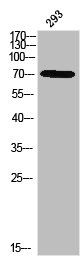
The antibody against ITK was raised in rabbit using the Synthesized peptide derived from Human Emt around the phosphorylation site of Y512. as the immunogen. This antibody exists as a non-conjugated isotype IgG. The antibody was affinity-purified from rabbit antiserum by affinity-chromatography using epitope-specific immunogen. This antibody has been validated on WB, IHC, ELISA.
$167.00
| Cat.No | ADC-32977A | Clonality | Polyclonal |
|---|---|---|---|
| Host Species | Rabbit | Target Name | ITK |
| Form | Liquid | Species Reactivity | Human, Mouse |
| Isotype | IgG | Storage Buffer | 0.5% BSA and 0.02% sodium azide., Liquid in PBS containing 50% glycerol |
| Purification Method | The antibody was affinity-purified from rabbit antiserum by affinity-chromatography using epitope-specific immunogen. | Conjugate | Non-conjugated |
| Application | ELISA, IHC, WB | Storage | Upon receipt |
| Immunogen Description | Synthesized peptide derived from Human Emt around the phosphorylation site of Y512. | Target Species | Human |
|---|---|---|---|
| Immunogen Sequence | Complete sequences for the immunogen, target protein, and peptides are available upon request. | Uniprot ID | Q08881 |
Uniprot Id
Q08881
Target Species
Human
Target Name
ITK
Target Full Name
Tyrosine-protein kinase ITK/TSK
Target Function
Tyrosine kinase that plays an essential role in regulation of the adaptive immune response. Regulates the development, function and differentiation of conventional T-cells and nonconventional NKT-cells. When antigen presenting cells (APC) activate T-cell receptor (TCR), a series of phosphorylation lead to the recruitment of ITK to the cell membrane, in the vicinity of the stimulated TCR receptor, where it is phosphorylated by LCK. Phosphorylation leads to ITK autophosphorylation and full activation. Once activated, phosphorylates PLCG1, leading to the activation of this lipase and subsequent cleavage of its substrates. In turn, the endoplasmic reticulum releases calcium in the cytoplasm and the nuclear activator of activated T-cells (NFAT) translocates into the nucleus to perform its transcriptional duty. Phosphorylates 2 essential adapter proteins: the linker for activation of T-cells/LAT protein and LCP2. Then, a large number of signaling molecules such as VAV1 are recruited and ultimately lead to lymphokine production, T-cell proliferation and differentiation. Required for TCR-mediated calcium response in gamma-delta T-cells, may also be involved in the modulation of the transcriptomic signature in the Vgamma2-positive subset of immature gamma-delta T-cells. Phosphorylates TBX21 at 'Tyr-530' and mediates its interaction with GATA3.
Target Involvement
Lymphoproliferative syndrome 1 (LPFS1)
Target Subcellular Location
Cytoplasm. Nucleus. Note=Localizes in the vicinity of cell surface receptors in the plasma membrane after receptor stimulation.
Target Protein Families
Protein kinase superfamily, Tyr protein kinase family, TEC subfamily
Target Tissue Specificity
T-cell lines and natural killer cell lines.
Target Synonyms
EMT; Homolog of mouse T cell itk/tsk; IL 2 inducible T cell kinase; IL2 inducible T cell kinase; Interleukin 2 inducible T cell kinase; Itk; ITK_HUMAN; Kinase EMT; LPFS1; LYK; MGC126257; MGC126258; PSCTK 2; PSCTK2; T cell specific kinase; T-cell-specific kinase; TSK; Tyrosine protein kinase; Tyrosine protein kinase ITK/TSK; Tyrosine protein kinase Lyk; Tyrosine-protein kinase ITK/TSK; Tyrosine-protein kinase Lyk
Target Background
This gene encodes an intracellular tyrosine kinase expressed in T-cells. The protein contains both SH2 and SH3 domains which are often found in intracellular kinases. It is thought to play a role in T-cell proliferation and differentiation.
Notification