• Contact info@abtriva.com for inquiries and orders.
  • Chinese (Simplified)

  • English

  • German

  • Korean

  • Spanish

United States (English / $ USD)

Rabbit anti-Human Phospho-RAD17 (S646) Polyclonal Antibody

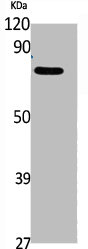
The antibody against RAD17 was raised in rabbit using the Synthesized peptide derived from Human Rad17 around the phosphorylation site of S646. as the immunogen. This antibody exists as a non-conjugated isotype IgG. The antibody was affinity-purified from rabbit antiserum by affinity-chromatography using epitope-specific immunogen. This antibody has been validated on WB, ELISA.

ADC-39442A

The antibody against RAD17 was raised in rabbit using the Synthesized peptide derived from Human Rad17 around the phosphorylation site of S646. as the immunogen. This antibody exists as a non-conjugated isotype IgG. The antibody was affinity-purified from rabbit antiserum by affinity-chromatography using epitope-specific immunogen. This antibody has been validated on WB, ELISA.

$167.00

Number
Order Exclusive Products Now

Request a Quote
High Purity LevelsPrecision and ReliabilityCustomization Options

Specifications


Cat.No ADC-39442A ClonalityPolyclonal
Host SpeciesRabbitTarget NameRAD17
FormLiquidSpecies ReactivityHuman, Mouse, Rat
IsotypeIgGStorage Buffer0.5% BSA and 0.02% sodium azide., Liquid in PBS containing 50% glycerol
Purification MethodThe antibody was affinity-purified from rabbit antiserum by affinity-chromatography using epitope-specific immunogen.ConjugateNon-conjugated
ApplicationELISA, WBStorageUpon receipt

Immunogen Information


Immunogen DescriptionSynthesized peptide derived from Human Rad17 around the phosphorylation site of S646.Target SpeciesHuman
Immunogen SequenceComplete sequences for the immunogen, target protein, and peptides are available upon request.Uniprot IDO75943
Background Information
  • Uniprot Id

    O75943

  • Target Species

    Human

  • Target Name

    RAD17

  • Target Full Name

    Cell cycle checkpoint protein RAD17

  • Target Function

    Essential for sustained cell growth, maintenance of chromosomal stability, and ATR-dependent checkpoint activation upon DNA damage. Has a weak ATPase activity required for binding to chromatin. Participates in the recruitment of the RAD1-RAD9-HUS1 complex and RHNO1 onto chromatin, and in CHEK1 activation. May also serve as a sensor of DNA replication progression, and may be involved in homologous recombination.

  • Target Subcellular Location

    Nucleus. Note=Phosphorylated form redistributes to discrete nuclear foci upon DNA damage.

  • Target Protein Families

    Rad17/RAD24 family

  • Target Tissue Specificity

    Overexpressed in various cancer cell lines and in colon carcinoma (at protein level). Isoform 2 and isoform 3 are the most abundant isoforms in non irradiated cells (at protein level). Ubiquitous at low levels. Highly expressed in testis, where it is expr

  • Target Synonyms

    CCYC; Cell cycle checkpoint protein; Cell cycle checkpoint protein RAD17; FLJ41520; HRAD 17; hRad17; R24L; Rad 17; Rad 24; RAD1 (S. pombe) homolog; RAD1 homolog; RAD17; RAD17 homolog (S. pombe); RAD17 homolog; Rad17 like protein; RAD17; S. pombe; homolog of; RAD17_HUMAN; RAD17Sp; Rad24; Rad24; mouse; homolog of; Rad24; S. cerevisiae; homolog of; RF C activator 1 homolog; RF C/activator 1 homolog; RF-C/activator 1 homolog

  • Target Background

    The protein encoded by this gene is highly similar to the gene product of Schizosaccharomyces pombe rad17, a cell cycle checkpoint gene required for cell cycle arrest and DNA damage repair in response to DNA damage. This protein shares strong similarity with DNA replication factor C (RFC), and can form a complex with RFCs. This protein binds to chromatin prior to DNA damage and is phosphorylated by the checkpoint kinase ATR following damage. This protein recruits the RAD1-RAD9-HUS1 checkpoint protein complex onto chromatin after DNA damage, which may be required for its phosphorylation. The phosphorylation of this protein is required for the DNA-damage-induced cell cycle G2 arrest, and is thought to be a critical early event during checkpoint signaling in DNA-damaged cells. Multiple alternatively spliced transcript variants of this gene, which encode four distinct protein isoforms, have been reported. Two pseudogenes, located on chromosomes 7 and 13, have been identified.

Inquire Rabbit anti-Human Phospho-RAD17 (S646) Polyclonal Antibody Now


AbTriva respects your privacy and protects your personal data in accordance with AbTriva. For more information, please see our data protection statement. *

Notification