-
Chinese (Simplified)
-
English
-
German
-
Korean
-
Spanish
Chinese (Simplified)
English
German
Korean
Spanish
Sign up for an account to enjoy easy online shopping and instant order tracking.
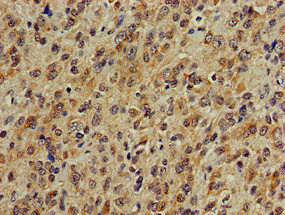
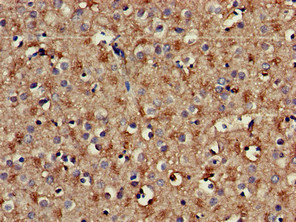
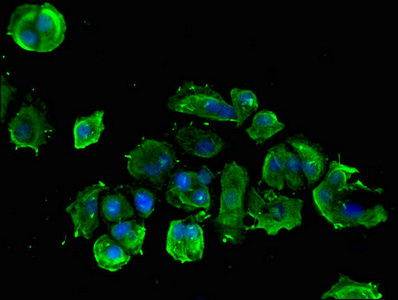
The antibody against PLCB1 was raised in rabbit using the Recombinant Human 1-phosphatidylinositol 4,5-bisphosphate phosphodiesterase beta-1 protein (781-896AA) as the immunogen. This antibody exists as a non-conjugated isotype IgG, purified by protein G with a purity greater than 95%. This antibody has been validated on ELISA, IHC, IF.
$299.00
| Cat.No | ADC-11627A | Clonality | Polyclonal |
|---|---|---|---|
| Host Species | Rabbit | Target Name | PLCB1 |
| Target Synonyms | 1 phosphatidylinositol 4, 5 bisphosphate phosphodiesterase beta 1 antibody; 1-phosphatidyl-D-myo-inositol-4 | Form | Liquid |
| Species Reactivity | Human | Isotype | IgG |
| Storage Buffer | 0.01M PBS, 0.03% Proclin 300; Constituents: 50% Glycerol, PH 7.4 | Purification Method | >95%, Protein G purified |
| Conjugate | Non-conjugated | Application | ELISA, IF, IHC |
| Storage | Upon receipt |
| Immunogen Description | Recombinant Human 1-phosphatidylinositol 4,5-bisphosphate phosphodiesterase beta-1 protein (781-896AA) | Target Species | Human |
|---|---|---|---|
| Immunogen Sequence | Complete sequences for the immunogen, target protein, and peptides are available upon request. | Uniprot ID | Q9NQ66 |
Uniprot Id
Q9NQ66
Target Species
Human
Target Name
PLCB1
Target Full Name
1-phosphatidylinositol 4,5-bisphosphate phosphodiesterase beta-1
Target Function
Catalyzes the hydrolysis of 1-phosphatidylinositol 4,5-bisphosphate into diacylglycerol (DAG) and inositol 1,4,5-trisphosphate (IP3) and mediates intracellular signaling downstream of G protein-coupled receptors. Regulates the function of the endothelial barrier.
Target Involvement
Epileptic encephalopathy, early infantile, 12 (EIEE12)
Target Subcellular Location
Nucleus membrane. Cytoplasm.
Target Synonyms
1 phosphatidylinositol 4,5 bisphosphate phosphodiesterase beta 1; 1-phosphatidyl-D-myo-inositol-4,5-bisphosphate; 1-phosphatidylinositol 4; 1-phosphatidylinositol-4; 5-bisphosphate phosphodiesterase beta-1; EIEE12; Inositoltrisphosphohydrolase; Monophosphatidylinositol phosphodiesterase; Phosphb; Phosphoinositidase C; Phosphoinositide phospholipase C; Phosphoinositide phospholipase C-beta 1; Phosphoinositide phospholipase C-beta-1; Phospholipase C beta 1 (phosphoinositide-specific); Phospholipase C I; Phospholipase C-beta-1; Phospholipase C-I; PI PLC; PLC 1; PLC beta 1; PLC I; PLC-154; PLC-beta-1; PLC-I; PLC154; Plcb; Plcb1; Plcb1 protein ; PLCB1_HUMAN; PLCbeta1; Triphosphoinositide phosphodiesterase
Target Background
The protein encoded by this gene catalyzes the formation of inositol 1, 4, 5-trisphosphate and diacylglycerol from phosphatidylinositol 4, 5-bisphosphate. This reaction uses calcium as a cofactor and plays an important role in the intracellular transduction of many extracellular signals. This gene is activated by two G-protein alpha subunits, alpha-q and alpha-11. Two transcript variants encoding different isoforms have been found for this gene.
Notification