• Contact info@abtriva.com for inquiries and orders.
  • Chinese (Simplified)

  • English

  • German

  • Korean

  • Spanish

United States (English / $ USD)

Rabbit anti-Human PLPP3 Polyclonal Antibody

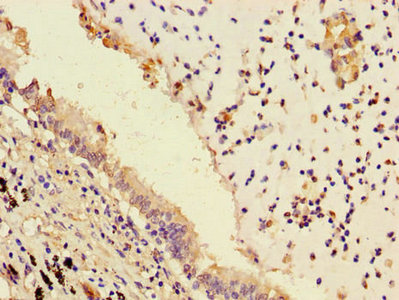
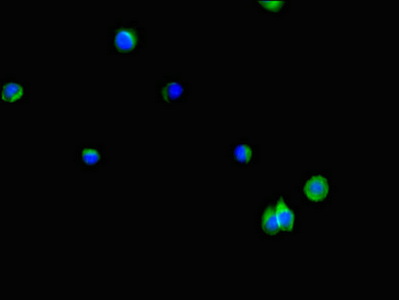
The antibody against PLPP3 was raised in rabbit using the Recombinant Human Phospholipid phosphatase 3 protein (144-193AA) as the immunogen. This antibody exists as a non-conjugated isotype IgG, purified by protein G with a purity greater than 95%. This antibody has been validated on ELISA, IHC, IF.

ADC-21650A

The antibody against PLPP3 was raised in rabbit using the Recombinant Human Phospholipid phosphatase 3 protein (144-193AA) as the immunogen. This antibody exists as a non-conjugated isotype IgG, purified by protein G with a purity greater than 95%. This antibody has been validated on ELISA, IHC, IF.

$299.00

Number
Order Exclusive Products Now

Request a Quote
High Purity LevelsPrecision and ReliabilityCustomization Options

Specifications


Cat.No ADC-21650A ClonalityPolyclonal
Host SpeciesRabbitTarget NamePLPP3
FormLiquidSpecies ReactivityHuman
IsotypeIgGStorage Buffer0.01M PBS, 0.03% Proclin 300; Constituents: 50% Glycerol, PH 7.4
Purification Method>95%, Protein G purifiedConjugateNon-conjugated
ApplicationELISA, IF, IHCStorageUpon receipt

Immunogen Information


Immunogen DescriptionRecombinant Human Phospholipid phosphatase 3 protein (144-193AA)Target SpeciesHuman
Immunogen SequenceComplete sequences for the immunogen, target protein, and peptides are available upon request.Uniprot IDO14495
Background Information
  • Uniprot Id

    O14495

  • Target Species

    Human

  • Target Name

    PLPP3

  • Target Full Name

    Phospholipid phosphatase 3

  • Target Function

    Magnesium-independent phospholipid phosphatase of the plasma membrane that catalyzes the dephosphorylation of a variety of glycerolipid and sphingolipid phosphate esters including phosphatidate/PA, lysophosphatidate/LPA, diacylglycerol pyrophosphate/DGPP, sphingosine 1-phosphate/S1P and ceramide 1-phosphate/C1P. Also acts on N-oleoyl ethanolamine phosphate/N-(9Z-octadecenoyl)-ethanolamine phosphate, a potential physiological compound. Has both an extracellular and an intracellular phosphatase activity, allowing the hydrolysis and the cellular uptake of these bioactive lipid mediators from the milieu, regulating signal transduction in different cellular processes. Through the dephosphorylation of extracellular sphingosine-1-phosphate and the regulation of its extra- and intracellular availability, plays a role in vascular homeostasis, regulating endothelial cell migration, adhesion, survival, proliferation and the production of pro-inflammatory cytokines. By maintaining the appropriate levels of this lipid in the cerebellum, also ensure its proper development and function. Through its intracellular lipid phosphatase activity may act in early compartments of the secretory pathway, regulating the formation of Golgi to endoplasmic reticulum retrograde transport carriers.; Independently of this phosphatase activity may also function in the Wnt signaling pathway and the stabilization of beta-catenin/CTNNB1, thereby regulating cell proliferation, migration and differentiation in angiogenesis or yet in tumor growth. Also plays a role in integrin-mediated cell-cell adhesion in angiogenesis.

  • Target Subcellular Location

    Cell membrane; Multi-pass membrane protein. Basolateral cell membrane; Multi-pass membrane protein. Endoplasmic reticulum membrane; Multi-pass membrane protein. Endoplasmic reticulum-Golgi intermediate compartment membrane; Multi-pass membrane protein. Golgi apparatus membrane; Multi-pass membrane protein. Golgi apparatus, trans-Golgi network membrane; Multi-pass membrane protein. Membrane raft; Multi-pass membrane protein.

  • Target Protein Families

    PA-phosphatase related phosphoesterase family

  • Target Tissue Specificity

    Ubiquitously expressed. Highly expressed in heart and placenta.

  • Target Synonyms

    PLPP3; LPP3; PPAP2B; Phospholipid phosphatase 3; Lipid phosphate phosphohydrolase 3; PAP2-beta; Phosphatidate phosphohydrolase type 2b; Phosphatidic acid phosphatase 2b; PAP-2b; PAP2b; Vascular endothelial growth factor and type I collagen-inducible protein; VCIP

  • Target Background

    The protein encoded by this gene is a member of the phosphatidic acid phosphatase (PAP) family. PAPs convert phosphatidic acid to diacylglycerol, and function in de novo synthesis of glycerolipids as well as in receptor-activated signal transduction mediated by phospholipase D. This protein is a membrane glycoprotein localized at the cell plasma membrane. It has been shown to actively hydrolyze extracellular lysophosphatidic acid and short-chain phosphatidic acid. The expression of this gene is found to be enhanced by epidermal growth factor in Hela cells.

Inquire Rabbit anti-Human PLPP3 Polyclonal Antibody Now


AbTriva respects your privacy and protects your personal data in accordance with AbTriva. For more information, please see our data protection statement. *

Notification