-
Chinese (Simplified)
-
English
-
German
-
Korean
-
Spanish
Chinese (Simplified)
English
German
Korean
Spanish
Sign up for an account to enjoy easy online shopping and instant order tracking.
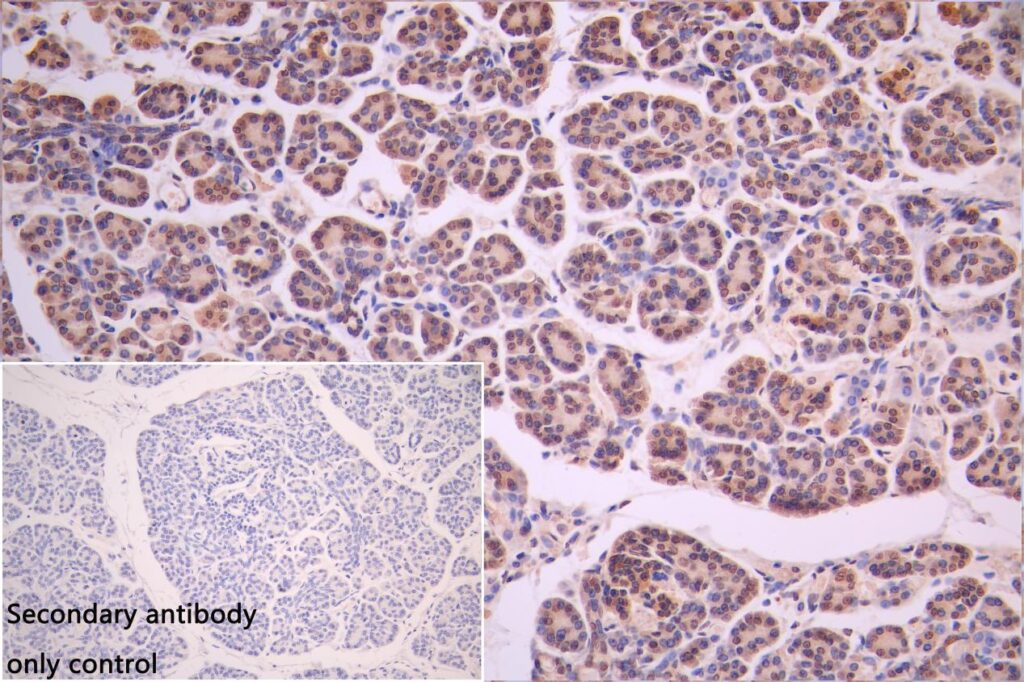
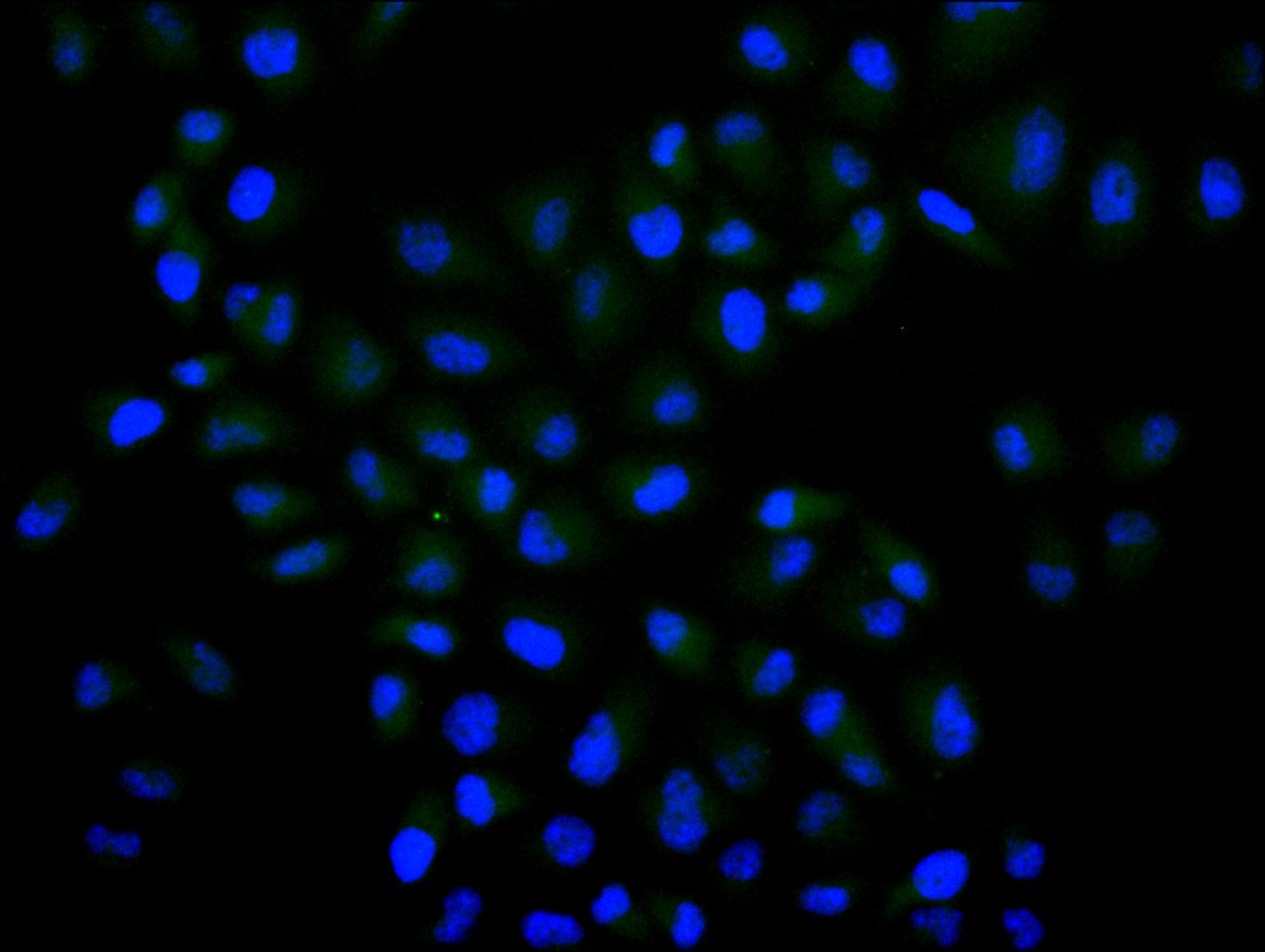
The antibody against POLH was raised in rabbit using the Recombinant Human DNA polymerase eta protein (408-609AA) as the immunogen. This antibody exists as a non-conjugated isotype IgG, purified by protein G with a purity greater than 95%. This antibody has been validated on ELISA, WB, IHC, IF.
$299.00
| Cat.No | ADC-10895A | Clonality | Polyclonal |
|---|---|---|---|
| Host Species | Rabbit | Target Name | POLH |
| Form | Liquid | Species Reactivity | Human |
| Isotype | IgG | Storage Buffer | 0.01M PBS, 0.03% Proclin 300; Constituents: 50% Glycerol, PH 7.4 |
| Purification Method | >95%, Protein G purified | Conjugate | Non-conjugated |
| Application | ELISA, IF, IHC, WB | Storage | Upon receipt |
| Immunogen Description | Recombinant Human DNA polymerase eta protein (408-609AA) | Target Species | Human |
|---|---|---|---|
| Immunogen Sequence | Complete sequences for the immunogen, target protein, and peptides are available upon request. | Uniprot ID | Q9Y253 |
Uniprot Id
Q9Y253
Target Species
Human
Target Name
POLH
Target Full Name
DNA polymerase eta
Target Function
DNA polymerase specifically involved in the DNA repair by translesion synthesis (TLS). Due to low processivity on both damaged and normal DNA, cooperates with the heterotetrameric (REV3L, REV7, POLD2 and POLD3) POLZ complex for complete bypass of DNA lesions. Inserts one or 2 nucleotide(s) opposite the lesion, the primer is further extended by the tetrameric POLZ complex. In the case of 1,2-intrastrand d(GpG)-cisplatin cross-link, inserts dCTP opposite the 3' guanine. Particularly important for the repair of UV-induced pyrimidine dimers. Although inserts the correct base, may cause base transitions and transversions depending upon the context. May play a role in hypermutation at immunoglobulin genes. Forms a Schiff base with 5'-deoxyribose phosphate at abasic sites, but does not have any lyase activity, preventing the release of the 5'-deoxyribose phosphate (5'-dRP) residue. This covalent trapping of the enzyme by the 5'-dRP residue inhibits its DNA synthetic activity during base excision repair, thereby avoiding high incidence of mutagenesis. Targets POLI to replication foci.
Target Involvement
Xeroderma pigmentosum variant type (XPV)
Target Subcellular Location
Nucleus.
Target Protein Families
DNA polymerase type-Y family
Target Synonyms
XPV; XP-V; RAD30; RAD30A; DNA polymerase eta
Target Background
This gene encodes a member of the Y family of specialized DNA polymerases. It copies undamaged DNA with a lower fidelity than other DNA-directed polymerases. However, it accurately replicates UV-damaged DNA; when thymine dimers are present, this polymerase inserts the complementary nucleotides in the newly synthesized DNA, thereby bypassing the lesion and suppressing the mutagenic effect of UV-induced DNA damage. This polymerase is thought to be involved in hypermutation during immunoglobulin class switch recombination. Mutations in this gene result in XPV, a variant type of xeroderma pigmentosum. Several transcript variants encoding different isoforms have been found for this gene.
Notification