-
Chinese (Simplified)
-
English
-
German
-
Korean
-
Spanish
Chinese (Simplified)
English
German
Korean
Spanish
Sign up for an account to enjoy easy online shopping and instant order tracking.
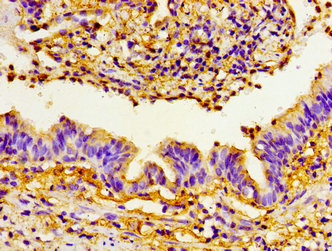
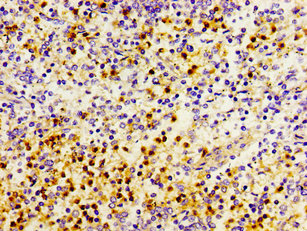
The antibody against PRTN3 was raised in rabbit using the Recombinant Human Myeloblastin protein (1-170AA) as the immunogen. This antibody exists as a non-conjugated isotype IgG, purified by protein G with a purity greater than 95%. This antibody has been validated on ELISA, IHC.
$299.00
| Cat.No | ADC-08422A | Clonality | Polyclonal |
|---|---|---|---|
| Host Species | Rabbit | Target Name | PRTN3 |
| Form | Liquid | Species Reactivity | Human |
| Isotype | IgG | Storage Buffer | 0.01M PBS, 0.03% Proclin 300; Constituents: 50% Glycerol, PH 7.4 |
| Purification Method | >95%, Protein G purified | Conjugate | Non-conjugated |
| Application | ELISA, IHC | Storage | Upon receipt |
| Immunogen Description | Recombinant Human Myeloblastin protein (1-170AA) | Target Species | Human |
|---|---|---|---|
| Immunogen Sequence | Complete sequences for the immunogen, target protein, and peptides are available upon request. | Uniprot ID | P24158 |
Uniprot Id
P24158
Target Species
Human
Target Name
PRTN3
Target Full Name
Myeloblastin
Target Function
Serine protease that degrades elastin, fibronectin, laminin, vitronectin, and collagen types I, III, and IV (in vitro). By cleaving and activating receptor F2RL1/PAR-2, enhances endothelial cell barrier function and thus vascular integrity during neutrophil transendothelial migration. May play a role in neutrophil transendothelial migration, probably when associated with CD177.
Target Involvement
Is the major autoantigen in anti-neutrophil cytoplasmic autoantibody (ANCA)-associated vasculitis (Wegener's granulomatosis) (PubMed:2377228, PubMed:2679910). This complex, systemic disease is characterized by granulomatous inflammation with necrotizing lesions in the respiratory tract, glomerulonephritis, vasculitis, and anti-neutrophil cytoplasmatic autoantibodies detected in patient sera (PubMed:2377228, PubMed:2679910). PRTN3 causes emphysema when administered by tracheal insufflation to hamsters (PubMed:3198760).
Target Subcellular Location
Cytoplasmic granule. Secreted. Cell membrane; Peripheral membrane protein; Extracellular side. Membrane raft; Peripheral membrane protein; Extracellular side.
Target Protein Families
Peptidase S1 family, Elastase subfamily
Target Tissue Specificity
Expressed in polymorphonuclear leukocytes (at protein level). Expressed in neutrophils (at protein level). Expressed in differentiating neutrophils.
Target Research Area
Signal Transduction
Target Synonyms
ACPA; AGP 7; AGP7; AGP7 serine proteinase; Azurophil Granule Protein 7; C ANCA; C ANCA antigen; C-ANCA antigen; CANCA; EC 3.4.21.76; Leukocyte proteinase 3; MBN; MBT; MBT WEGENER AUTOANTIGEN; Myeloblastin; Neutrophil proteinase 4; NP 4 ; NP-4; NP4; P29; PR 3; PR-3; PR3; Proteinase 3; Proteinase3; PRTN 3; Prtn3; PRTN3_HUMAN; Serine proteinase neutrophil Wegener granulomatosis autoantigen; Serine proteinase; neutrophil; Wegener autoantigen; Wegener granulomatosis autoantigen
Target Background
Enables enzyme binding activity; serine-type endopeptidase activity; and signaling receptor binding activity. Involved in several processes, including mature conventional dendritic cell differentiation; membrane protein ectodomain proteolysis; and neutrophil extravasation. Located in azurophil granule lumen; cytosol; and plasma membrane raft. Colocalizes with plasma membrane.
Notification