-
Chinese (Simplified)
-
English
-
German
-
Korean
-
Spanish
Chinese (Simplified)
English
German
Korean
Spanish
Sign up for an account to enjoy easy online shopping and instant order tracking.
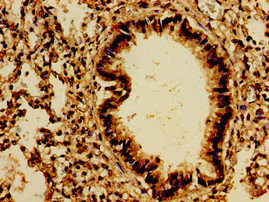
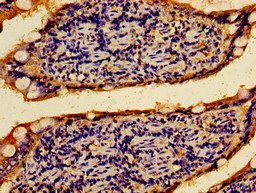
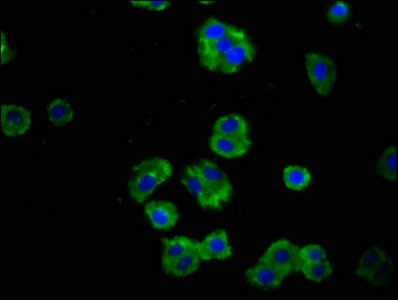
The antibody against PTPRF was raised in rabbit using the Recombinant Human Receptor-type tyrosine-protein phosphatase F protein (688-970AA) as the immunogen. This antibody exists as a non-conjugated isotype IgG, purified by protein G with a purity greater than 95%. This antibody has been validated on ELISA, IHC, IF.
$299.00
| Cat.No | ADC-08863A | Clonality | Polyclonal |
|---|---|---|---|
| Host Species | Rabbit | Target Name | PTPRF |
| Form | Liquid | Species Reactivity | Human |
| Isotype | IgG | Storage Buffer | 0.01M PBS, 0.03% Proclin 300; Constituents: 50% Glycerol, PH 7.4 |
| Purification Method | >95%, Protein G purified | Conjugate | Non-conjugated |
| Application | ELISA, IF, IHC | Storage | Upon receipt |
| Immunogen Description | Recombinant Human Receptor-type tyrosine-protein phosphatase F protein (688-970AA) | Target Species | Human |
|---|---|---|---|
| Immunogen Sequence | Complete sequences for the immunogen, target protein, and peptides are available upon request. | Uniprot ID | P10586 |
Uniprot Id
P10586
Target Species
Human
Target Name
PTPRF
Target Full Name
Receptor-type tyrosine-protein phosphatase F
Target Function
Possible cell adhesion receptor. It possesses an intrinsic protein tyrosine phosphatase activity (PTPase) and dephosphorylates EPHA2 regulating its activity.; The first PTPase domain has enzymatic activity, while the second one seems to affect the substrate specificity of the first one.
Target Involvement
Aplasia or hypoplasia of the breasts and/or nipples 2 (BNAH2)
Target Subcellular Location
Membrane; Single-pass type I membrane protein.
Target Protein Families
Protein-tyrosine phosphatase family, Receptor class 2A subfamily
Target Synonyms
FLJ43335; FLJ45062; FLJ45567; LAR; LAR protein; LARFN5C; LARS; LCA homolog; Leukocyte antigen related (LAR) PTP receptor; Leukocyte antigen related; Leukocyte antigen related PTP receptor; Leukocyte antigen related tyrosine phosphatase; Leukocyte common antigen related; Protein Tyrosine Phosphatase Receptor Type F; Protein tyrosine phosphatase receptor type F polypeptide; Ptprf; PTPRF protein; PTPRF_HUMAN; Receptor linked protein tyrosine phosphatase LAR; Receptor type tyrosine protein phosphatase F; Receptor type tyrosine protein phosphatase F precursor; Receptor-type tyrosine-protein phosphatase F
Target Background
The protein encoded by this gene is a member of the protein tyrosine phosphatase (PTP) family. PTPs are known to be signaling molecules that regulate a variety of cellular processes including cell growth, differentiation, mitotic cycle, and oncogenic transformation. This PTP possesses an extracellular region, a single transmembrane region, and two tandem intracytoplasmic catalytic domains, and thus represents a receptor-type PTP. The extracellular region contains three Ig-like domains, and nine non-Ig like domains similar to that of neural-cell adhesion molecule. This PTP was shown to function in the regulation of epithelial cell-cell contacts at adherents junctions, as well as in the control of beta-catenin signaling. An increased expression level of this protein was found in the insulin-responsive tissue of obese, insulin-resistant individuals, and may contribute to the pathogenesis of insulin resistance. Two alternatively spliced transcript variants of this gene, which encode distinct proteins, have been reported.
Notification