• Contact info@abtriva.com for inquiries and orders.
  • Chinese (Simplified)

  • English

  • German

  • Korean

  • Spanish

United States (English / $ USD)

Rabbit anti-Human SERPIND1 Polyclonal Antibody

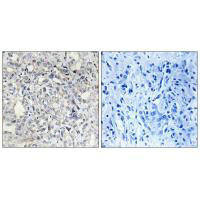
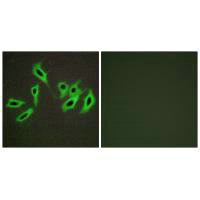
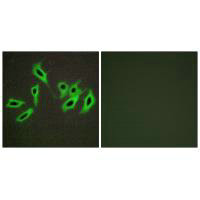
The antibody against SERPIND1 was raised in rabbit using the Synthesized peptide derived from internal of Human Heparin Cofactor II. as the immunogen. The antibody was affinity-purified from rabbit antiserum by affinity-chromatography using epitope-specific immunogen. This antibody has been validated on ELISA, IHC, IF.

ADC-42172A

The antibody against SERPIND1 was raised in rabbit using the Synthesized peptide derived from internal of Human Heparin Cofactor II. as the immunogen. The antibody was affinity-purified from rabbit antiserum by affinity-chromatography using epitope-specific immunogen. This antibody has been validated on ELISA, IHC, IF.

$297.00

Number
Order Exclusive Products Now

Request a Quote
High Purity LevelsPrecision and ReliabilityCustomization Options

Specifications


Cat.No ADC-42172A ClonalityPolyclonal
Host SpeciesRabbitTarget NameSERPIND1
Target Synonymsclade D (heparin cofactor), member 1 antibody; Serpin D1 antibody; serpin peptidase inhibitor, member 1 antibody; SERPIND1 antibody; THPH10 antibodyFormLiquid
Species ReactivityHuman, MouseStorage BufferPH 7.4, 0.02% sodium azide and 50% glycerol., 150mM NaCl, Rabbit IgG in phosphate buffered saline (without Mg2+ and Ca2+)
Purification MethodThe antibody was affinity-purified from rabbit antiserum by affinity-chromatography using epitope-specific immunogen.ApplicationELISA, IF, IHC
StorageUpon receipt

Immunogen Information


Immunogen DescriptionSynthesized peptide derived from internal of Human Heparin Cofactor II.Target SpeciesHuman
Immunogen SequenceComplete sequences for the immunogen, target protein, and peptides are available upon request.Uniprot IDP05546
Background Information
  • Uniprot Id

    P05546

  • Target Species

    Human

  • Target Name

    SERPIND1

  • Target Full Name

    Heparin cofactor 2

  • Target Function

    Thrombin inhibitor activated by the glycosaminoglycans, heparin or dermatan sulfate. In the presence of the latter, HC-II becomes the predominant thrombin inhibitor in place of antithrombin III (AT-III). Also inhibits chymotrypsin, but in a glycosaminoglycan-independent manner.; Peptides at the N-terminal of HC-II have chemotactic activity for both monocytes and neutrophils.

  • Target Involvement

    Thrombophilia due to heparin cofactor 2 deficiency (THPH10)

  • Target Protein Families

    Serpin family

  • Target Tissue Specificity

    Expressed predominantly in liver. Also present in plasma.

  • Target Synonyms

    D22S673; HC II; HC-II; HC2; HCF2; HEP2_HUMAN; Heparin cofactor 2; Heparin cofactor II; HLS2; Leuserpin 2; LS2; Protease inhibitor leuserpin 2; Protease inhibitor leuserpin-2; serine (or cysteine) proteinase inhibitor, clade D (heparin cofactor), member 1; Serpin D1; serpin peptidase inhibitor, clade D (heparin cofactor), member 1; SERPIND1; THPH10

  • Target Background

    This gene belongs to the serpin gene superfamily. Serpins play roles in many processes including inflammation, blood clotting, and cancer metastasis. Members of this family have highly conserved secondary structures with a reactive center loop that interacts with the protease active site to inhibit protease activity. This gene encodes a plasma serine protease that functions as a thrombin and chymotrypsin inhibitor. The protein is activated by heparin, dermatan sulfate, and glycosaminoglycans. Allelic variations in this gene are associated with heparin cofactor II deficiency.

Inquire Rabbit anti-Human SERPIND1 Polyclonal Antibody Now


AbTriva respects your privacy and protects your personal data in accordance with AbTriva. For more information, please see our data protection statement. *

Notification