• Contact info@abtriva.com for inquiries and orders.
  • Chinese (Simplified)

  • English

  • German

  • Korean

  • Spanish

United States (English / $ USD)

Rabbit anti-Human SMARCA1 Polyclonal Antibody

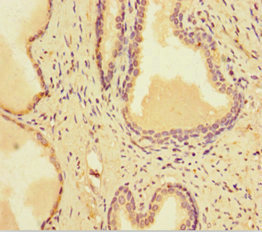
The antibody against SMARCA1 was raised in rabbit using the Recombinant Human Probable global transcription activator SNF2L1 protein (500-601AA) as the immunogen. This antibody exists as a non-conjugated isotype IgG, purified by protein G with a purity greater than 95%. This antibody has been validated on ELISA, IHC.

ADC-15700A

The antibody against SMARCA1 was raised in rabbit using the Recombinant Human Probable global transcription activator SNF2L1 protein (500-601AA) as the immunogen. This antibody exists as a non-conjugated isotype IgG, purified by protein G with a purity greater than 95%. This antibody has been validated on ELISA, IHC.

$299.00

Number
Order Exclusive Products Now

Request a Quote
High Purity LevelsPrecision and ReliabilityCustomization Options

Specifications


Cat.No ADC-15700A ClonalityPolyclonal
Host SpeciesRabbitTarget NameSMARCA1
FormLiquidSpecies ReactivityHuman
IsotypeIgGStorage Buffer0.01M PBS, 0.03% Proclin 300; Constituents: 50% Glycerol, PH 7.4
Purification Method>95%, Protein G purifiedConjugateNon-conjugated
ApplicationELISA, IHCStorageUpon receipt

Immunogen Information


Immunogen DescriptionRecombinant Human Probable global transcription activator SNF2L1 protein (500-601AA)Target SpeciesHuman
Immunogen SequenceComplete sequences for the immunogen, target protein, and peptides are available upon request.Uniprot IDP28370
Background Information
  • Uniprot Id

    P28370

  • Target Species

    Human

  • Target Name

    SMARCA1

  • Target Full Name

    Probable global transcription activator SNF2L1

  • Target Function

    Catalytically inactive when either DNA or nucleosomes are the substrate and does not possess chromatin-remodeling activity. Acts as a negative regulator of chromatin remodelers by generating inactive complexes.; Helicase that possesses intrinsic ATP-dependent chromatin-remodeling activity. ATPase activity is substrate-dependent, and is increased when nucleosomes are the substrate, but is also catalytically active when DNA alone is the substrate. Catalytic subunit of ISWI chromatin-remodeling complexes, which form ordered nucleosome arrays on chromatin and facilitate access to DNA during DNA-templated processes such as DNA replication, transcription, and repair. Within the ISWI chromatin-remodeling complexes, slides edge- and center-positioned histone octamers away from their original location on the DNA template. Catalytic activity and histone octamer sliding propensity is regulated and determined by components of the ISWI chromatin-remodeling complexes. The BAZ1A-, BAZ1B-, BAZ2A- and BAZ2B-containing ISWI chromatin-remodeling complexes regulate the spacing of nucleosomes along the chromatin and have the ability to slide mononucleosomes to the center of a DNA template. The CECR2- and RSF1-containing ISWI chromatin-remodeling complexes do not have the ability to slide mononucleosomes to the center of a DNA template. Within the NURF-1 and CERF-1 ISWI chromatin remodeling complexes, nucleosomes are the preferred substrate for its ATPase activity. Within the NURF-1 ISWI chromatin-remodeling complex, binds to the promoters of En1 and En2 to positively regulate their expression and promote brain development. May promote neurite outgrowth. May be involved in the development of luteal cells.

  • Target Subcellular Location

    Nucleus.

  • Target Protein Families

    SNF2/RAD54 helicase family, ISWI subfamily

  • Target Tissue Specificity

    [Isoform 1]: Mainly expressed in non-neuronal tissues such as lung, breast, kidney, and ovary.; [Isoform 2]: Expressed in lung, breast, kidney, ovary, skeletal muscle and brain.

  • Target Synonyms

    SMARCA1; SNF2L; SNF2L1; Probable global transcription activator SNF2L1; EC 3.6.4.-; ATP-dependent helicase SMARCA1; Nucleosome-remodeling factor subunit SNF2L; SWI/SNF-related matrix-associated actin-dependent regulator of chromatin subfamily A member 1

  • Target Background

    This gene encodes a member of the SWI/SNF family of proteins. The encoded protein is an ATPase which is expressed in diverse tissues and contributes to the chromatin remodeling complex that is involved in transcription. The protein may also play a role in DNA damage, growth inhibition and apoptosis of cancer cells. Alternative splicing results in multiple transcript variants.

Inquire Rabbit anti-Human SMARCA1 Polyclonal Antibody Now


AbTriva respects your privacy and protects your personal data in accordance with AbTriva. For more information, please see our data protection statement. *

Notification