-
Chinese (Simplified)
-
English
-
German
-
Korean
-
Spanish

Chinese (Simplified)
English
German
Korean
Spanish
Sign up for an account to enjoy easy online shopping and instant order tracking.
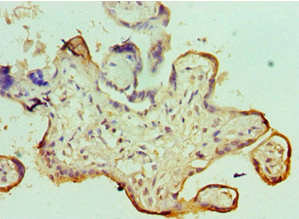
The antibody against SMARCC1 was raised in rabbit using the Recombinant Human SWI/SNF complex subunit SMARCC1 protein (80-320AA) as the immunogen. This antibody exists as a non-conjugated isotype IgG, Antigen affinity purified. This antibody has been validated on ELISA, IHC.
$299.00
| Cat.No | ADC-40041A | Clonality | Polyclonal |
|---|---|---|---|
| Host Species | Rabbit | Target Name | SMARCC1 |
| Form | Liquid | Species Reactivity | Human |
| Isotype | IgG | Storage Buffer | 50% Glycerol, PBS with 0.02% sodium azide, pH7.3. |
| Purification Method | Antigen affinity purified | Conjugate | Non-conjugated |
| Application | ELISA, IHC | Storage | Upon receipt |
| Immunogen Description | Recombinant Human SWI/SNF complex subunit SMARCC1 protein (80-320AA) | Target Species | Human |
|---|---|---|---|
| Immunogen Sequence | Complete sequences for the immunogen, target protein, and peptides are available upon request. | Uniprot ID | Q92922 |
Uniprot Id
Q92922
Target Species
Human
Target Name
SMARCC1
Target Full Name
SWI/SNF complex subunit SMARCC1
Target Function
Involved in transcriptional activation and repression of select genes by chromatin remodeling (alteration of DNA-nucleosome topology). Component of SWI/SNF chromatin remodeling complexes that carry out key enzymatic activities, changing chromatin structure by altering DNA-histone contacts within a nucleosome in an ATP-dependent manner. May stimulate the ATPase activity of the catalytic subunit of the complex. Belongs to the neural progenitors-specific chromatin remodeling complex (npBAF complex) and the neuron-specific chromatin remodeling complex (nBAF complex). During neural development a switch from a stem/progenitor to a postmitotic chromatin remodeling mechanism occurs as neurons exit the cell cycle and become committed to their adult state. The transition from proliferating neural stem/progenitor cells to postmitotic neurons requires a switch in subunit composition of the npBAF and nBAF complexes. As neural progenitors exit mitosis and differentiate into neurons, npBAF complexes which contain ACTL6A/BAF53A and PHF10/BAF45A, are exchanged for homologous alternative ACTL6B/BAF53B and DPF1/BAF45B or DPF3/BAF45C subunits in neuron-specific complexes (nBAF). The npBAF complex is essential for the self-renewal/proliferative capacity of the multipotent neural stem cells. The nBAF complex along with CREST plays a role regulating the activity of genes essential for dendrite growth.
Target Subcellular Location
Nucleus. Cytoplasm.
Target Protein Families
SMARCC family
Target Tissue Specificity
Expressed in brain, heart, muscle, placenta, lung, liver, muscle, kidney and pancreas.
Target Research Area
Neuroscience
Target Synonyms
AI115498; BAF 155; BAF155; BRG 1 associated factor 155; BRG1 associated factor 155; BRG1-associated factor 155; Chromatin remodeling complex BAF155 subunit; CRACC 1; CRACC1; Mammalian chromatin remodeling complex BRG 1 associated factor 155; Mammalian chromatin remodeling complex BRG1 associated factor 155; Rsc 8; Rsc8; SMARC C1; SMARCC 1; SMARCC1; SMRC1_HUMAN; SRG 3; SRG3; SWI 3; SWI/SNF complex 155 kDa subunit; SWI/SNF complex subunit SMARCC1; SWI/SNF related matrix associated actin dependent regulator of chromatin c1; SWI/SNF related matrix associated actin dependent regulator of chromatin subfamily c member 1; SWI/SNF-related matrix-associated actin-dependent regulator of chromatin subfamily C member 1; SWI3
Target Background
The protein encoded by this gene is a member of the SWI/SNF family of proteins, whose members display helicase and ATPase activities and which are thought to regulate transcription of certain genes by altering the chromatin structure around those genes. The encoded protein is part of the large ATP-dependent chromatin remodeling complex SNF/SWI and contains a predicted leucine zipper motif typical of many transcription factors.
Notification