• Contact info@abtriva.com for inquiries and orders.
  • Chinese (Simplified)

  • English

  • German

  • Korean

  • Spanish

United States (English / $ USD)

Rabbit anti-Human TRPM8 Polyclonal Antibody

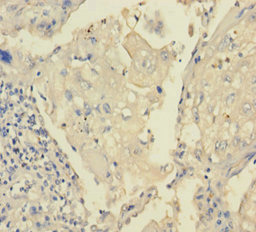
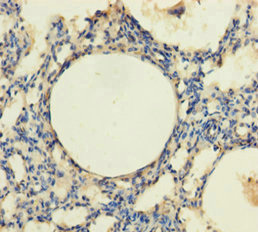
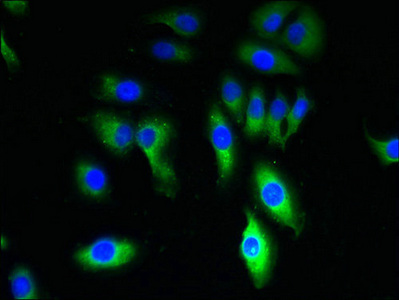
The antibody against TRPM8 was raised in rabbit using the Recombinant Human Transient receptor potential cation channel subfamily M member 8 protein (1-192AA) as the immunogen. This antibody exists as a non-conjugated isotype IgG, purified by protein G with a purity greater than 95%. This antibody has been validated on ELISA, IHC, IF.

ADC-40438A

The antibody against TRPM8 was raised in rabbit using the Recombinant Human Transient receptor potential cation channel subfamily M member 8 protein (1-192AA) as the immunogen. This antibody exists as a non-conjugated isotype IgG, purified by protein G with a purity greater than 95%. This antibody has been validated on ELISA, IHC, IF.

$299.00

Number
Order Exclusive Products Now

Request a Quote
High Purity LevelsPrecision and ReliabilityCustomization Options

Specifications


Cat.No ADC-40438A ClonalityPolyclonal
Host SpeciesRabbitTarget NameTRPM8
FormLiquidSpecies ReactivityHuman
IsotypeIgGStorage Buffer0.01M PBS, 0.03% Proclin 300; Constituents: 50% Glycerol, PH 7.4
Purification Method>95%, Protein G purifiedConjugateNon-conjugated
ApplicationELISA, IF, IHCStorageUpon receipt

Immunogen Information


Immunogen DescriptionRecombinant Human Transient receptor potential cation channel subfamily M member 8 protein (1-192AA)Target SpeciesHuman
Immunogen SequenceComplete sequences for the immunogen, target protein, and peptides are available upon request.Uniprot IDQ7Z2W7
Background Information
  • Uniprot Id

    Q7Z2W7

  • Target Species

    Human

  • Target Name

    TRPM8

  • Target Full Name

    Transient receptor potential cation channel subfamily M member 8

  • Target Function

    Receptor-activated non-selective cation channel involved in detection of sensations such as coolness, by being activated by cold temperature below 25 degrees Celsius. Activated by icilin, eucalyptol, menthol, cold and modulation of intracellular pH. Involved in menthol sensation. Permeable for monovalent cations sodium, potassium, and cesium and divalent cation calcium. Temperature sensing is tightly linked to voltage-dependent gating. Activated upon depolarization, changes in temperature resulting in graded shifts of its voltage-dependent activation curves. The chemical agonist menthol functions as a gating modifier, shifting activation curves towards physiological membrane potentials. Temperature sensitivity arises from a tenfold difference in the activation energies associated with voltage-dependent opening and closing. In prostate cancer cells, shows strong inward rectification and high calcium selectivity in contrast to its behavior in normal cells which is characterized by outward rectification and poor cationic selectivity. Plays a role in prostate cancer cell migration. Isoform 2 and isoform 3 negatively regulate menthol- and cold-induced channel activity by stabilizing the closed state of the channel.

  • Target Subcellular Location

    Cell membrane; Multi-pass membrane protein. Membrane raft. Endoplasmic reticulum membrane.

  • Target Protein Families

    Transient receptor (TC 1.A.4) family, LTrpC subfamily, TRPM8 sub-subfamily

  • Target Tissue Specificity

    Expressed in prostate. Also expressed in prostate tumors and in non-prostatic primary tumors such as colon, lung, breast and skin tumors.

  • Target Synonyms

    Long transient receptor potential channel 6; LTrpC-6; LTrpC6; MGC2849; Short form of the TRPM8 cationic channel ; Transient receptor potential cation channel subfamily M member 8; Transient receptor potential p8; transient receptor potential-p8; Trp p8; Trp-p8; Trpm8; TRPM8_HUMAN; TRPP8

  • Target Background

    Predicted to enable ligand-gated calcium channel activity. Predicted to be involved in calcium ion transmembrane transport and positive regulation of cold-induced thermogenesis. Predicted to act upstream of or within several processes, including cellular calcium ion homeostasis; response to cold; and thermoception. Located in plasma membrane.

Inquire Rabbit anti-Human TRPM8 Polyclonal Antibody Now


AbTriva respects your privacy and protects your personal data in accordance with AbTriva. For more information, please see our data protection statement. *

Notification