-
Chinese (Simplified)
-
English
-
German
-
Korean
-
Spanish
Chinese (Simplified)
English
German
Korean
Spanish
Sign up for an account to enjoy easy online shopping and instant order tracking.
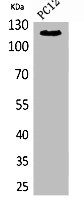
The antibody against UBA1 was raised in rabbit using the Synthesized peptide derived from the N-terminal region of Human UBA1. as the immunogen. This antibody exists as a non-conjugated isotype IgG. The antibody was affinity-purified from rabbit antiserum by affinity-chromatography using epitope-specific immunogen. This antibody has been validated on WB, ELISA.
$167.00
| Cat.No | ADC-36878A | Clonality | Polyclonal |
|---|---|---|---|
| Host Species | Rabbit | Target Name | UBA1 |
| Form | Liquid | Species Reactivity | Human, Mouse, Rat |
| Isotype | IgG | Storage Buffer | 0.5% BSA and 0.02% sodium azide., Liquid in PBS containing 50% glycerol |
| Purification Method | The antibody was affinity-purified from rabbit antiserum by affinity-chromatography using epitope-specific immunogen. | Conjugate | Non-conjugated |
| Application | ELISA, WB | Storage | Upon receipt |
| Immunogen Description | Synthesized peptide derived from the N-terminal region of Human UBA1. | Target Species | Human |
|---|---|---|---|
| Immunogen Sequence | Complete sequences for the immunogen, target protein, and peptides are available upon request. | Uniprot ID | P22314 |
Uniprot Id
P22314
Target Species
Human
Target Name
UBA1
Target Full Name
Ubiquitin-like modifier-activating enzyme 1
Target Function
Catalyzes the first step in ubiquitin conjugation to mark cellular proteins for degradation through the ubiquitin-proteasome system. Activates ubiquitin by first adenylating its C-terminal glycine residue with ATP, and thereafter linking this residue to the side chain of a cysteine residue in E1, yielding a ubiquitin-E1 thioester and free AMP. Essential for the formation of radiation-induced foci, timely DNA repair and for response to replication stress. Promotes the recruitment of TP53BP1 and BRCA1 at DNA damage sites.
Target Involvement
Spinal muscular atrophy X-linked 2 (SMAX2)
Target Subcellular Location
Cytoplasm. Mitochondrion. Nucleus.; [Isoform 1]: Nucleus.; [Isoform 2]: Cytoplasm.
Target Protein Families
Ubiquitin-activating E1 family
Target Tissue Specificity
Detected in erythrocytes (at protein level). Ubiquitous.
Target Synonyms
A1S9; A1S9 protein; A1S9T and BN75 temperature sensitivity complementing; A1S9T; A1ST; AMCX1; CFAP124; CTD-2522E6.1; GXP 1; GXP1; MGC4781; POC20; POC20 centriolar protein homolog; Protein A1S9; SMAX2; Uba1; UBA1, ubiquitin-activating enzyme E1 homolog A; UBA1_HUMAN; UBA1A; UBE 1; UBE 1X; UBE1; UBE1X; Ubiquitin activating enzyme E1; Ubiquitin-activating enzyme E1; Ubiquitin-like modifier-activating enzyme 1
Target Background
The protein encoded by this gene catalyzes the first step in ubiquitin conjugation to mark cellular proteins for degradation. This gene complements an X-linked mouse temperature-sensitive defect in DNA synthesis, and thus may function in DNA repair. It is part of a gene cluster on chromosome Xp11.23. Alternatively spliced transcript variants that encode the same protein have been described.
Notification