-
Chinese (Simplified)
-
English
-
German
-
Korean
-
Spanish
Chinese (Simplified)
English
German
Korean
Spanish
Sign up for an account to enjoy easy online shopping and instant order tracking.
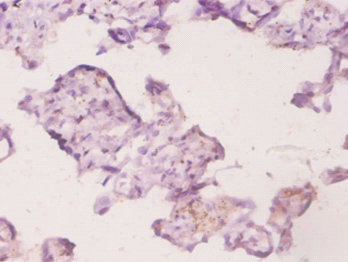
The antibody against UBE2K was raised in rabbit using the Recombinant Human Ubiquitin-conjugating enzyme E2 K protein (2-200AA) as the immunogen. This antibody exists as a non-conjugated isotype IgG, purified by protein G with a purity greater than 95%. This antibody has been validated on ELISA, IHC, IF.
$299.00
| Cat.No | ADC-45776A | Clonality | Polyclonal |
|---|---|---|---|
| Host Species | Rabbit | Target Name | UBE2K |
| Form | Liquid | Species Reactivity | Human |
| Isotype | IgG | Storage Buffer | 0.01M PBS, 0.03% Proclin 300; Constituents: 50% Glycerol, PH 7.4 |
| Purification Method | >95%, Protein G purified | Conjugate | Non-conjugated |
| Application | ELISA, IF, IHC | Storage | Upon receipt |
| Immunogen Description | Recombinant Human Ubiquitin-conjugating enzyme E2 K protein (2-200AA) | Target Species | Human |
|---|---|---|---|
| Immunogen Sequence | Complete sequences for the immunogen, target protein, and peptides are available upon request. | Uniprot ID | P61086 |
Uniprot Id
P61086
Target Species
Human
Target Name
UBE2K
Target Full Name
Ubiquitin-conjugating enzyme E2 K
Target Function
Accepts ubiquitin from the E1 complex and catalyzes its covalent attachment to other proteins. In vitro, in the presence or in the absence of BRCA1-BARD1 E3 ubiquitin-protein ligase complex, catalyzes the synthesis of 'Lys-48'-linked polyubiquitin chains. Does not transfer ubiquitin directly to but elongates monoubiquitinated substrate protein. Mediates the selective degradation of short-lived and abnormal proteins, such as the endoplasmic reticulum-associated degradation (ERAD) of misfolded lumenal proteins. Ubiquitinates huntingtin. May mediate foam cell formation by the suppression of apoptosis of lipid-bearing macrophages through ubiquitination and subsequence degradation of p53/TP53. Proposed to be involved in ubiquitination and proteolytic processing of NF-kappa-B; in vitro supports ubiquitination of NFKB1. In case of infection by cytomegaloviruses may be involved in the US11-dependent degradation of MHC class I heavy chains following their export from the ER to the cytosol. In case of viral infections may be involved in the HPV E7 protein-dependent degradation of RB1.
Target Subcellular Location
Cytoplasm.
Target Protein Families
Ubiquitin-conjugating enzyme family
Target Tissue Specificity
Expressed in all tissues tested, including spleen, thymus, prostate, testis, ovary, small intestine, colon, peripheral blood leukocytes, T-lymphocytes, monocytes, granulocytes and bone marrow mononuclear cells. Highly expressed in brain, with highest leve
Target Research Area
Neuroscience
Target Synonyms
E2 25K; E2(25K); HIP-2; Huntingtin interacting protein 2; Huntingtin-interacting protein 2; HYPG; LIG; UBC1; UBE2K; UBE2K_HUMAN; Ubiquitin carrier protein; Ubiquitin conjugating enzyme E2 25 kDa; ubiquitin conjugating enzyme E2K; ubiquitin conjugating enzyme E2K (UBC1 homolog, yeast); Ubiquitin protein ligase; Ubiquitin-conjugating enzyme E2 K; Ubiquitin-conjugating enzyme E2(25K); Ubiquitin-conjugating enzyme E2-25 kDa; Ubiquitin-conjugating enzyme E2-25K; Ubiquitin-protein ligase
Target Background
The protein encoded by this gene belongs to the ubiquitin-conjugating enzyme family. This protein interacts with RING finger proteins, and it can ubiquitinate huntingtin, the gene product for Huntington's disease. Known functions for this protein include a role in aggregate formation of expanded polyglutamine proteins and the suppression of apoptosis in polyglutamine diseases, a role in the dislocation of newly synthesized MHC class I heavy chains from the endoplasmic reticulum, and involvement in foam cell formation. Multiple transcript variants encoding different isoforms have been identified for this gene.
Notification