-
Chinese (Simplified)
-
English
-
German
-
Korean
-
Spanish
Chinese (Simplified)
English
German
Korean
Spanish
Sign up for an account to enjoy easy online shopping and instant order tracking.
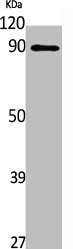
The antibody against UHRF1 was raised in rabbit using the Synthesized peptide derived from the Internal region of Human UHRF1. as the immunogen. This antibody exists as a non-conjugated isotype IgG. The antibody was affinity-purified from rabbit antiserum by affinity-chromatography using epitope-specific immunogen. This antibody has been validated on WB, ELISA.
$167.00
| Cat.No | ADC-37281A | Clonality | Polyclonal |
|---|---|---|---|
| Host Species | Rabbit | Target Name | UHRF1 |
| Target Synonyms | 1 antibody; Ubiquitin-like-containing PHD and RING finger domains protein 1 antibody; UHRF1 antibody; UHRF1_HUMAN antibody, containing PHD and RING finger domains | Form | Liquid |
| Species Reactivity | Human | Isotype | IgG |
| Storage Buffer | 0.5% BSA and 0.02% sodium azide., Liquid in PBS containing 50% glycerol | Purification Method | The antibody was affinity-purified from rabbit antiserum by affinity-chromatography using epitope-specific immunogen. |
| Conjugate | Non-conjugated | Application | ELISA, WB |
| Storage | Upon receipt |
| Immunogen Description | Synthesized peptide derived from the Internal region of Human UHRF1. | Target Species | Human |
|---|---|---|---|
| Immunogen Sequence | Complete sequences for the immunogen, target protein, and peptides are available upon request. | Uniprot ID | Q96T88 |
Uniprot Id
Q96T88
Target Species
Human
Target Name
UHRF1
Target Full Name
E3 ubiquitin-protein ligase UHRF1
Target Function
Multidomain protein that acts as a key epigenetic regulator by bridging DNA methylation and chromatin modification. Specifically recognizes and binds hemimethylated DNA at replication forks via its YDG domain and recruits DNMT1 methyltransferase to ensure faithful propagation of the DNA methylation patterns through DNA replication. In addition to its role in maintenance of DNA methylation, also plays a key role in chromatin modification: through its tudor-like regions and PHD-type zinc fingers, specifically recognizes and binds histone H3 trimethylated at 'Lys-9' (H3K9me3) and unmethylated at 'Arg-2' (H3R2me0), respectively, and recruits chromatin proteins. Enriched in pericentric heterochromatin where it recruits different chromatin modifiers required for this chromatin replication. Also localizes to euchromatic regions where it negatively regulates transcription possibly by impacting DNA methylation and histone modifications. Has E3 ubiquitin-protein ligase activity by mediating the ubiquitination of target proteins such as histone H3 and PML. It is still unclear how E3 ubiquitin-protein ligase activity is related to its role in chromatin in vivo. Plays a role in DNA repair by cooperating with UHRF1 to ensure recruitment of FANCD2 to interstrand cross-links (ICLs) leading to FANCD2 activation.
Target Involvement
Defects in UHRF1 may be a cause of cancers. Overexpressed in many different forms of human cancers, including bladder, breast, cervical, colorectal and prostate cancers, as well as pancreatic adenocarcinomas, rhabdomyosarcomas and gliomas. Plays an important role in the correlation of histone modification and gene silencing in cancer progression. Expression is associated with a poor prognosis in patients with various cancers, suggesting that it participates in cancer progression.
Target Subcellular Location
Nucleus. Note=Localizes to replication foci. Enriched in pericentric heterochromatin. Also localizes to euchromatic regions.
Target Tissue Specificity
Expressed in thymus, bone marrow, testis, lung and heart. Overexpressed in breast cancer.
Target Synonyms
Ac2-121; AL022808; E3 ubiquitin-protein ligase UHRF1; EC 6.3.2.-; FLJ21925; hNP95; hUHRF1; HuNp95; ICBP90; Inverted CCAAT box binding protein of 90 kDa; Inverted CCAAT box binding protein, 90-kD; Inverted CCAAT box-binding protein of 90 kDa; Liver regeneration-related protein LRRG126; MGC138707; NP95; Nuclear phosphoprotein 95; Nuclear phosphoprotein, 95-KD; Nuclear protein 95; Nuclear zinc finger protein Np95; RING finger protein 106; RNF106; TDRD22; Transcription factor ICBP90; Ubiquitin like containing PHD and RING finger domains protein 1; Ubiquitin like PHD and RING finger domain containing protein 1; Ubiquitin-like PHD and RING finger domain-containing protein 1; Ubiquitin-like protein containing PHD and RING finger domains 1; Ubiquitin-like with PHD and ring finger domains 1; Ubiquitin-like, containing PHD and RING finger domains, 1; Ubiquitin-like-containing PHD and RING finger domains protein 1; UHRF1; UHRF1_HUMAN
Target Background
This gene encodes a member of a subfamily of RING-finger type E3 ubiquitin ligases. The protein binds to specific DNA sequences, and recruits a histone deacetylase to regulate gene expression. Its expression peaks at late G1 phase and continues during G2 and M phases of the cell cycle. It plays a major role in the G1/S transition by regulating topoisomerase IIalpha and retinoblastoma gene expression, and functions in the p53-dependent DNA damage checkpoint. It is regarded as a hub protein for the integration of epigenetic information. This gene is up-regulated in various cancers, and it is therefore considered to be a therapeutic target. Multiple transcript variants encoding different isoforms have been found for this gene. A related pseudogene exists on chromosome 12.
Notification