-
Chinese (Simplified)
-
English
-
German
-
Korean
-
Spanish
Chinese (Simplified)
English
German
Korean
Spanish
Sign up for an account to enjoy easy online shopping and instant order tracking.
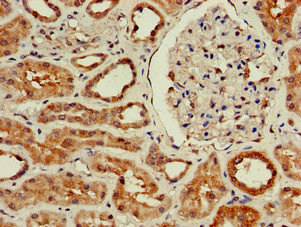
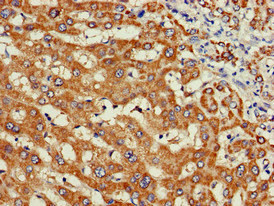
The antibody against WISP3 was raised in rabbit using the Recombinant Human WNT1-inducible-signaling pathway protein 3 protein (201-372AA) as the immunogen. This antibody exists as a non-conjugated isotype IgG, purified by protein G with a purity greater than 95%. This antibody has been validated on ELISA, WB, IHC.
$299.00
| Cat.No | ADC-10695A | Clonality | Polyclonal |
|---|---|---|---|
| Host Species | Rabbit | Target Name | WISP3 |
| Form | Liquid | Species Reactivity | Human, Mouse, Rat |
| Isotype | IgG | Storage Buffer | 0.01M PBS, 0.03% Proclin 300; Constituents: 50% Glycerol, PH 7.4 |
| Purification Method | >95%, Protein G purified | Conjugate | Non-conjugated |
| Application | ELISA, IHC, WB | Storage | Upon receipt |
| Immunogen Description | Recombinant Human WNT1-inducible-signaling pathway protein 3 protein (201-372AA) | Target Species | Human |
|---|---|---|---|
| Immunogen Sequence | Complete sequences for the immunogen, target protein, and peptides are available upon request. | Uniprot ID | O95389 |
Uniprot Id
O95389
Target Species
Human
Target Name
CCN6
Target Full Name
Cellular communication network factor 6
Target Function
Plays a role in mitochondrial electron transport and mitochondrial respiration. Through its regulation of the mitochondrial function may play a role in normal postnatal skeletal growth and cartilage homeostasis.
Target Involvement
Progressive pseudorheumatoid arthropathy of childhood (PPAC)
Target Subcellular Location
Secreted. Mitochondrion.
Target Protein Families
CCN family
Target Tissue Specificity
Predominant expression in adult kidney and testis and fetal kidney. Weaker expression found in placenta, ovary, prostate and small intestine. Also expressed in skeletally-derived cells such as synoviocytes and articular cartilage chondrocytes.
Target Synonyms
CCN 6; CCN family member 6; CCN6; CYR61; LIBC; Lost in inflammatory breast cancer tumor suppressor protein; MGC125987; MGC125988; MGC125989; OTTHUMP00000040421; PPAC; PPD; UNQ462/PRO790/PRO956 ; WISP 3; WISP-3; WISP3; WISP3_HUMAN; WNT 1 inducible signaling pathway protein 3; Wnt 1 signaling pathway protein 3; WNT1 inducible signaling pathway protein 3; WNT1 inducible signaling pathway protein 3 precursor; WNT1-inducible-signaling pathway protein 3
Target Background
This gene encodes a member of the WNT1 inducible signaling pathway (WISP) protein subfamily, which belongs to the connective tissue growth factor (CTGF) family. WNT1 is a member of a family of cysteine-rich, glycosylated signaling proteins that mediate diverse developmental processes. The CTGF family members are characterized by four conserved cysteine-rich domains: insulin-like growth factor-binding domain, von Willebrand factor type C module, thrombospondin domain and C-terminal cystine knot-like domain. This gene is overexpressed in colon tumors. It may be downstream in the WNT1 signaling pathway that is relevant to malignant transformation. Mutations of this gene are associated with progressive pseudorheumatoid dysplasia, an autosomal recessive skeletal disorder, indicating that the gene is essential for normal postnatal skeletal growth and cartilage homeostasis. Multiple transcript variants encoding different isoforms have been found for this gene.
Notification