• Contact info@abtriva.com for inquiries and orders.
  • Chinese (Simplified)

  • English

  • German

  • Korean

  • Spanish

United States (English / $ USD)

Rabbit anti-Human ZFP36L1 Polyclonal Antibody

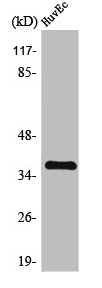
The antibody against ZFP36L1 was raised in rabbit using the Synthesized peptide derived from Human TIS11B around the non-phosphorylation site of S92. as the immunogen. This antibody exists as a non-conjugated isotype IgG. The antibody was affinity-purified from rabbit antiserum by affinity-chromatography using epitope-specific immunogen. This antibody has been validated on WB, IHC, ELISA.

ADC-37459A

The antibody against ZFP36L1 was raised in rabbit using the Synthesized peptide derived from Human TIS11B around the non-phosphorylation site of S92. as the immunogen. This antibody exists as a non-conjugated isotype IgG. The antibody was affinity-purified from rabbit antiserum by affinity-chromatography using epitope-specific immunogen. This antibody has been validated on WB, IHC, ELISA.

$167.00

Number
Order Exclusive Products Now

Request a Quote
High Purity LevelsPrecision and ReliabilityCustomization Options

Specifications


Cat.No ADC-37459A ClonalityPolyclonal
Host SpeciesRabbitTarget NameZFP36L1
FormLiquidSpecies ReactivityHuman, Mouse, Rat
IsotypeIgGStorage Buffer0.5% BSA and 0.02% sodium azide., Liquid in PBS containing 50% glycerol
Purification MethodThe antibody was affinity-purified from rabbit antiserum by affinity-chromatography using epitope-specific immunogen.ConjugateNon-conjugated
ApplicationELISA, IHC, WBStorageUpon receipt

Immunogen Information


Immunogen DescriptionSynthesized peptide derived from Human TIS11B around the non-phosphorylation site of S92.Target SpeciesHuman
Immunogen SequenceComplete sequences for the immunogen, target protein, and peptides are available upon request.Uniprot IDQ07352
Background Information
  • Uniprot Id

    Q07352

  • Target Species

    Human

  • Target Name

    ZFP36L1

  • Target Full Name

    mRNA decay activator protein ZFP36L1

  • Target Function

    Zinc-finger RNA-binding protein that destabilizes several cytoplasmic AU-rich element (ARE)-containing mRNA transcripts by promoting their poly(A) tail removal or deadenylation, and hence provide a mechanism for attenuating protein synthesis. Acts as a 3'-untranslated region (UTR) ARE mRNA-binding adapter protein to communicate signaling events to the mRNA decay machinery. Functions by recruiting the CCR4-NOT deadenylase complex and components of the cytoplasmic RNA decay machinery to the bound ARE-containing mRNAs, and hence promotes ARE-mediated mRNA deadenylation and decay processes. Induces also the degradation of ARE-containing mRNAs even in absence of poly(A) tail. Binds to 3'-UTR ARE of numerous mRNAs. Positively regulates early adipogenesis by promoting ARE-mediated mRNA decay of immediate early genes (IEGs). Promotes ARE-mediated mRNA decay of mineralocorticoid receptor NR3C2 mRNA in response to hypertonic stress. Negatively regulates hematopoietic/erythroid cell differentiation by promoting ARE-mediated mRNA decay of the transcription factor STAT5B mRNA. Positively regulates monocyte/macrophage cell differentiation by promoting ARE-mediated mRNA decay of the cyclin-dependent kinase CDK6 mRNA. Promotes degradation of ARE-containing pluripotency-associated mRNAs in embryonic stem cells (ESCs), such as NANOG, through a fibroblast growth factor (FGF)-induced MAPK-dependent signaling pathway, and hence attenuates ESC self-renewal and positively regulates mesendoderm differentiation. May play a role in mediating pro-apoptotic effects in malignant B-cells by promoting ARE-mediated mRNA decay of BCL2 mRNA. In association with ZFP36L2 maintains quiescence on developing B lymphocytes by promoting ARE-mediated decay of several mRNAs encoding cell cycle regulators that help B cells progress through the cell cycle, and hence ensuring accurate variable-diversity-joining (VDJ) recombination and functional immune cell formation. Together with ZFP36L2 is also necessary for thymocyte development and prevention of T-cell acute lymphoblastic leukemia (T-ALL) transformation by promoting ARE-mediated mRNA decay of the oncogenic transcription factor NOTCH1 mRNA. Participates in the delivery of target ARE-mRNAs to processing bodies (PBs). In addition to its cytosolic mRNA-decay function, plays a role in the regulation of nuclear mRNA 3'-end processing; modulates mRNA 3'-end maturation efficiency of the DLL4 mRNA through binding with an ARE embedded in a weak noncanonical polyadenylation (poly(A)) signal in endothelial cells. Also involved in the regulation of stress granule (SG) and P-body (PB) formation and fusion. Plays a role in vasculogenesis and endocardial development. Plays a role in the regulation of keratinocyte proliferation, differentiation and apoptosis. Plays a role in myoblast cell differentiation.

  • Target Subcellular Location

    Nucleus. Cytoplasm. Cytoplasmic granule. Cytoplasm, P-body.

  • Target Tissue Specificity

    Expressed mainly in the basal epidermal layer, weakly in the suprabasal epidermal layers. Expressed in epidermal keratinocytes (at protein level). Expressed in osteoblasts.

  • Target Synonyms

    BRF1; ERF1; cMG1; ERF-1; Berg36; TIS11B; RNF162B; ZFP36L1

  • Target Background

    This gene is a member of the TIS11 family of early response genes, which are induced by various agonists such as the phorbol ester TPA and the polypeptide mitogen EGF. This gene is well conserved across species and has a promoter that contains motifs seen in other early-response genes. The encoded protein contains a distinguishing putative zinc finger domain with a repeating cys-his motif. This putative nuclear transcription factor most likely functions in regulating the response to growth factors. Alternatively spliced transcript variants encoding different isoforms have been found for this gene.

Inquire Rabbit anti-Human ZFP36L1 Polyclonal Antibody Now


AbTriva respects your privacy and protects your personal data in accordance with AbTriva. For more information, please see our data protection statement. *

Notification