• Contact info@abtriva.com for inquiries and orders.
  • Chinese (Simplified)

  • English

  • German

  • Korean

  • Spanish

United States (English / $ USD)

Rabbit anti-Mus musculus (Mouse) Htra1 Polyclonal Antibody

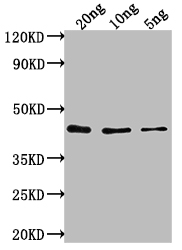
The antibody against Htra1 was raised in rabbit using the Recombinant Mouse Serine protease HTRA1 (Htra1), partial (141-480AA) as the immunogen. This antibody exists as a non-conjugated isotype IgG, Protein A/G purified. This antibody has been validated on ELISA, WB.

ADC-01733A

The antibody against Htra1 was raised in rabbit using the Recombinant Mouse Serine protease HTRA1 (Htra1), partial (141-480AA) as the immunogen. This antibody exists as a non-conjugated isotype IgG, Protein A/G purified. This antibody has been validated on ELISA, WB.

$299.00

Number
Order Exclusive Products Now

Request a Quote
High Purity LevelsPrecision and ReliabilityCustomization Options

Specifications


Cat.No ADC-01733A ClonalityPolyclonal
Host SpeciesRabbitTarget NameHTRA1
Target SynonymsHtra1 antibody; Htra antibody; Prss11 antibody; Serine protease HTRA1 antibody; EC 3.4.21.- antibody; High-temperature requirement A serine peptidase 1 antibody; Serine protease 11 antibodyFormLiquid
Species ReactivityMus musculusIsotypeIgG
Storage Buffer0.01M PBS, 0.03% Proclin 300; Constituents: 50% Glycerol, PH 7.4Purification MethodProtein A/G purified
ConjugateNon-conjugatedApplicationELISA, WB
StorageUpon receipt

Immunogen Information


Immunogen DescriptionRecombinant Mouse Serine protease HTRA1 (Htra1), partial (141-480AA)Target SpeciesMus musculus (Mouse)
Immunogen SequenceComplete sequences for the immunogen, target protein, and peptides are available upon request.Uniprot IDQ9R118
Background Information
  • Uniprot Id

    Q9R118

  • Target Species

    Mouse

  • Target Name

    HTRA1

  • Target Full Name

    Serine protease HTRA1

  • Target Function

    Serine protease with a variety of targets, including extracellular matrix proteins such as fibronectin. HTRA1-generated fibronectin fragments further induce synovial cells to up-regulate MMP1 and MMP3 production. May also degrade proteoglycans, such as aggrecan, decorin and fibromodulin. Through cleavage of proteoglycans, may release soluble FGF-glycosaminoglycan complexes that promote the range and intensity of FGF signals in the extracellular space. Regulates the availability of insulin-like growth factors (IGFs) by cleaving IGF-binding proteins. Inhibits signaling mediated by TGF-beta family members. This activity requires the integrity of the catalytic site, but it is unclear whether it leads to the proteolytic degradation of TGF-beta proteins themselves or not. By acting on TGF-beta signaling, may regulate many physiological processes, including retinal angiogenesis and neuronal survival and maturation during development. Intracellularly, degrades TSC2, leading to the activation of TSC2 downstream targets.

  • Target Subcellular Location

    Cell membrane. Secreted. Cytoplasm, cytosol.

  • Target Protein Families

    Peptidase S1C family

  • Target Tissue Specificity

    In the brain, mainly expressed in cortical areas both in glial cells and neurons (at protein level). In bones, deposited in the matrix, with higher level in newly formed bone compared to fully calcified bone (at protein level). Also expressed in the tendo

Inquire Rabbit anti-Mus musculus (Mouse) Htra1 Polyclonal Antibody Now


AbTriva respects your privacy and protects your personal data in accordance with AbTriva. For more information, please see our data protection statement. *

Notification