• Contact info@abtriva.com for inquiries and orders.
  • Chinese (Simplified)

  • English

  • German

  • Korean

  • Spanish

United States (English / $ USD)

Rabbit anti-Human cGAS Polyclonal Antibody

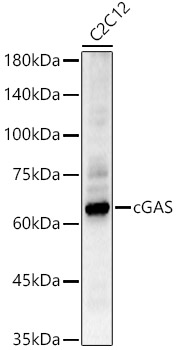
The antibody against cGAS was raised in Rabbit using a synthetic peptide corresponding to a sequence within amino acids 400-500 of human CGAS(NP_612450.2) as the immunogen. The polyclonal antibody exists as a isotype IgG, by affinity purification. This antibody has been validated on WB, IF/ICC, ELISA.

ADA-11988A

The antibody against cGAS was raised in Rabbit using a synthetic peptide corresponding to a sequence within amino acids 400-500 of human CGAS(NP_612450.2) as the immunogen. The polyclonal antibody exists as a isotype IgG, by affinity purification. This antibody has been validated on WB, IF/ICC, ELISA.

Number
Order Exclusive Products Now

Request a Quote
High Purity LevelsPrecision and ReliabilityCustomization Options

Specifications


Cat.No ADA-11988A ClonalityPolyclonal
Host SpeciesRabbitTarget NamecGAS
Target SynonymsMB21D1; h-cGAS; C6orf150; cGASFormLiquid
Species ReactivityHuman, Mouse, RatIsotypeIgG
Storage Buffer50% Glycerol, PBS with 0.02% sodium azide, pH7.3.Purification MethodAffinity purification
Positive SamplesC2C12ApplicationELISA, WB, IF/ICC

Immunogen Information


Immunogen DescriptionA synthetic peptide corresponding to a sequence within amino acids 400-500 of human CGAS(NP_612450.2).Target SpeciesHuman
Immunogen SequenceKEEKCCRKDCLKLMKYLLEQLKERFKDKKHLDKFSSYHVKTAFFHVCTQNPQDSQWDRKDLGLCFDNCVTYFLQCLRTEKLENYFIPEFNLFSSNLIDKRSUniprot IDQ8N884
Background Information
  • Uniprot Id

    Q8N884

  • Target Species

    Human

  • Target Name

    CGAS

  • Target Full Name

    Cyclic GMP-AMP synthase

  • Target Function

    Nucleotidyltransferase that catalyzes the formation of cyclic GMP-AMP (cGAMP) from ATP and GTP and plays a key role in innate immunity. Catalysis involves both the formation of a 2',5' phosphodiester linkage at the GpA step and the formation of a 3',5' phosphodiester linkage at the ApG step, producing c[G(2',5')pA(3',5')p]. Acts as a key cytosolic DNA sensor, the presence of double-stranded DNA (dsDNA) in the cytoplasm being a danger signal that triggers the immune responses. Binds cytosolic DNA directly, leading to activation and synthesis of cGAMP, a second messenger that binds to and activates TMEM173/STING, thereby triggering type-I interferon production. Preferentially recognizes and binds curved long DNAs. In contrast to other mammals, human CGAS displays species-specific mechanisms of DNA recognition and produces less cyclic GMP-AMP (cGAMP), allowing a more fine-tuned response to pathogens. Has antiviral activity by sensing the presence of dsDNA from DNA viruses in the cytoplasm. Also acts as an innate immune sensor of infection by retroviruses, such as HIV-1, by detecting the presence of reverse-transcribed DNA in the cytosol. Detection of retroviral reverse-transcribed DNA in the cytosol may be indirect and be mediated via interaction with PQBP1, which directly binds reverse-transcribed retroviral DNA. Also detects the presence of DNA from bacteria, such as M.tuberculosis. cGAMP can be transferred from producing cells to neighboring cells through gap junctions, leading to promote TMEM173/STING activation and convey immune response to connecting cells. cGAMP can also be transferred between cells by virtue of packaging within viral particles contributing to IFN-induction in newly infected cells in a cGAS-independent but TMEM173/STING-dependent manner. In addition to antiviral activity, also involved in the response to cellular stresses, such as senescence, DNA damage or genome instability. Acts as a regulator of cellular senescence by binding to cytosolic chromatin fragments that are present in senescent cells, leading to trigger type-I interferon production via TMEM173/STING and promote cellular senescence. Also involved in the inflammatory response to genome instability and double-stranded DNA breaks: acts by localizing to micronuclei arising from genome instability. Micronuclei, which as frequently found in cancer cells, consist of chromatin surrounded by its own nuclear membrane: following breakdown of the micronuclear envelope, a process associated with chromothripsis, CGAS binds self-DNA exposed to the cytosol, leading to cGAMP synthesis and subsequent activation of TMEM173/STING and type-I interferon production. Acts as a suppressor of DNA repair in response to DNA damage: translocates to the nucleus following dephosphorylation at Tyr-215 and inhibits homologous recombination repair by interacting with PARP1, the CGAS-PARP1 interaction leading to impede the formation of the PARP1-TIMELESS complex

  • Target Subcellular Location

    Cell membrane; Peripheral membrane protein. Cytoplasm, cytosol. Nucleus.;

  • Target Protein Families

    Mab-21 family

  • Target Tissue Specificity

    Expressed in the monocytic cell line THP1.

  • Target Research Area

    Cell Biology

  • Target Synonyms

    2'3'-cGAMP synthase Mab-21 domain-containing protein 1

Inquire Rabbit anti-Human cGAS Polyclonal Antibody Now


AbTriva respects your privacy and protects your personal data in accordance with AbTriva. For more information, please see our data protection statement. *

Notification