-
Chinese (Simplified)
-
English
-
German
-
Korean
-
Spanish

Chinese (Simplified)
English
German
Korean
Spanish
Sign up for an account to enjoy easy online shopping and instant order tracking.
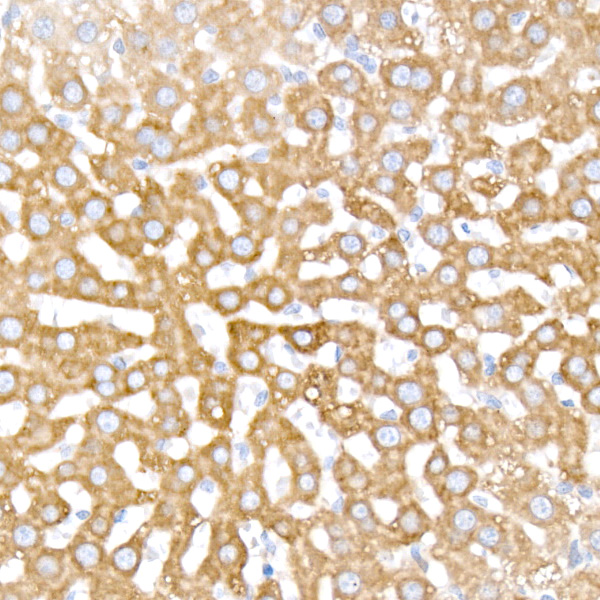
The antibody against INSIG1 was raised in Rabbit using the recombinant protein of human INSIG1 as the immunogen. The monoclonal antibody exists as a isotype IgG, by affinity purification. This antibody has been validated on IHC-P, ELISA.
| Cat.No | ADA-15313A | Clonality | Monoclonal |
|---|---|---|---|
| Host Species | Rabbit | Target Name | INSIG1 |
| Target Synonyms | CL6; INSIG1 | Form | Liquid |
| Species Reactivity | Mouse, Rat | Isotype | IgG |
| Storage Buffer | 50% Glycerol, 0.05% BSA, PBS with 0.05% proclin300, pH7.3. | Purification Method | Affinity purification |
| Application | ELISA, IHC-P |
| Immunogen Description | Recombinant protein of human INSIG1. | Target Species | Human |
|---|---|---|---|
| Immunogen Sequence | Complete sequences for the immunogen, target protein, and peptides are available upon request. | Uniprot ID | O15503 |
Uniprot Id
O15503
Target Species
Human
Target Name
INSIG1
Target Full Name
Insulin-induced gene 1 protein
Target Function
Oxysterol-binding protein that mediates feedback control of cholesterol synthesis by controlling both endoplasmic reticulum to Golgi transport of SCAP and degradation of HMGCR. Acts as a negative regulator of cholesterol biosynthesis by mediating the retention of the SCAP-SREBP complex in the endoplasmic reticulum, thereby blocking the processing of sterol regulatory element-binding proteins (SREBPs) SREBF1/SREBP1 and SREBF2/SREBP2. Binds oxysterol, including 25-hydroxycholesterol, regulating interaction with SCAP and retention of the SCAP-SREBP complex in the endoplasmic reticulum. In presence of oxysterol, interacts with SCAP, retaining the SCAP-SREBP complex in the endoplasmic reticulum, thereby preventing SCAP from escorting SREBF1/SREBP1 and SREBF2/SREBP2 to the Golgi. Sterol deprivation or phosphorylation by PCK1 reduce oxysterol-binding, disrupting the interaction between INSIG1 and SCAP, thereby promoting Golgi transport of the SCAP-SREBP complex, followed by processing and nuclear translocation of SREBF1/SREBP1 and SREBF2/SREBP2. Also regulates cholesterol synthesis by regulating degradation of HMGCR: initiates the sterol-mediated ubiquitin-mediated endoplasmic reticulum-associated degradation (ERAD) of HMGCR via recruitment of the reductase to the ubiquitin ligases AMFR/gp78 and/or RNF139. Also regulates degradation of SOAT2/ACAT2 when the lipid levels are low: initiates the ubiquitin-mediated degradation of SOAT2/ACAT2 via recruitment of the ubiquitin ligases AMFR/gp78.
Target Subcellular Location
Endoplasmic reticulum membrane; Multi-pass membrane protein.
Target Protein Families
INSIG family
Target Tissue Specificity
Expressed in all tissues tested with highest expression in the liver.
Target Synonyms
INSIG1; Insulin-induced gene 1 protein; INSIG-1
Target Background
This gene encodes an endoplasmic reticulum membrane protein that regulates cholesterol metabolism, lipogenesis, and glucose homeostasis. The encoded protein has six transmembrane helices which contain an effector protein binding site. It binds the sterol-sensing domains of sterol regulatory element-binding protein (SREBP) cleavage-activating protein (SCAP) and 3-hydroxy-3-methylglutaryl-coenzyme A reductase (HMG-CoA reductase), and is essential for the sterol-mediated trafficking of these two proteins. It promotes the endoplasmic reticulum retention of SCAP and the ubiquitin-mediated degradation of HMG-CoA reductase. Alternative splicing results in multiple transcript variants.
Notification