-
Chinese (Simplified)
-
English
-
German
-
Korean
-
Spanish
Chinese (Simplified)
English
German
Korean
Spanish
Sign up for an account to enjoy easy online shopping and instant order tracking.
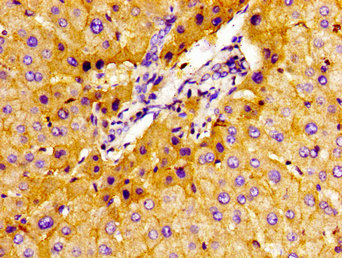
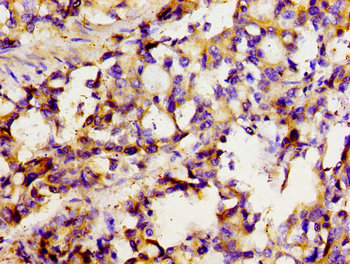
The antibody against SLC22A1 was raised in rabbit using the Recombinant Human Solute carrier family 22 member 1 protein (43-149AA) as the immunogen. This antibody exists as a non-conjugated isotype IgG, purified by protein G with a purity greater than 95%. This antibody has been validated on ELISA, IHC.
$299.00
| Cat.No | ADC-08366A | Clonality | Polyclonal |
|---|---|---|---|
| Host Species | Rabbit | Target Name | SLC22A1 |
| Target Synonyms | hOCT1 antibody; OCT1 antibody; oct1_cds antibody; Organic cation transporter 1 antibody; S22A1_HUMAN antibody; Slc22a1 antibody; solute carrier family 22 (organic cation transporter), member 1 antibody; Solute carrier family 22 member 1 antibody | Form | Liquid |
| Species Reactivity | Human | Isotype | IgG |
| Storage Buffer | 0.01M PBS, 0.03% Proclin 300; Constituents: 50% Glycerol, PH 7.4 | Purification Method | >95%, Protein G purified |
| Conjugate | Non-conjugated | Application | ELISA, IHC |
| Storage | Upon receipt |
| Immunogen Description | Recombinant Human Solute carrier family 22 member 1 protein (43-149AA) | Target Species | Human |
|---|---|---|---|
| Immunogen Sequence | Complete sequences for the immunogen, target protein, and peptides are available upon request. | Uniprot ID | O15245 |
Uniprot Id
O15245
Target Species
Human
Target Name
SLC22A1
Target Full Name
Solute carrier family 22 member 1
Target Function
Translocates a broad array of organic cations with various structures and molecular weights including the model compounds 1-methyl-4-phenylpyridinium (MPP), tetraethylammonium (TEA), N-1-methylnicotinamide (NMN), 4-(4-(dimethylamino)styryl)-N-methylpyridinium (ASP), the endogenous compounds choline, guanidine, histamine, epinephrine, adrenaline, noradrenaline and dopamine, and the drugs quinine, and metformin. The transport of organic cations is inhibited by a broad array of compounds like tetramethylammonium (TMA), cocaine, lidocaine, NMDA receptor antagonists, atropine, prazosin, cimetidine, TEA and NMN, guanidine, cimetidine, choline, procainamide, quinine, tetrabutylammonium, and tetrapentylammonium. Translocates organic cations in an electrogenic and pH-independent manner. Translocates organic cations across the plasma membrane in both directions. Transports the polyamines spermine and spermidine. Transports pramipexole across the basolateral membrane of the proximal tubular epithelial cells. The choline transport is activated by MMTS. Regulated by various intracellular signaling pathways including inhibition by protein kinase A activation, and endogenously activation by the calmodulin complex, the calmodulin-dependent kinase II and LCK tyrosine kinase.
Target Subcellular Location
Basolateral cell membrane; Multi-pass membrane protein.
Target Protein Families
Major facilitator (TC 2.A.1) superfamily, Organic cation transporter (TC 2.A.1.19) family
Target Tissue Specificity
Widely expressed with high level in liver. Isoform 1 and isoform 2 are expressed in liver. Isoform 1, isoform 2, isoform 3 and isoform 4 are expressed in glial cell lines.
Target Research Area
Signal Transduction
Target Synonyms
hOCT1; OCT1; oct1_cds; Organic cation transporter 1; S22A1_HUMAN; Slc22a1; solute carrier family 22 (organic cation transporter), member 1; Solute carrier family 22 member 1
Target Background
Polyspecific organic cation transporters in the liver, kidney, intestine, and other organs are critical for elimination of many endogenous small organic cations as well as a wide array of drugs and environmental toxins. This gene is one of three similar cation transporter genes located in a cluster on chromosome 6. The encoded protein contains twelve putative transmembrane domains and is a plasma integral membrane protein. Two transcript variants encoding two different isoforms have been found for this gene, but only the longer variant encodes a functional transporter.
Notification