• Contact info@abtriva.com for inquiries and orders.
  • Chinese (Simplified)

  • English

  • German

  • Korean

  • Spanish

United States (English / $ USD)

Rabbit anti-Human KCNK1 Polyclonal Antibody

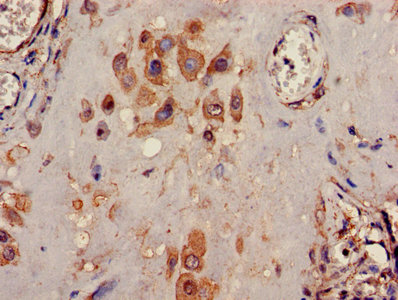
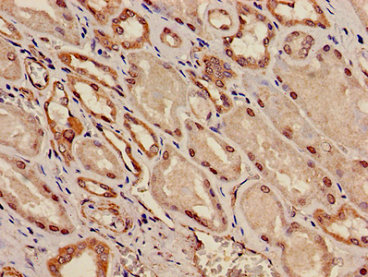
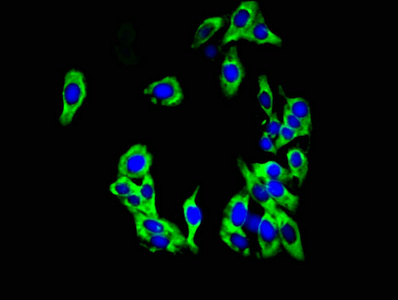
The antibody against KCNK1 was raised in rabbit using the Recombinant Human Potassium channel subfamily K member 1 protein (268-336AA) as the immunogen. This antibody exists as a non-conjugated isotype IgG, purified by protein G with a purity greater than 95%. This antibody has been validated on ELISA, IHC, IF.

ADC-09712A

The antibody against KCNK1 was raised in rabbit using the Recombinant Human Potassium channel subfamily K member 1 protein (268-336AA) as the immunogen. This antibody exists as a non-conjugated isotype IgG, purified by protein G with a purity greater than 95%. This antibody has been validated on ELISA, IHC, IF.

$299.00

Number
Order Exclusive Products Now

Request a Quote
High Purity LevelsPrecision and ReliabilityCustomization Options

Specifications


Cat.No ADC-09712A ClonalityPolyclonal
Host SpeciesRabbitTarget NameKCNK1
Target SynonymsKCNK1; HOHO1; KCNO1; TWIK1; Potassium channel subfamily K member 1; Inward rectifying potassium channel protein TWIK-1; Potassium channel K2P1; Potassium channel KCNO1FormLiquid
Species ReactivityHumanIsotypeIgG
Storage Buffer0.01M PBS, 0.03% Proclin 300; Constituents: 50% Glycerol, PH 7.4Purification Method>95%, Protein G purified
ConjugateNon-conjugatedApplicationELISA, IF, IHC
StorageUpon receipt

Immunogen Information


Immunogen DescriptionRecombinant Human Potassium channel subfamily K member 1 protein (268-336AA)Target SpeciesHuman
Immunogen SequenceComplete sequences for the immunogen, target protein, and peptides are available upon request.Uniprot IDO00180
Background Information
  • Uniprot Id

    O00180

  • Target Species

    Human

  • Target Name

    KCNK1

  • Target Full Name

    Potassium channel subfamily K member 1

  • Target Function

    Ion channel that contributes to passive transmembrane potassium transport and to the regulation of the resting membrane potential in brain astrocytes, but also in kidney and in other tissues. Forms dimeric channels through which potassium ions pass in accordance with their electrochemical gradient. The channel is selective for K(+) ions at physiological potassium concentrations and at neutral pH, but becomes permeable to Na(+) at subphysiological K(+) levels and upon acidification of the extracellular medium. The homodimer has very low potassium channel activity, when expressed in heterologous systems, and can function as weakly inward rectifying potassium channel. Channel activity is modulated by activation of serotonin receptors. Heterodimeric channels containing KCNK1 and KCNK2 have much higher activity, and may represent the predominant form in astrocytes. Heterodimeric channels containing KCNK1 and KCNK3 or KCNK9 have much higher activity. Heterodimeric channels formed by KCNK1 and KCNK9 may contribute to halothane-sensitive currents. Mediates outward rectifying potassium currents in dentate gyrus granule cells and contributes to the regulation of their resting membrane potential. Contributes to the regulation of action potential firing in dentate gyrus granule cells and down-regulates their intrinsic excitability. In astrocytes, the heterodimer formed by KCNK1 and KCNK2 is required for rapid glutamate release in response to activation of G-protein coupled receptors, such as F2R and CNR1. Required for normal ion and water transport in the kidney. Contributes to the regulation of the resting membrane potential of pancreatic beta cells. The low channel activity of homodimeric KCNK1 may be due to sumoylation. The low channel activity may be due to rapid internalization from the cell membrane and retention in recycling endosomes.

  • Target Subcellular Location

    Cell membrane; Multi-pass membrane protein. Recycling endosome. Cell junction, synapse, synaptic cell membrane. Cytoplasmic vesicle. Perikaryon. Cell projection, dendrite. Cell projection. Apical cell membrane; Multi-pass membrane protein.

  • Target Protein Families

    Two pore domain potassium channel (TC 1.A.1.8) family

  • Target Tissue Specificity

    Detected in bronchial epithelial cells. Detected in heart left atrium and left ventricle. Detected in cardiac myocytes (at protein level). Widely expressed with high levels in heart, brain and kidney, and lower levels in colon, ovary, placenta, lung and l

  • Target Synonyms

    KCNK1; HOHO1; KCNO1; TWIK1; Potassium channel subfamily K member 1; Inward rectifying potassium channel protein TWIK-1; Potassium channel K2P1; Potassium channel KCNO1

Inquire Rabbit anti-Human KCNK1 Polyclonal Antibody Now


AbTriva respects your privacy and protects your personal data in accordance with AbTriva. For more information, please see our data protection statement. *

Notification