His-Tag Protein Purification with Ni-NTA: Step-by-Step Protocol
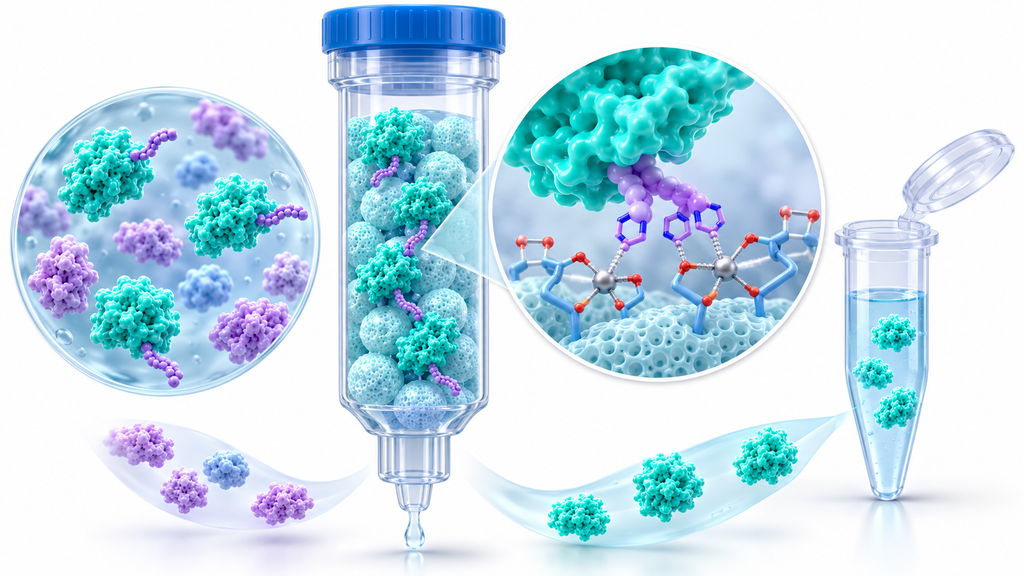
His-Tag Protein Purification with Ni-NTA is a widely used method for isolating recombinant proteins from cell lysates. It relies on Ni-NTA affinity chromatography, where nickel ions bind to histidine tags attached to target proteins. During the protein purification workflow, unwanted proteins are washed away, and the target protein is released using imidazole elution. This method is popular because it's simple, efficient, and suitable for many laboratory applications. However, proper buffer selection, resin preparation, and handling are essential for good results. This guide explains the purification steps, common problems, and practical tips to improve protein recovery and maintain biological activity.
What Are Lyophilized Recombinant Proteins and Why Are They Used?
Lyophilized recombinant proteins are purified proteins preserved by freeze-drying. Removing water can improve storage stability, but the protein's formulation and structure still determine how well it survives drying.
His-tag protein purification is a different process. It separates tagged proteins from other molecules before final formulation. Researchers can explore AbTriva's recombinant protein collection to compare protein formats and specifications.
How Does Ni-NTA Affinity Chromatography Work?
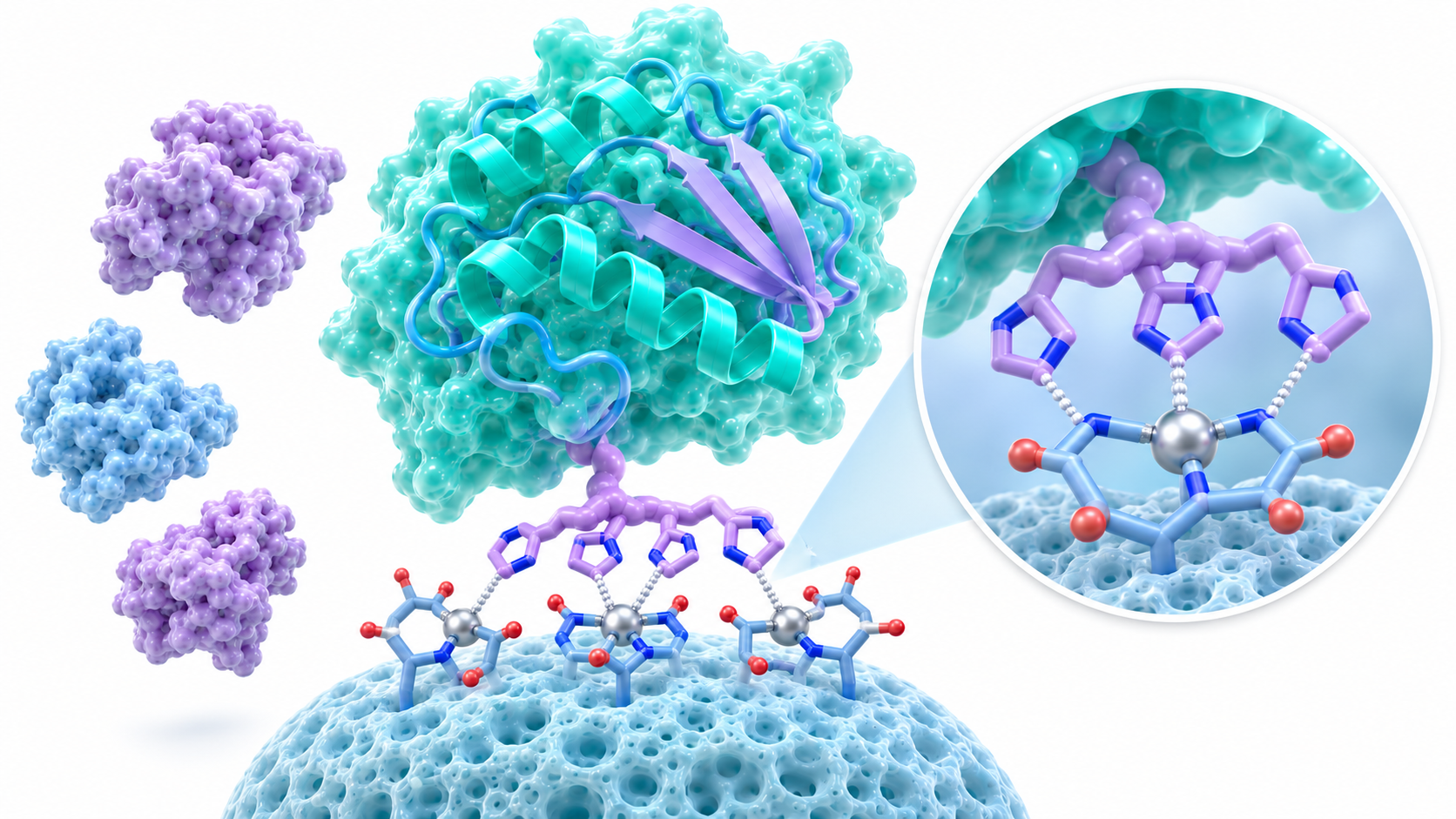
Ni-NTA affinity chromatography uses nickel ions held by NTA groups on a resin. Histidine residues in His6-tagged proteins coordinate with nickel, allowing target proteins to bind while many contaminants pass through.
Why Are His-Tags Used for Recombinant Proteins?
A six-histidine tag is small, easy to add during recombinant expression, and useful for purification and detection. However, tag position and accessibility can affect how strongly the protein binds.
Purified Protein vs. Lyophilized Protein
Purification removes unwanted sample components. Lyophilization removes water from an already prepared protein formulation. A protein may be purified using Ni-NTA and later freeze-dried, but these procedures aren't interchangeable.
For example, AbTriva's recombinant human IFI6 protein is described with an N-terminal 6xHis-containing fusion tag, affinity purification, and liquid or lyophilized formats.
Essential Materials and Preparation Before Protein Reconstitution
Before starting your protein purification workflow, confirm the expression system, tag location, sample solubility, and intended downstream application. Native and denaturing purification require different buffer conditions.
For reconstitution, check the Certificate of Analysis (CoA) and product datasheet. These should guide your choice of solvent, target concentration, and protein storage conditions.
Materials for Native His-Tag Purification
You'll generally need clarified cell lysate, Ni-NTA resin, chromatography columns, binding and wash buffers, imidazole, and fraction collection tubes. Keep appropriate equipment available for centrifugation and protein analysis.
Example Ni-NTA Buffer Conditions
The table gives illustrative conditions for compatible native 6xHis-tagged proteins, based on established Ni-NTA methods. Adjust the formulation to match your protein and resin manufacturer's protocol.
Buffer
Example composition
Purpose
Binding
50 mM sodium phosphate, 300 mM NaCl, 10 mM imidazole, pH 8.0
Capture His-tagged protein
Wash
50 mM sodium phosphate, 300 mM NaCl, 20 mM imidazole, pH 8.0
Reduce nonspecific binding
Elution
50 mM sodium phosphate, 300 mM NaCl, 250 mM imidazole, pH 8.0
Release target protein
These values are examples, not universal requirements. QIAGEN recommends optimizing low imidazole concentrations during binding and washing and commonly uses approximately 100–250 mM for elution.
Confirm the Tag and Protein Specifications
Some proteins carry His-tags alongside larger fusion partners. AbTriva's recombinant human PGM3 protein is described with an N-terminal 6xHis-SUMO tag, illustrating why the complete construct matters.
How to Reconstitute Lyophilized Recombinant Proteins: Step-by-Step Protocol
For His-Tag Protein Purification, the core method is binding, washing, and elution. Reconstitution comes afterward if the purified protein has been freeze-dried for storage or shipment.
A protein reconstitution protocol instead prepares dry protein for use. These two workflows are presented separately below so you can follow the appropriate procedure.
Step 1: Prepare and Clarify the Cell Lysate
Harvest your expression sample and lyse cells using conditions suitable for your protein. Clarify the lysate by centrifugation, retaining soluble material and a small sample for later analysis.
Step 2: Equilibrate the Ni-NTA Resin
Prepare the affinity chromatography resin according to its manufacturer instructions. Equilibrate it with binding buffer and make sure the sample contains no incompatible chelating agents.
Step 3: Bind the His-Tagged Protein
Apply clarified lysate to the equilibrated resin. Follow the recommended contact time and flow conditions so the tagged protein can bind efficiently. Collect the unbound fraction for troubleshooting.
Step 4: Wash Away Contaminating Proteins
Wash the resin with a suitable low-imidazole buffer. This removes many weakly binding proteins while retaining the target. Excessive imidazole may cause premature target loss.
Step 5: Elute the Purified Protein
Use imidazole elution to compete with the histidine tag for nickel binding. Collect separate fractions and avoid combining them until their purity and protein content have been checked.
Step 6: Remove Imidazole and Analyze Fractions
Use dialysis, desalting, or ultrafiltration when downstream experiments require imidazole removal. Compare lysate, flow-through, wash, and elution fractions using SDS-PAGE protein analysis.
AbTriva's tag and control antibody collection can help you explore reagents for checking tagged proteins, subject to individual application validation.
Step 7: Reconstitute Freeze-Dried Purified Protein When Needed
Let the sealed vial equilibrate as directed, then briefly centrifuge before opening. Add the manufacturer-recommended solvent, allow gentle dissolution, and avoid vigorous vortexing or unnecessary foam formation.
For a related formulation example, AbTriva lists recombinant human IL-40 protein as lyophilized powder. Its product-specific instructions should determine reconstitution rather than the Ni-NTA buffer recipe.
Choosing the Right Reconstitution Buffer, Solvent, and Protein Concentration
The appropriate reconstitution buffer depends on the protein's solubility, pH requirements, and formulation. Sterile water, PBS, and acidic solvents aren't interchangeable for every target.
After Ni-NTA purification, buffer exchange may also be needed. Removing imidazole and adjusting salt or glycerol can improve compatibility with functional assays and storage.
How to Calculate Reconstitution Buffer Volume
Divide protein mass by the desired final concentration. For example, dissolve 100 µg in 1 mL to obtain 100 µg/mL, assuming the stated protein mass is accurate.
[ \text{Volume (mL)}=\frac{\text{Protein mass (mg)}}{\text{Target concentration (mg/mL)}} ]
Choosing a Buffer After Ni-NTA Elution
For native proteins, select a buffer that maintains solubility and activity. Don't automatically use the original purification buffer for storage, especially when high imidazole concentrations affect downstream measurements.
Nickel vs. Cobalt Affinity Purification
Nickel-based resins often provide useful binding capacity, while cobalt-based systems may offer greater selectivity for some targets. Actual purity and recovery depend on the resin, tag, and sample.
AbTriva's recombinant human CLECL1P protein provides an example of a construct with an N-terminal 10xHis tag and a C-terminal Myc tag.
How to Improve Protein Solubility and Prevent Aggregation or Denaturation
Protein solubility is essential for successful native purification and reconstitution. Poor solubility can reduce resin binding, interfere with elution, or cause visible particles in the final sample.
Protein aggregation may result from unsuitable pH, excessive concentration, temperature changes, or unstable buffer composition. Preventing damage is easier than recovering a heavily aggregated protein.
Native vs. Denaturing Protein Purification
Native purification aims to preserve folded protein. Denaturing methods use reagents such as urea or guanidine hydrochloride when proteins are insoluble, but additional refolding may be necessary afterward.
How to Prevent Protein Denaturation
Minimize unnecessary warming, harsh agitation, and exposure to incompatible additives. Keep protein handling consistent and use stabilizers only when suitable for the target and downstream assay.
Protecting Biological Activity
Purity alone doesn't prove biological function. A protein may appear clean on SDS-PAGE but have reduced activity, especially after denaturing purification or incomplete refolding.
For example, AbTriva's recombinant antileukoproteinase protein includes formulation and purity information that should be considered alongside any assay-specific activity requirements.
How to Store Reconstituted Recombinant Proteins for Short-Term and Long-Term Use
Short-term protein storage and long-term protein storage depend on the protein's stability, buffer, concentration, and application. Some purified proteins tolerate refrigeration, while others need frozen storage.
Avoid assuming that every recombinant protein can safely remain at 4°C, −20°C, or −80°C for the same period. Use validated manufacturer conditions wherever available.
Short-Term Storage at 2–8°C
Refrigeration may be suitable for certain stable proteins over limited periods. Check the approved duration and monitor for precipitation or activity loss before using stored samples.
Long-Term Storage at −20°C or −80°C
Frozen aliquots are commonly used for sensitive protein stocks. Storage at −80°C may benefit some proteins, but the correct temperature and allowable storage time are formulation-specific.
Aliquoting and Freeze-Thaw Protection
Protein aliquoting reduces repeated exposure to temperature changes. Prepare volumes suitable for individual experiments and avoid unnecessary freeze-thaw cycles, particularly for sensitive enzymes and signaling proteins.
AbTriva's recombinant human NAPB protein illustrates a lyophilized formulation for which the product's handling details need careful review.
Common Protein Reconstitution and Storage Problems: Troubleshooting Guide
Poor protein recovery may originate during cell lysis, resin binding, elution, buffer exchange, or storage. Tracking fractions helps identify where the target was lost.
Protein degradation can also occur after an apparently successful purification. Check protein integrity and activity before making major changes to the purification workflow.
Why Doesn't My His-Tagged Protein Bind to Ni-NTA?
The His-tag may be missing, inaccessible, or affected by buffer conditions. Check expression, lysate pH, chelating additives, and imidazole concentration before increasing resin quantity.
Why Is My Protein Contaminated After Elution?
Contaminants may bind nonspecifically to nickel resin. Optimize wash stringency, resin loading, and salt conditions. If purity remains poor, consider a second purification step.
Why Does My Protein Precipitate After Buffer Exchange?
Removing imidazole or changing pH and salt can reduce stability. Test buffer changes on a small sample before exchanging the entire purified preparation.
Troubleshooting His-Tag Purification and Protein Storage
Problem
Likely cause
Practical correction
Low binding
Hidden tag or incompatible buffer
Check tag accessibility and pH
Protein in wash fraction
Excessive wash stringency
Optimize imidazole concentration
Contaminated eluate
Nonspecific resin binding
Improve washing or add polishing step
Poor protein recovery
Aggregation or adsorption
Review buffer and concentration
Precipitation
Unsuitable buffer exchange
Test alternative compatible conditions
Reduced biological activity
Denaturation or storage damage
Reassess purification and storage
Unexpected SDS-PAGE bands
Degradation or impurities
Review protease control and fraction purity
Checking Purity and Activity
Use SDS-PAGE to assess fraction composition and molecular weight. A protein activity assay adds evidence that the purified protein remains functional after preparation and storage.
Frequently Asked Questions
1. How Do You Perform His-Tag Protein Purification in the Lab?
His-tag protein purification involves preparing cell lysate, binding the tagged protein to Ni-NTA resin, washing away impurities, and eluting the target protein using imidazole.
2. What Is the Ni-NTA His-Tag Protein Purification Protocol?
The Ni-NTA purification protocol includes resin equilibration, sample loading, washing with low-imidazole buffer, and protein elution using higher imidazole concentrations. Purity is commonly checked by SDS-PAGE.
3. How Does Ni-NTA Protein Purification Work?
Ni-NTA affinity chromatography uses nickel ions to bind histidine residues in tagged proteins. Imidazole competes with these interactions, allowing the purified protein to be released.
4.What Is a His-Tag Protein Purification Kit?
A His-tag protein purification kit typically contains nickel or cobalt affinity resin and may include columns and buffers. It simplifies the isolation of recombinant proteins carrying histidine tags.
5. How Do You Purify His-Tagged Proteins?
His-tagged proteins are purified using immobilized metal affinity chromatography (IMAC). The target binds to nickel or cobalt resin, while unwanted proteins are washed away before elution.
Conclusion
Successful His-Tag Protein Purification requires suitable binding conditions, careful washing, controlled elution, and verification of the recovered protein. Ni-NTA chromatography can simplify purification, but protein solubility and tag accessibility still affect results.
After purification, choose a compatible storage buffer and prepare suitable aliquots. If your protein is supplied as a lyophilized product, follow its own reconstitution instructions. Combining careful purification with proper storage helps preserve protein quality and biological activity.
Fast & Free Shipping
Free shipping on orders $999+
Quality Guarantee
Advenit post multos Scudilo Scutariorum tribunus velament
Secure Payment
We accept credit cards, PayPal, and bank wires
Lifetime Customer Support
Responsive and knowledgable customer service via email, text or phone