• Contact info@abtriva.com for inquiries and orders.
  • Chinese (Simplified)

  • English

  • German

  • Korean

  • Spanish

United States (English / $ USD)

Rabbit anti-Human SGO1 Polyclonal Antibody

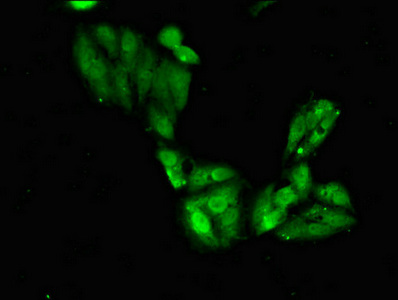
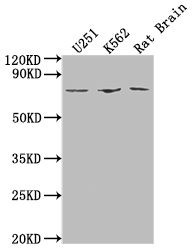
The antibody against SGO1 was raised in rabbit using the Recombinant Human Shugoshin 1 protein (260-439AA) as the immunogen. This antibody exists as a non-conjugated isotype IgG, purified by protein G with a purity greater than 95%. This antibody has been validated on ELISA, WB, IF.

ADC-10375A

The antibody against SGO1 was raised in rabbit using the Recombinant Human Shugoshin 1 protein (260-439AA) as the immunogen. This antibody exists as a non-conjugated isotype IgG, purified by protein G with a purity greater than 95%. This antibody has been validated on ELISA, WB, IF.

$299.00

Number
Order Exclusive Products Now

Request a Quote
High Purity LevelsPrecision and ReliabilityCustomization Options

Specifications


Cat.No ADC-10375A ClonalityPolyclonal
Host SpeciesRabbitTarget NameSGO1
FormLiquidSpecies ReactivityHuman, Mouse, Rat
IsotypeIgGStorage Buffer0.01M PBS, 0.03% Proclin 300; Constituents: 50% Glycerol, PH 7.4
Purification Method>95%, Protein G purifiedConjugateNon-conjugated
ApplicationELISA, IF, WBStorageUpon receipt

Immunogen Information


Immunogen DescriptionRecombinant Human Shugoshin 1 protein (260-439AA)Target SpeciesHuman
Immunogen SequenceComplete sequences for the immunogen, target protein, and peptides are available upon request.Uniprot IDQ5FBB7
Background Information
  • Uniprot Id

    Q5FBB7

  • Target Species

    Human

  • Target Name

    SGO1

  • Target Full Name

    Shugoshin 1

  • Target Function

    Plays a central role in chromosome cohesion during mitosis by preventing premature dissociation of cohesin complex from centromeres after prophase, when most of cohesin complex dissociates from chromosomes arms. May act by preventing phosphorylation of the STAG2 subunit of cohesin complex at the centromere, ensuring cohesin persistence at centromere until cohesin cleavage by ESPL1/separase at anaphase. Essential for proper chromosome segregation during mitosis and this function requires interaction with PPP2R1A. Its phosphorylated form is necessary for chromosome congression and for the proper attachment of spindle microtubule to the kinetochore. Necessary for kinetochore localization of PLK1 and CENPF. May play a role in the tension sensing mechanism of the spindle-assembly checkpoint by regulating PLK1 kinetochore affinity. Isoform 3 plays a role in maintaining centriole cohesion involved in controlling spindle pole integrity. Involved in centromeric enrichment of AUKRB in prometaphase.

  • Target Involvement

    Chronic atrial and intestinal dysrhythmia (CAID)

  • Target Subcellular Location

    Nucleus. Chromosome, centromere. Chromosome, centromere, kinetochore. Cytoplasm, cytoskeleton, spindle pole. Cytoplasm, cytoskeleton, microtubule organizing center, centrosome.

  • Target Protein Families

    Shugoshin family

  • Target Tissue Specificity

    Widely expressed. Highly expressed in testis. Expressed in lung, small intestine, breast, liver and placenta. Strongly overexpressed in 90% of breast cancers tested.

  • Target Synonyms

    hSgo 1; hSgo1; NY BR 85; Serologically defined breast cancer antigen NY BR 85 ; Serologically defined breast cancer antigen NY-BR-85; SGO 1; SGO; SGO L1; SGO1; SGOL 1; SGOL1; SGOL1_HUMAN; Shugoshin 1AB protein; Shugoshin 1CD protein; Shugoshin 1EFprotein; Shugoshin 1GH protein; Shugoshin 1KL protein; Shugoshin like 1 (S. pombe); Shugoshin like 1; Shugoshin-like 1

  • Target Background

    The protein encoded by this gene is a member of the shugoshin family of proteins. This protein is thought to protect centromeric cohesin from cleavage during mitotic prophase by preventing phosphorylation of a cohesin subunit. Reduced expression of this gene leads to the premature loss of centromeric cohesion, mis-segregation of sister chromatids, and mitotic arrest. Evidence suggests that this protein also protects a small subset of cohesin found along the length of the chromosome arms during mitotic prophase. An isoform lacking exon 6 has been shown to play a role in the cohesion of centrioles (PMID: 16582621 and PMID:18331714). Mutations in this gene have been associated with Chronic Atrial and Intestinal Dysrhythmia (CAID) syndrome, characterized by the co-occurrence of Sick Sinus Syndrome (SSS) and Chronic Intestinal Pseudo-obstruction (CIPO) within the first four decades of life (PMID:25282101). Fibroblast cells from CAID patients exhibited both increased cell proliferation and higher rates of senescence. Pseudogenes of this gene have been found on chromosomes 1 and 7. Alternative splicing results in multiple transcript variants.

Inquire Rabbit anti-Human SGO1 Polyclonal Antibody Now


AbTriva respects your privacy and protects your personal data in accordance with AbTriva. For more information, please see our data protection statement. *

Notification