• Contact info@abtriva.com for inquiries and orders.
  • Chinese (Simplified)

  • English

  • German

  • Korean

  • Spanish

United States (English / $ USD)

Rabbit anti-Human KCNK4 Polyclonal Antibody

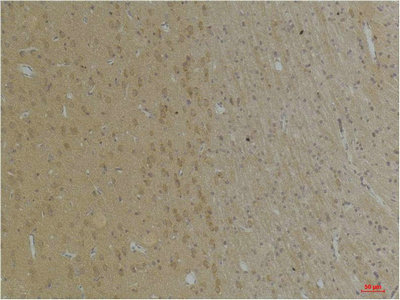
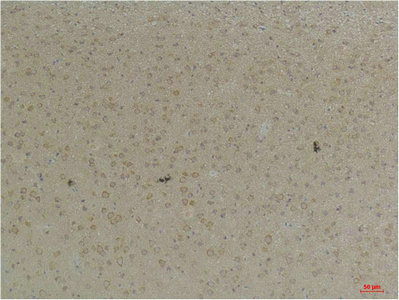
The antibody against KCNK4 was raised in rabbit using the Synthetic Peptide as the immunogen. This antibody exists as a non-conjugated antibody. The antibody was affinity-purified from rabbit antiserum by affinity-chromatography using specific immunogen. This antibody has been validated on IHC, ELISA.

ADC-13181A

The antibody against KCNK4 was raised in rabbit using the Synthetic Peptide as the immunogen. This antibody exists as a non-conjugated antibody. The antibody was affinity-purified from rabbit antiserum by affinity-chromatography using specific immunogen. This antibody has been validated on IHC, ELISA.

$167.00

Number
Order Exclusive Products Now

Request a Quote
High Purity LevelsPrecision and ReliabilityCustomization Options

Specifications


Cat.No ADC-13181A ClonalityPolyclonal
Host SpeciesRabbitTarget NameKCNK4
Target SynonymsKCNK4; TRAAK; Potassium channel subfamily K member 4; TWIK-related arachidonic acid-stimulated potassium channel protein; Two pore potassium channel KT4.1; Two pore K(+ channel KT4.1FormLiquid
Species ReactivityHuman, Mouse, RatStorage Buffer0.5% BSA and 0.02% sodium azide., Liquid in PBS containing 50% glycerol
Purification MethodThe antibody was affinity-purified from rabbit antiserum by affinity-chromatography using specific immunogen.ConjugateNon-conjugated
ApplicationELISA, IHCStorageUpon receipt

Immunogen Information


Immunogen DescriptionSynthetic PeptideTarget SpeciesHuman
Immunogen SequenceComplete sequences for the immunogen, target protein, and peptides are available upon request.Uniprot IDQ9NYG8
Background Information
  • Uniprot Id

    Q9NYG8

  • Target Species

    Human

  • Target Name

    KCNK4

  • Target Full Name

    Potassium channel subfamily K member 4

  • Target Function

    Voltage-insensitive potassium channel. Channel opening is triggered by mechanical forces that deform the membrane. Channel opening is triggered by raising the intracellular pH to basic levels. The channel is inactive at 24 degrees Celsius (in vitro); raising the temperature to 37 degrees Celsius increases the frequency of channel opening, with a further increase in channel activity when the temperature is raised to 42 degrees Celsius. Plays a role in the perception of pain caused by heat. Plays a role in the sensory perception of pain caused by pressure.

  • Target Subcellular Location

    Cell membrane; Multi-pass membrane protein.

  • Target Protein Families

    Two pore domain potassium channel (TC 1.A.1.8) family

  • Target Synonyms

    KCNK4; TRAAK; Potassium channel subfamily K member 4; TWIK-related arachidonic acid-stimulated potassium channel protein; Two pore potassium channel KT4.1; Two pore K(+ channel KT4.1

  • Target Background

    This gene encodes a member of the TWIK-related arachidonic acid-stimulated two pore potassium channel subfamily. The encoded protein homodimerizes and functions as an outwardly rectifying channel. This channel is regulated by polyunsaturated fatty acids, temperature and mechanical deformation of the lipid membrane. This protein is expressed primarily in neural tissues and may be involved in regulating the noxious input threshold in dorsal root ganglia neurons. Alternate splicing results in multiple transcript variants. Naturally occurring read-through transcripts also exist between this gene and the downstream testis expressed 40 (TEX40) gene, as represented in GeneID: 106780802.

Inquire Rabbit anti-Human KCNK4 Polyclonal Antibody Now


AbTriva respects your privacy and protects your personal data in accordance with AbTriva. For more information, please see our data protection statement. *

Notification