• Contact info@abtriva.com for inquiries and orders.
  • Chinese (Simplified)

  • English

  • German

  • Korean

  • Spanish

United States (English / $ USD)

Rabbit anti-Human KCNK10 Polyclonal Antibody

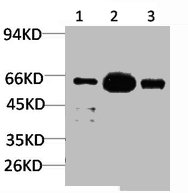
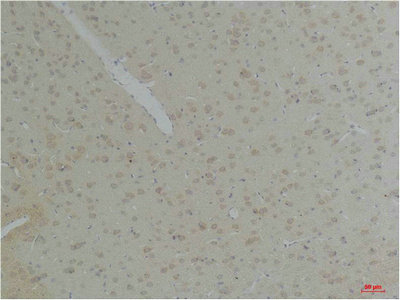
The antibody against KCNK10 was raised in rabbit using the Synthetic Peptide as the immunogen. This antibody exists as a non-conjugated antibody. The antibody was affinity-purified from rabbit antiserum by affinity-chromatography using specific immunogen. This antibody has been validated on WB, IHC, ELISA.

ADC-13182A

The antibody against KCNK10 was raised in rabbit using the Synthetic Peptide as the immunogen. This antibody exists as a non-conjugated antibody. The antibody was affinity-purified from rabbit antiserum by affinity-chromatography using specific immunogen. This antibody has been validated on WB, IHC, ELISA.

$167.00

Number
Order Exclusive Products Now

Request a Quote
High Purity LevelsPrecision and ReliabilityCustomization Options

Specifications


Cat.No ADC-13182A ClonalityPolyclonal
Host SpeciesRabbitTarget NameKCNK10
Target SynonymsKCNK10; TREK2; Potassium channel subfamily K member 10; Outward rectifying potassium channel protein TREK-2; TREK-2 K(+ channel subunitFormLiquid
Species ReactivityHuman, Mouse, RatStorage Buffer0.5% BSA and 0.02% sodium azide., Liquid in PBS containing 50% glycerol
Purification MethodThe antibody was affinity-purified from rabbit antiserum by affinity-chromatography using specific immunogen.ConjugateNon-conjugated
ApplicationELISA, IHC, WBStorageUpon receipt

Immunogen Information


Immunogen DescriptionSynthetic PeptideTarget SpeciesHuman
Immunogen SequenceComplete sequences for the immunogen, target protein, and peptides are available upon request.Uniprot IDP57789
Background Information
  • Uniprot Id

    P57789

  • Target Species

    Human

  • Target Name

    KCNK10

  • Target Full Name

    Potassium channel subfamily K member 10

  • Target Function

    Outward rectifying potassium channel. Produces rapidly activating and non-inactivating outward rectifier K(+) currents. Activated by arachidonic acid and other naturally occurring unsaturated free fatty acids.

  • Target Subcellular Location

    Membrane; Multi-pass membrane protein.

  • Target Protein Families

    Two pore domain potassium channel (TC 1.A.1.8) family

  • Target Tissue Specificity

    Abundantly expressed in pancreas and kidney and to a lower level in brain, testis, colon, and small intestine. Isoform b is strongly expressed in kidney (primarily in the proximal tubule) and pancreas, whereas isoform c is abundantly expressed in brain.

  • Target Synonyms

    KCNK10; TREK2; Potassium channel subfamily K member 10; Outward rectifying potassium channel protein TREK-2; TREK-2 K(+ channel subunit

  • Target Background

    The protein encoded by this gene belongs to the family of potassium channel proteins containing two pore-forming P domains. This channel is an open rectifier which primarily passes outward current under physiological K+ concentrations, and is stimulated strongly by arachidonic acid and to a lesser degree by membrane stretching, intracellular acidification, and general anaesthetics. Several alternatively spliced transcript variants encoding different isoforms have been identified for this gene.

Inquire Rabbit anti-Human KCNK10 Polyclonal Antibody Now


AbTriva respects your privacy and protects your personal data in accordance with AbTriva. For more information, please see our data protection statement. *

Notification