-
Chinese (Simplified)
-
English
-
German
-
Korean
-
Spanish
Chinese (Simplified)
English
German
Korean
Spanish
Sign up for an account to enjoy easy online shopping and instant order tracking.
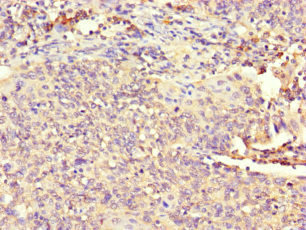
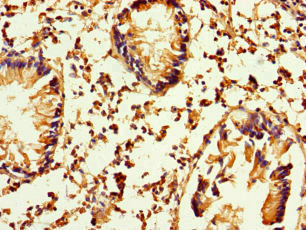
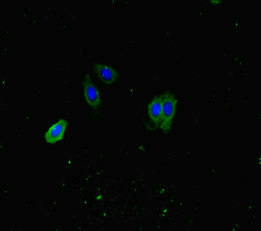
The antibody against ATP8A1 was raised in rabbit using the Recombinant Human Phospholipid-transporting ATPase IA protein (448-545AA) as the immunogen. This antibody exists as a non-conjugated isotype IgG, purified by protein G with a purity greater than 95%. This antibody has been validated on ELISA, IHC, IF.
$299.00
| Cat.No | ADC-14888A | Clonality | Polyclonal |
|---|---|---|---|
| Host Species | Rabbit | Target Name | ATP8A1 |
| Form | Liquid | Species Reactivity | Human |
| Isotype | IgG | Storage Buffer | 0.01M PBS, 0.03% Proclin 300; Constituents: 50% Glycerol, PH 7.4 |
| Purification Method | >95%, Protein G purified | Conjugate | Non-conjugated |
| Application | ELISA, IF, IHC | Storage | Upon receipt |
| Immunogen Description | Recombinant Human Phospholipid-transporting ATPase IA protein (448-545AA) | Target Species | Human |
|---|---|---|---|
| Immunogen Sequence | Complete sequences for the immunogen, target protein, and peptides are available upon request. | Uniprot ID | Q9Y2Q0 |
Uniprot Id
Q9Y2Q0
Target Species
Human
Target Name
ATP8A1
Target Full Name
Phospholipid-transporting ATPase IA
Target Function
Catalytic component of a P4-ATPase flippase complex which catalyzes the hydrolysis of ATP coupled to the transport of aminophospholipids from the outer to the inner leaflet of various membranes and ensures the maintenance of asymmetric distribution of phospholipids. Phospholipid translocation seems also to be implicated in vesicle formation and in uptake of lipid signaling molecules. In vitro, its ATPase activity is selectively and stereospecifically stimulated by phosphatidylserine (PS). The flippase complex ATP8A1:TMEM30A seems to play a role in regulation of cell migration probably involving flippase-mediated translocation of phosphatidylethanolamine (PE) at the plasma membrane. Acts as aminophospholipid translocase at the plasma membrane in neuronal cells.
Target Subcellular Location
Cytoplasmic vesicle, secretory vesicle, chromaffin granule membrane; Multi-pass membrane protein. Cytoplasmic granule. Cell membrane. Endoplasmic reticulum. Golgi apparatus.
Target Protein Families
Cation transport ATPase (P-type) (TC 3.A.3) family, Type IV subfamily
Target Tissue Specificity
Found in most adult tissues except liver, testis and placenta. Most abundant in heart, brain and skeletal muscle. Also detected in fetal tissues. Isoform 1 is only detected in brain, skeletal muscle and heart and is the most abundant form in skeletal musc
Target Synonyms
ATP8A1; ATPIAPhospholipid-transporting ATPase IA; EC 7.6.2.1; ATPase class I type 8A member 1; Chromaffin granule ATPase II; P4-ATPase flippase complex alpha subunit ATP8A1
Target Background
The P-type adenosinetriphosphatases (P-type ATPases) are a family of proteins which use the free energy of ATP hydrolysis to drive uphill transport of ions across membranes. Several subfamilies of P-type ATPases have been identified. One subfamily catalyzes transport of heavy metal ions. Another subfamily transports non-heavy metal ions (NMHI). The protein encoded by this gene is a member of the third subfamily of P-type ATPases and acts to transport amphipaths, such as phosphatidylserine. Two transcript variants encoding different isoforms have been found for this gene.
Notification