-
Chinese (Simplified)
-
English
-
German
-
Korean
-
Spanish
Chinese (Simplified)
English
German
Korean
Spanish
Sign up for an account to enjoy easy online shopping and instant order tracking.
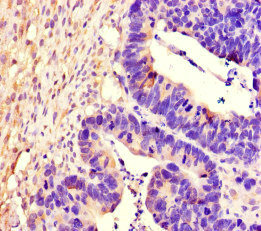
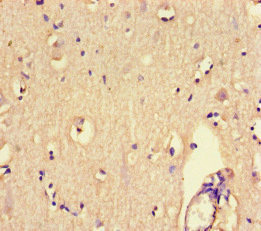
The antibody against PTPRS was raised in rabbit using the Recombinant Human Receptor-type tyrosine-protein phosphatase S protein (25-128AA) as the immunogen. This antibody exists as a non-conjugated isotype IgG, purified by protein G with a purity greater than 95%. This antibody has been validated on ELISA, IHC.
$299.00
| Cat.No | ADC-15466A | Clonality | Polyclonal |
|---|---|---|---|
| Host Species | Rabbit | Target Name | PTPRS |
| Form | Liquid | Species Reactivity | Human |
| Isotype | IgG | Storage Buffer | 0.01M PBS, 0.03% Proclin 300; Constituents: 50% Glycerol, PH 7.4 |
| Purification Method | >95%, Protein G purified | Conjugate | Non-conjugated |
| Application | ELISA, IHC | Storage | Upon receipt |
| Immunogen Description | Recombinant Human Receptor-type tyrosine-protein phosphatase S protein (25-128AA) | Target Species | Human |
|---|---|---|---|
| Immunogen Sequence | Complete sequences for the immunogen, target protein, and peptides are available upon request. | Uniprot ID | Q13332 |
Uniprot Id
Q13332
Target Species
Human
Target Name
PTPRS
Target Full Name
Receptor-type tyrosine-protein phosphatase S
Target Function
Cell surface receptor that binds to glycosaminoglycans, including chondroitin sulfate proteoglycans and heparan sulfate proteoglycan. Binding to chondroitin sulfate and heparan sulfate proteoglycans has opposite effects on PTPRS oligomerization and regulation of neurite outgrowth. Contributes to the inhibition of neurite and axonal outgrowth by chondroitin sulfate proteoglycans, also after nerve transection. Plays a role in stimulating neurite outgrowth in response to the heparan sulfate proteoglycan GPC2. Required for normal brain development, especially for normal development of the pituitary gland and the olfactory bulb. Functions as tyrosine phosphatase. Mediates dephosphorylation of NTRK1, NTRK2 and NTRK3. Plays a role in down-regulation of signaling cascades that lead to the activation of Akt and MAP kinases. Down-regulates TLR9-mediated activation of NF-kappa-B, as well as production of TNF, interferon alpha and interferon beta.
Target Subcellular Location
Cell membrane; Single-pass type I membrane protein. Cell projection, axon. Perikaryon. Cytoplasmic vesicle, secretory vesicle, synaptic vesicle membrane. Cell junction, synapse, synaptosome. Cell junction, synapse, postsynaptic density. Cell projection, neuron projection. Cell projection, growth cone.
Target Protein Families
Protein-tyrosine phosphatase family, Receptor class 2A subfamily
Target Tissue Specificity
Detected in peripheral blood plasmacytoid dendritic cells (at protein level). Detected in all tissues tested except for placenta and liver. Detected in peripheral blood plasmacytoid dendritic cells.
Target Synonyms
Protein tyrosine phosphatase PTPsigma ; Protein tyrosine phosphatase receptor type S; Protein tyrosine phosphatase receptor type sigma; Ptprs; PTPRS_HUMAN; PTPSIGMA ; R PTP sigma; R-PTP-S; R-PTP-sigma; Receptor-type tyrosine-protein phosphatase S; Receptor-type tyrosine-protein phosphatase sigma
Target Background
The protein encoded by this gene is a member of the protein tyrosine phosphatase (PTP) family. PTPs are known to be signaling molecules that regulate a variety of cellular processes including cell growth, differentiation, mitotic cycle, and oncogenic transformation. This PTP contains an extracellular region, a single transmembrane segment and two tandem intracytoplasmic catalytic domains, and thus represents a receptor-type PTP. The extracellular region of this protein is composed of multiple Ig-like and fibronectin type III-like domains. Studies of the similar gene in mice suggested that this PTP may be involved in cell-cell interaction, primary axonogenesis, and axon guidance during embryogenesis. This PTP has been also implicated in the molecular control of adult nerve repair. Four alternatively spliced transcript variants, which encode distinct proteins, have been reported.
Notification