-
Chinese (Simplified)
-
English
-
German
-
Korean
-
Spanish
Chinese (Simplified)
English
German
Korean
Spanish
Sign up for an account to enjoy easy online shopping and instant order tracking.
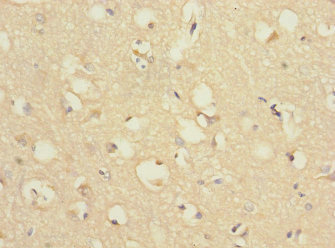
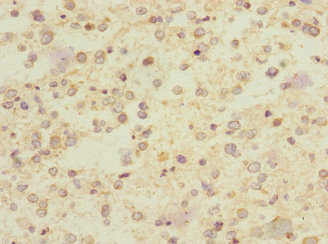
The antibody against CHRNA9 was raised in rabbit using the Recombinant Human Neuronal acetylcholine receptor subunit alpha-9 protein (26-240AA) as the immunogen. This antibody exists as a non-conjugated isotype IgG, Antigen affinity purified. This antibody has been validated on ELISA, IHC.
$299.00
| Cat.No | ADC-16453A | Clonality | Polyclonal |
|---|---|---|---|
| Host Species | Rabbit | Target Name | CHRNA9 |
| Target Synonyms | CHRNA9 antibody; NACHRA9Neuronal acetylcholine receptor subunit alpha-9 antibody; Nicotinic acetylcholine receptor subunit alpha-9 antibody; NACHR alpha-9 antibody | Form | Liquid |
| Species Reactivity | Human | Isotype | IgG |
| Storage Buffer | 50% Glycerol, PBS with 0.02% sodium azide, pH7.3. | Purification Method | Antigen affinity purified |
| Conjugate | Non-conjugated | Application | ELISA, IHC |
| Storage | Upon receipt |
| Immunogen Description | Recombinant Human Neuronal acetylcholine receptor subunit alpha-9 protein (26-240AA) | Target Species | Human |
|---|---|---|---|
| Immunogen Sequence | Complete sequences for the immunogen, target protein, and peptides are available upon request. | Uniprot ID | Q9UGM1 |
Uniprot Id
Q9UGM1
Target Species
Human
Target Name
CHRNA9
Target Full Name
Neuronal acetylcholine receptor subunit alpha-9
Target Function
Ionotropic receptor with a probable role in the modulation of auditory stimuli. Agonist binding induces a conformation change that leads to the opening of an ion-conducting channel across the plasma membrane. The channel is permeable to a range of divalent cations including calcium, the influx of which may activate a potassium current which hyperpolarizes the cell membrane. In the ear, this may lead to a reduction in basilar membrane motion, altering the activity of auditory nerve fibers and reducing the range of dynamic hearing. This may protect against acoustic trauma. May also regulate keratinocyte adhesion.
Target Subcellular Location
Cell junction, synapse, postsynaptic cell membrane; Multi-pass membrane protein. Cell membrane; Multi-pass membrane protein.
Target Protein Families
Ligand-gated ion channel (TC 1.A.9) family, Acetylcholine receptor (TC 1.A.9.1) subfamily, Alpha-9/CHRNA9 sub-subfamily
Target Tissue Specificity
Expressed in cochlea, keratinocytes, pituitary gland, B-cells and T-cells.
Target Synonyms
CHRNA9; NACHRA9Neuronal acetylcholine receptor subunit alpha-9; Nicotinic acetylcholine receptor subunit alpha-9; NACHR alpha-9
Target Background
This gene is a member of the ligand-gated ionic channel family and nicotinic acetylcholine receptor gene superfamily. It encodes a plasma membrane protein that forms homo- or hetero-oligomeric divalent cation channels. This protein is involved in cochlea hair cell development and is also expressed in the outer hair cells (OHCs) of the adult cochlea.
Notification